

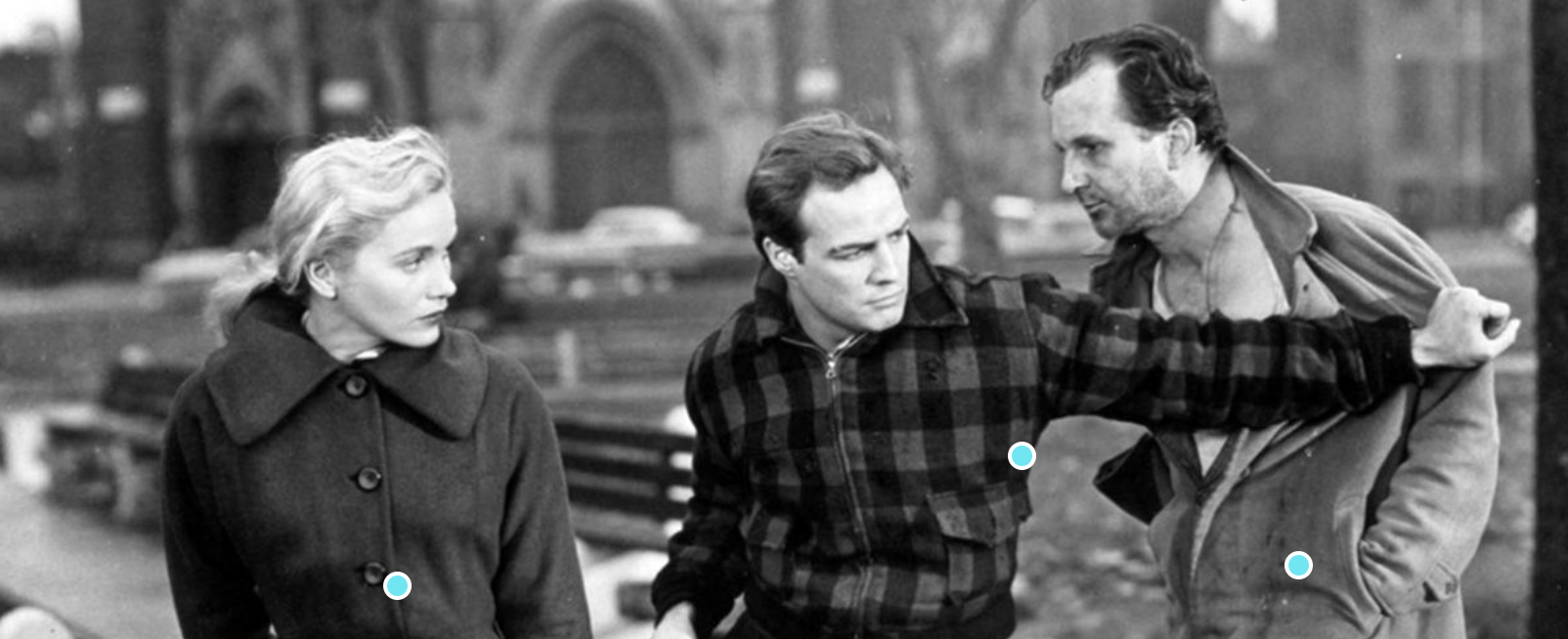


I rewatched the film soon after the Right Rev. Mariann Budde, Episcopal bishop of the Diocese of Washington, challenged President Trump to his face over his cruelty to immigrants.
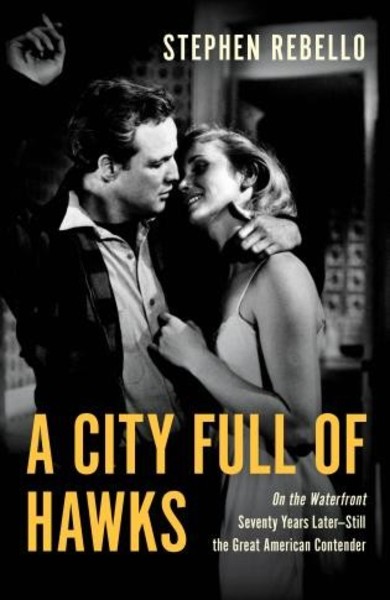
1954’s On the Waterfront has always been among my favorite and most watched films. After reading Stephen Rebello’s wonderful new book, A City Full of Hawks: On the Waterfront Seventy Years Later―Still the Great American Contender, I viewed it again and liked it even more. I also understood his choice of title, as early in the film Marlon Brando talks about the hawks who prey on pigeons.
On the Waterfront is probably best known for Marlon Brando’s epic performance as Terry Malloy. But it has several memorable roles along with one of the most powerful lines in film history: Brando’s plea to his brother, “I could have been a contender.”
The book is a page-turner. Here’s how a book about a 70-year movie captivates readers.
The Political Back Story
Most readers drawn to this book know about Director Elia Kazan’s naming names before HUAC and how this relates to the film. Rebello describes how progressive playwright and screenwriter Arthur Miller was involved in the waterfront project from the start. He offers an intriguing story of the contrasting politics between Miller and Kazan and how studio heads responded to both.
Budd Schulberg, who also named names, then became the screenwriter. He and Kazan followed an unsteady and at times seemingly hopeless path to get this film made. Studio heads like Daryl Zanuck didn’t see profits in finance a film about longshoremen victimized on the docks by organized crime. As Zanuck famously told Kazan, “a film about a bunch of sweaty longshoremen” is “exactly what the American people don’t want to see.”
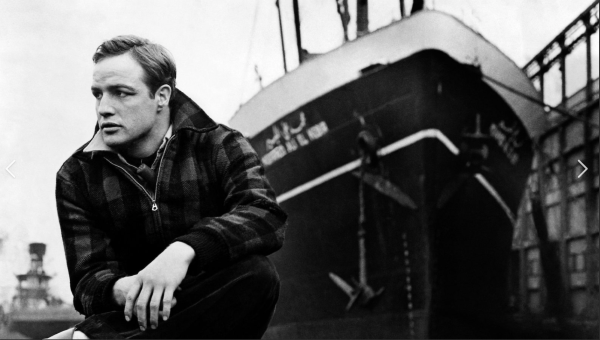
Ultimately, Sam Spiegel, a producer known for cheating actors and directors out of movie profits, secured financing for the film. He also helped secure Marlon Brando as the lead. Rebello reveals that a young actor named Paul Newsom almost got the Malloy role. Frank Sinatra of all people actually had a contract to play what became Brando’s legendary role.
Rebello shows a great film with a fantastic cast came very close to not being made.
Life in Hoboken
The film was shot in Hoboken, New Jersey, during an historic cold spell (it’s a short train ride to Manhattan). Given that much of the movie is shot outside, starting to film in November added to the weather risks. Viewers had no idea how cold Eve Marie Saint must have been without a jacket up on the roof with the pigeons. She persevered, turning in an Oscar-winning performance in her first film (she had been on Broadway and in TV series).
Karl Malden as Father Pete Barry gives one of the most memorable speeches in film history. Yet producer Spiegel demanded it be slashed in half. Kazan kept assuring Spiegel he would make the cut after the film was shot—with no intention of ever doing so.
The “Waterfront Priest” reflected an America when low-income and working-class Catholics could count on priests and the Church for help. I rewatched the film soon after the Right Rev. Mariann Budde, Episcopal bishop of the Diocese of Washington, challenged President Trump to his face over his cruelty to immigrants. It’s the type of courage Father Pete Barry shows in the film.
It was not that long ago that Catholic bishops and priests mobilizing opposition to attacks on their immigrant parishioners. And worked in working-class communities for economic justice. The American Catholic hierarchy is far less activist today. Reverend Budde will hopefully encourage other faith leaders to follow the model of herself and Father Pete.
Schulberg hung out in Hoboken and the film uses a lot of actual longshoreman and residents. The boy who helps Brando with the pigeons was a local who never again acted in film. On the Waterfront feels so authentic because in many ways it was.
Public Response
At the first showing of the film Kazan, Schulberg, and Spiegel were not sure they had made a classic. It wasn’t until they heard feedback and read the reviews that they knew their film would be a popular success. It went on to massive wins at the Oscar’s and Kazan’s stellar directorial career continued (he won Best Director, Brando won Best Actor, Saint won Best Supporting Actress and the film won Best Picture).
Not until the last sentences of the book does the reader learn Rebello’s position on Kazan’s naming names. He handles it eloquently.
Rebello is a great writer. I find many books about films and movie stars are bloated. Not this book. For fans of On the Waterfront, Rebello’s book is an absolute must-read. You’ll be eager to watch the film again while reading it.
