

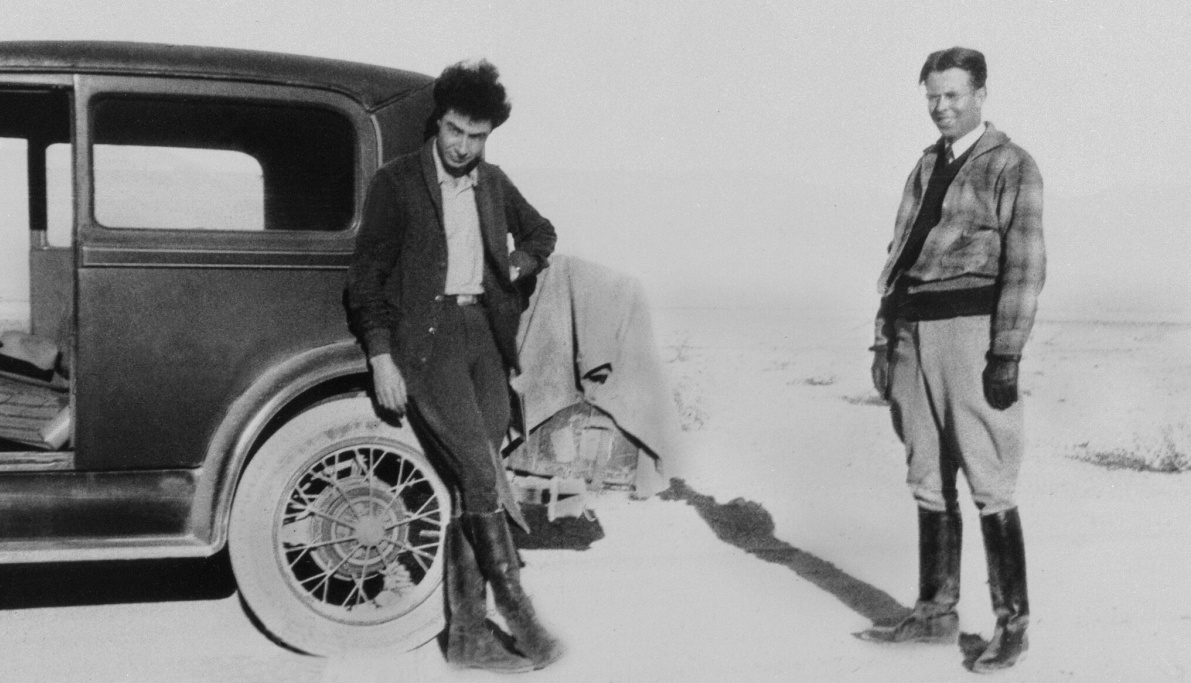


Like Prometheus of legends past, Oppenheimer is rendered helpless as the vultures of opportunism consume his innards under the oversight of the AEC.
“Primum non nocere (“First, do no harm”) has been the oath taken by those entering the healing professions since the time of the ancient philosophers. The words are attributed to the Greek philosopher Hippocrates who lived about 300 years BC. These words are incorporated into the ‘Hippocratic Oath’ which serves as the ethical guideline for those who are skilled at the highest levels of technical competence as they practice today’s modern methods of healing.
The Hippocratic oath is a humbling reminder that constrains the arrogance of all of us who have acquired technical prowess while we function in society.
This ancient ‘do no harm’ rule is the essence of the torment of J. Robert Oppenheimer, hero of the recently released Christopher Nolan film depicting the life of the idiosyncratic scientist who oversaw the World War II Manhattan Project and produced the atomic bombs which the Unites States dropped on Hiroshima and Nagasaki seven decades ago.
Hypocrites’ ethical advice is tested repeatedly by the many characters in Nolan’s three-hour film as they follow the convoluted technical, social and political path that led to the seemingly bizarre circumstance 70 years ago in which the most talented intellectual thinkers of time carried out a plan which instantly incinerated tens of thousands of human beings as if they were merely ants munching a pile of garbage.
How did this happen?
Nolan based his film on the excellent research reported in the book ‘American Prometheus’ (Bird & Sherwin, 2006). Additional credit is due to more recent re-examinations of our national security state (Wallerstein, 2021), and the recent challenges to the status quo by individuals like Edward Snowden who experienced the hypocrisy of the national security state from the inside and felt compelled to speak out against superiors after they lied to Congress in 'No Place to Hide' (Greenwald, 2024) and 'Fact and Fears' (Clapper & Brown, 2018).
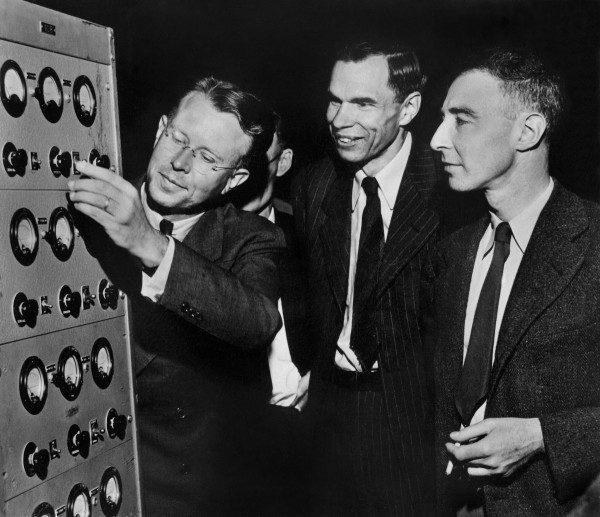 Ernest O. Lawrence, Glen T. Seaborg, and J. Robert Oppenheimer in early 1946 at the controls to the magnet of the 184-inch cyclotro
Viewing the film compels us to ask ourselves if Oppenheimer’s torment was self-inflicted perhaps as a consequence of an exaggerated sense of personal power traceable to his origins in a family of extreme wealth and privilege. This power of wealth permitted him to freely follow his personal interests as he traveled to Europe in the 1920s to experience the revolution we now call ‘quantum mechanics.’ Oppenheimer was able to study in the company of physicists like Nils Bohr, Werner Heisenberg, and Max Born, the emerging giants of the field.
Along the way he also encountered the individuals who, by association, were to cause his public humiliation and ridicule decades later during the McCarthy years.
The film reveals to viewers the kangaroo court that emerged at Oppenheimer’s Atomic Energy Commission (AEC) hearing in 1954 which resulted in the loss of his security clearance. He is betrayed by a series of old friends who had no qualms about seeing him burned as a witch for his past love affairs with Communist women while he was on the faculty at Caltech and Berkeley. Like Prometheus of legends past, Oppenheimer is rendered helpless as the vultures of opportunism consume his innards under the oversight of the AEC.
Ultimately, Oppenheimer experiences a still greater final humiliation. He approaches President Truman to express the consensus moral regret of his Manhattan Project colleagues for the ‘blood on our hands.’ Truman rebukes him for being so presumptuous as to assume Oppenheimer had control of the use of the products that he and his Manhattan Project colleagues worked to produce. This is a final insulting lesson Oppenheimer was forced to learn while discovering his true place in the universe.
This leaves a question for all of us who view the film: “Could Oppenheimer have lived his life as a non-controversial figure? Or is being idiosyncratic simply a part of being a genius?”
References:
- Bird, K., & Sherwin, M. J. (2006). American Prometheus: The triumph and tragedy of J. Robert Oppenheimer (1st Vintage Books ed). Vintage Books.
- Clapper, J. R., & Brown, T. (2018). Facts and fears: Hard truths from a life in intelligence. Viking.
- Glenn Greenwald. (2014.). No Place to Hide. Metropolitan Books
- Wallerstein, A (2021). Restricted Data. University of Chicago Press.
