

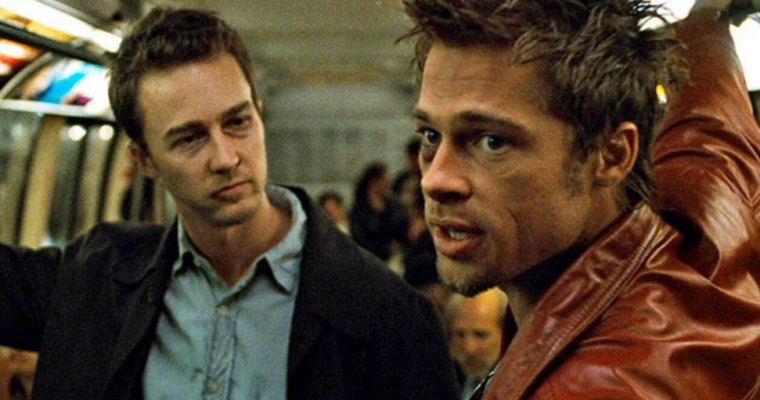


The political right's nostalgic indulgence in its own mythic portrayals of America’s past throws Fight Club’s cultural ironies into even sharper relief.
Now doesn’t it make you feel better?
the pigs have won tonight
now they can all sleep soundly
and everything is alright. –NIN
As more and more Americans are feeling the negative effects of the 2024 presidential election, the message of economic and social upheaval conveyed in Chuck Palahniuk's 1996 novel Fight Club and David Fincher's 1999 adaptation gains renewed force. While both speak to a nation confronting the crumbling façade of the American Dream, as Palahniuk observed of Fincher’s version, the story’s cinematic presentation has its advantages, since “by openly acknowledging the mechanics of film, Fincher made his version seem more real and more mythic at the same time.”
The political right's nostalgic indulgence in its own mythic portrayals of America’s past throws Fight Club’s cultural ironies into even sharper relief. This tendency was starkly exemplified by the keynote speakers chosen for the 2024 Republican National Convention. Featuring aging wrestling legend Hulk Hogan alongside UFC President Dana White, this eclectic mashup of pop culture and combat sports 'royalty' wasn't just bridging past to present; it actively performed and promoted a specific, often theatrical, vision of American masculinity and power, one that prioritizes nostalgic symbolism over addressing present-day complexities.
And let’s not forget the farcical spectacle of politicians brandishing assault rifles like extras in a low-budget Soldier of Fortune knock-off. But these wannabe commandos, it seems, display even less aptitude for handling firearms than the 80s VHS machine gun, bikini babes (not the cool song from The Cramps), since carelessly pointing loaded muzzles at bystanders appears to be their signature move. This whole charade boasts the same level of “authenticity”—and alarming recklessness—as historical reenactors at Colonial Williamsburg deciding, on a whim, to use live ammo.
Besides generating topics for political pundits to dissect ad nauseum, the broader historical significance of all this gratuitous shirt-tearing and Rambo cos-play seems dubious at best. As cartoonish as such gestures of simulated bad-assery may be, as public performance they resonate on a level that is beyond words, in deeply symbolic ways.
Such acts tap into some of the same cultural insecurities explored by Palahniuk in Fight Club, while signaling defiance against a social climate perceived by many as one of intrusive surveillance, “woke” judgment, and cancel culture. The imagery and rhetoric alluded to here have particular appeal to Americans who harbor resentment for feeling demeaned, marginalized, or forgotten, especially by those they consider part of the nation's entrenched elite.
Trump's populist sleight of hand, which often leave establishment Democrats fractured and floundering, stems from a shrewd media savvy honed through years of movie and TV appearances, with relentless tabloid self-promotion. This exposure, with guest spots on numerous popular shows and movies from The Jefferson’s, The Fresh Prince of Bel-Air, The Nanny, Spin City, and Sex in the City, to Home Alone 2 and Zoolander allowed him to connect with audiences across class divisions, making Trump a household name by the early 90s.
Since officially entering politics, Donald Trump has cultivated a rhetorical style that, despite its myriad factual inaccuracies, powerfully resonates with populist audiences. These audiences feel maligned by what they perceive as elitist disdain, often expressed through epithets like “rednecks,” “trailer trash,” “deplorables” and similar terms of contempt. Having a flawed reality TV star at their helm empowered conservatives to more effectively weaponize a careless insult from the leader of the very party that, until recently, presented itself as champions of the working class, wearing the slur as a badge of honor. And yes, converting it into yet another new brand.
Shopping Support Groups on the Edge of Despair
Speaking through Fight Club's antihero Tyler Durden, Palahniuk delivered an anti-establishment, anti-Hollywood, culture-jamming message that resonated with alienated Gen Xers. Yeah, the irony. Yet Durden's lasting impact stems from how he anticipated and articulated a profound, cross-political distrust among Americans long before Trump’s emergence into the political scene. Durden targeted the dominant social and economic structures viewed as monuments to the failed visions of prior generations—the very sentiment Trump would later harness.
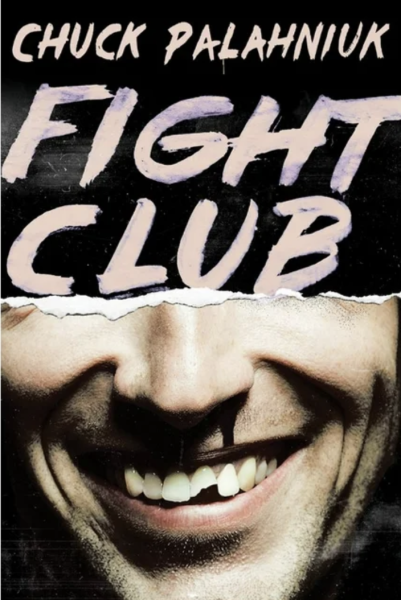
Factors and influences that have left the majority of Americans alienated, isolated, and embittered due to the unbridled greed of banks and corporations, aided by the control and manipulation of the mass media, as was on stark display during the 2024 election cycle. All while becoming ever more dependent upon technology, with more of our time spent in the virtual worlds of cyberspace.
Fight Club’s critique is delivered through the gradual awakening of an anonymous, mild-mannered young professional played by Edward Norton. Throughout Fincher’s film, this character undergoes a profound personal transformation set off by his loss of his home, and the privileged social status that came with it, in exchange for the exhilaration of anarchic revolt and a Nietzschean “will to power.”
In the establishing scenes of both versions, he is depicted as meek but neurotic, long suffering from insomnia. This leads him to lurking in support groups for terminal illnesses as a “voyeur” for relief from his own suffering. His assertion that this is “better than real life,” offers insight into the life of quiet desperation he is leading.
The cumulative weight of social and cultural expectations propels the narrator toward escapism, initiating his downward spiral. His search leads him through various support groups, waystations offering only passive, temporary relief from a hollow existence. There, surrounded by authentic suffering, “in the middle of all their truth,” he confronts his own role as a “liar” and a “fake,” before crossing paths with his eventual love interest, Marla Singer.
Palahniuk offers a harrowing, yet ironic, view of social resignation through the fractured despairing imagination that emerges from his troubled protagonist. A character for whom life has lost nearly all meaning, as he laments, “life comes down to nothing, not even nothing, oblivion.” Afflicted by an elusive but pervasive set of psychological maladies, the narrator recounts how he’d sought treatment for his insomnia but was told by his doctor that it was “just a symptom of something larger.”
The Media Simulation as Spectacle
His drastic attempts at self-therapy and the untreated effects of his condition leaves him more estranged from a reality in which, “everything is so far away, a copy of a copy of a copy.” The notions of replication and imitation cited recall the philosopher Jean Baudrillard’s famous critique of Western historicism via the concept of the simulacra, the process of simulation, and its displacement of reality itself.
The existential crisis this character suffers also intersects with insights explored by Guy Debord, a leading figure of the Situationist International. Writing on the source of modern estrangement in his manifesto, The Society of the Spectacle, Debord asserts, “the spectacle is not a collection of images; rather, it is a social relationship between people that is mediated by images.”
These ideas form the crux of a cultural critique centered on images as a “locus of illusion,” whereby “all that once was directly lived has become mere representation.” For Debord, this condition of modern life results from the erosion of previous social relations and the impulses that once held sway over human behavior, having now given way to a social existence in which our innermost desires have become “mediated by images.”
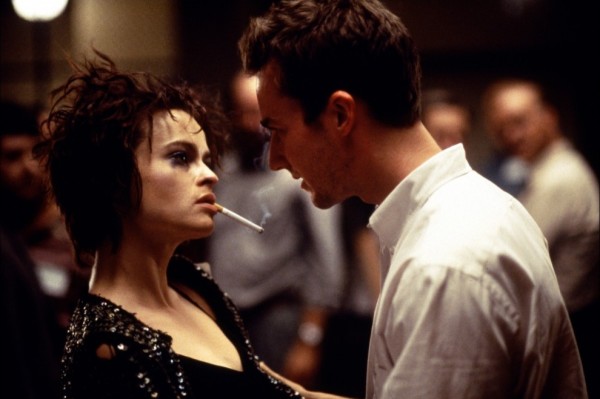
A global economic system emerges that is “split into reality on the one hand and image on the other.” This system recasts people as “consumers,” stripping away individual identity and agency, and granting freedom only on the condition that they buy. To illustrate this shift, consider how America’s rugged individual has been supplanted by the figures Naomi Klein identifies in No Logo: patrons of marketed spaces, devotees to “brand essence,” and, increasingly, influencers.
The social and cultural upheavals caused by these shifts help explain the current appeal of Trumpism, since he’d already transformed his image into a recognizable brand that had seeped into practically every part of American society long before he burst onto the political stage. He achieved this through the naming of hotels, casinos, and golf courses, along with the release of branded consumer goods including steaks, wines, a board game, and of course, Patrick Bateman’s favorite book, The Art of the Deal.
Since becoming President, he’s leveraged the social power that comes with the position to launch his own social media platform and meme coin, along with a heap of promotional products (almost all of which are made outside the US) from action figures, hats and sneakers, to even a “God Bless the USA Bible”—available in a limited gold edition, no less. Regardless of the appeal, its undeniable that Trump has proven to be master of self-promotion and branding, constantly revising and redefining his image and very identity in the process.
Lifestyles of the Rich and (In)Famous
Fight Club echoes the 80s and 90s American zeitgeist—an era of insatiable avarice and celebrity worship also skewered in Bret Easton Ellis’ ferocious satire, American Psycho—through myriad lenses. Prominent among these we find the narrator’s description of his high-rise condo not as a chic symbol of luxury, but “a sort of filing cabinet for widows and young professionals.”
This form of modern habitation, which Trump has also become famous for through NYC’s Trump Tower and it’s various copies around the world, may seem a triumph of urbanization and engineering prowess from a utopian, or might we now say, a uTrumpian, perspective? Filtered through the postmodern sensibilities of Palahniuk and Fincher, high-rise living emerges as an over-medicated take on J.G. Ballard’s 1970s dystopian nightmare. It becomes a place of profound alienation and loneliness.
These modes of social organization serve as the rallying cry for Durden’s fight club, while providing the fuel for the acts of sabotage that grow from it under the banner of the more sinister Project Mayhem—now adopted as the name “for the ultimate fan movement” in celebration of Lady Gaga’s latest album, Mayhem. Copies of copies of copies abound. The narrator’s description of his home is further contextualized by the account of an explosion that effectively destroyed his “lovely nest,” leaving it “a gutted charred concrete hole in the cliffside of the building.”
Placing emphasis on the immense influence of consumer culture, the narrator’s account of the blast soon veers into a deadpan inventory of his “personal effects.” His tone as much as the content is revealing, “everything, including your set of hand-blown green glass dishes with the tiny bubbles and imperfections, little bits of sand, proof they were crafted by the honest, simple, hard-working indigenous aboriginal peoples of wherever . . . Picture the floor-to-ceiling drapes blown out and flaming to shreds in the hot wind.”
Questioned by the police investigating the explosion, the ruined property morphs into Bateman-esque parody of material fetishism, “something which was a bomb, a big bomb, had blasted my clever Njurunda coffee tables in the shape of a lime green yin and an orange yang that fit together to make a circle. Well they were splinters, now. My Haparanda sofa group with orange slip covers, design by Erika Pekkari, it was trash, now.” Material possessions that stood not merely as symbols of social status, but for life itself.
The doorman’s observation that “a lot of young people try to impress the world and buy too many things” resonates deeply as the narrator confronts his situation. With seemingly nowhere else to go, he calls Tyler Durden, a free spirit met on one of the near-identical flights undertaken for his job investigating accidents as a recall coordinator. He’s presented in this scene as a part-time movie projectionist—yep, Plato’s allegory of the cave has something to do with it—who because he’s “tired and angry,” but also just “bored,” splices single frames of pornography into the feature films he’s been hired to play.
In a conversation over beer at a hole-in-the-wall bar called Lou’s Tavern, he describes the loss of his home to Durden, lamenting “a wardrobe that was getting very respectable, close to being complete.” Durden responds, asking what a “duvet is?” He says, “a comforter,” to which Durden nods, “it’s a blanket, just a blanket. And why do guys like us know what a duvet is? Is it essential to our survival in the hunter-gather sense of the word? No. What are we then?”
Norton’s character connects the dots, responding, “because we’re consumers.” Durden’s simple, yet profound questions probe at the core ideas both Debord and Klein address, but in a way that is immediate and accessible: “right, we are consumers. We are byproducts of a lifestyle obsession. Murder, crime, poverty, these things don’t concern me. What concerns me are celebrity magazines, television with 500 channels, some guy’s name on my underwear. Rogaine, Viagra, Olestra.” Chanel No5, anyone?
Fight Club Is Born
The ideas presented in these scenes lay bare a profound spiritual emptiness at the core of modern techno-industrial society. Palahniuk's critique gains strength through his exploration of fractured identities born from consumer culture’s apathy, and driven by the hyper-mediated social experience that propels us toward a relentless virtual existence and near constant surveillance. These frustrations become the impetus for the creation of fight club.
Driven to rebel against these forces, Fight Club's narrator discovers release in the visceral thrill of physical combat after Durden asks him to do him a “favor,” saying, “I want you to hit me as hard as you can.” With the narrator obliging and Durden returning the blow, fight club is formed. This social experiment it enacts seeks to break the spell of paralysis and the stupor induced by media saturation, plunging members back into the immediacy of lived experience:
“Fight club is not football on television. You aren’t watching a bunch of men you don’t know halfway around the world beating on each other live by satellite with a two-minute delay . . . Fight club gets to be your reason for going to the gym and keeping your hair cut short and cutting your nails. The gyms you go to are crowded with guys trying to look like men, as if being a man means looking the way a sculptor or an art director says.”
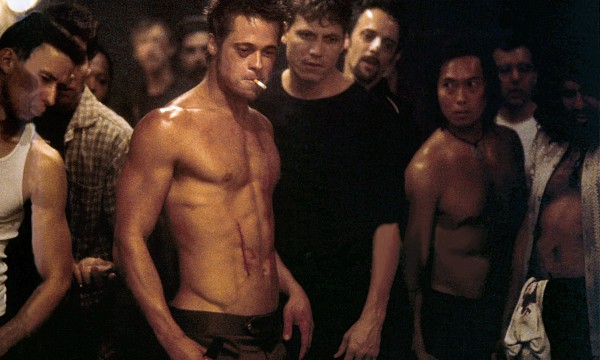
The masculine subjects shaped within this alternative context of experience transcend mere expressions of conformist, albeit idealized, social roles. Fight club strives to liberate participants from the tyranny of manufactured desires. Within this space, the passive happiness in consumer slavery is shed, replaced by the difficult reclamation of embodied identity, summoned forth by overcoming the socially constructed consumer self that had become their prison.
One of the film’s most memorable scenes features Durden addressing the expanding ranks of fight club in the basement of Lou’s Tavern. In this setting, he exposes the economic coercion at the heart of consumer culture and the social, political, and historical structures that buttress it, proclaiming:
“Man, I see in fight club the strongest and smartest men who’ve ever lived. See all this potential, and I see it squandering. Goddamn it, an entire generation pumping gas, waiting tables, slaves with white collars. Advertising has us chasing cars and clothes. Working jobs we hate, so that we can buy shit we don’t need. We are the middle children of history, men. No purpose or place. We have no great war. No great depression. Our great war’s a spiritual war. Our great depression is our lives. We’ve all been raised on television to believe that one day we’d all be millionaires, and movie gods, and rock stars. But we won't. And we're slowly learning that fact. And we’re very, very pissed off.”
The aggressive, angst-ridden industrial soundscape forged by Trent Reznor and Nine Inch Nails resonates powerfully with the frustrations Durden voices. This connection is vividly captured in their track “March of the Pigs” (released two years before Fight Club’s publication), where Reznor’s distorted vocals careen over a mounting onslaught of digital noise, abrasive percussion, and guitar feedback, culminating in lyrics: “march, push, crawl right up on your knees, please, greed, feed—no time to hesitate. I want a little bit, I want a piece of it, I think he’s losing it, I want to watch it come down.”
A desire to not only watch it all “come down,” but to lend a hand in speeding the process along becomes the motivating drive of both Durden and the anonymous lead. Marla has another view, however, one that threatens such plans as she maintains an adoration for “all the things that people love intensely and then dump an hour or a day after.”
The Utopian Dream in Purification and Sacrifice
In partnering with Norton’s character to build fight club, Durden strips away the life and comfort that had made him docile. At the same time, Durden makes him promise never to speak to Marla about him, threatening that if so, “you’ll never see me again.” The next step in his transformation comes with Durden acquainting him with his idea of sacrifice via a chemical burn with lye. He tells him “the first soap was made from the ashes of heroes,” while equating themselves with “the first monkeys shot into space.”
The lesson is simply that “without pain, without sacrifice we’d have nothing.” This is a message that diverges from the exhortations being uttered by Trump and his allies of late, which, while invoking sacrifice, isn’t meant for those speaking and leading, but everyone else.
Norton's character first recoils from the pain, retreating into desperate meditative chanting: “I’m going to my cave! . . . I’m gonna find my power animal!” But Durden insists he not just endure but embrace the agony as “the greatest moment” of his life. This intense physical lesson serves to introduce Durden's core ideology, which confronts the void left by unreliable father figures, “our fathers were our models for God. If our fathers bailed, what does that tell you about God?”
Durden, acting as a stern equal rather than a domineering father figure, finally offers vinegar for the burn, but with a price for the relief, demanding the protagonist first “give up” and truly “know, not fear, know, that someday [he’s] gonna die.” Yielding, the protagonist cries out, “You don’t know how this feels!” Durden counters by revealing his own scarred hand and declaring, “It’s only after we’ve lost everything that we are free to do anything.”
Enlightenment through suffering, cleansing through destruction—this core message resonates throughout the novel and film, crystallizing in this pivotal scene. It embodies a nihilistic, post-historical viewpoint raging against the emptiness of late capitalism. This perspective has only gathered force since 9/11, proving increasingly relevant in our world shaped by perpetual war and its sprawling consequences.
The broader significance of Durden’s agenda functions as a life-affirming escape from what Franco Berardi, writing in After the Future, called the global “machine of exploitation, debt, and compulsory consumption.” It is from these socio-cultural contexts that fight club was brought to life with the emergence of the anonymous lead’s deviant alter-ego. The activities that flow from these circumstances empower the narrator and Durden, with their followers, to peel away the false consciousness imposed through the illusory world formed from consumerist self-indulgence.
As the narrator asserts in the novel, “who I am in fight club is not someone my boss knows. After a night in fight club everything in the real world gets the volume turned down. Nothing can piss you off. Your word is law, and if other people break that law or question you, even that doesn’t piss you off.” As such, Durden assumes the archetypal role of a messianic figure common to utopian narratives—one Trump has increasingly worked to channel in yet another re-branding since his 2024 reelection to the Presidency.
According to Edward Rothstein such rhetoric seeks to claim the voice of a “messenger who brings the good news down to earth and then helps put it into effect. He comes from the out-side of history, enters into its midst, and promises redemption.”
The Dystopian Nightmare of Project Mayhem
The goal in Fight Club is a primitivist utopia born out of the fires of apocalypse, achieved by “destroying every scrap of history,” while making “the whole world hit bottom.” In this revolutionary milieu, raw sensation and direct experience actively overthrow the static images of the past, rendering history obsolete. Fight club and Project Mayhem thus function as the narrator’s ideal catalyst, the perfect drug delivering a new way of being to take root within the fractured cityscape.
Together, these complimentary movements serve as ironic antidotes to the loss of individual identity and social agency that has come to define modern consumer culture and the computer age. Participation teaches “each man in the project that he had the power to control history.” This entails, in Rothstein’s words, a complete rejection of our current way of life such that “the future paradise will have nothing to do with earthly history of its familial order.”
The cultural mischief, misinformation, and organized chaos of Project Mayhem are used to fight back against the all-consuming power of the consumerist spectacle and reclaim, not simply the participants’ lives and identities, but more vitally, their independent historical agency. Thus, Durden’s role as the narrator’s liberating double is underscored by his position as the embodiment of a repressed psyche that prompts the question, “if I could wake up in a different place, at a different time, could I wake up as a different person?”
This fracturing of identity grows in potency as the narrator adopts the communal, post-historical views articulated by Durden, “only in death will we have our own names since only in death are we no longer part of the effort. In death we will become heroes.” Project Mayhem’s ultimate goal is freeing the present from the tyranny of the past, essentially resetting the world to year zero. Yet, the heroism achieved through self-sacrifice for this cause proves tragically fleeting with the members’ corpses ultimately being laid to rest within the very charnel house of progress they strove to dismantle.
The uncompromising nature of Durden’s plans reveals the fatal flaw of his revolutionary fervor—his movement’s only path to agency is the total destruction of the reality that produced it. Tyler confirms this zero-sum game, declaring, “‘This is our world, now, our world,’ before continuing, ‘and those ancient people are dead.’” So while fight club and Project Mayhem attack capitalist oppression and the American Dream, the ultimate goal Durden pursues with his “space monkeys” leads directly to his followers’ annihilation.
The narrator’s urge “to blast the world free of history,” then, amounts to nothing less than a call to torch the entire edifice of Western civilization. Palahniuk seems keen to ditch the standard anchors for historical agency—class consciousness, contemporary politics, that whole tired routine. These impulses contrast sharply with the rhetoric Trump and his administration deploy in all of its exuberance and overblown hype for Western values, mixed with shallow appeals to Christianity. A prime example? Posting an AI-generated image of Trump himself as Pope.
Eschewing such megalomania, Durden envisions a future where remnant human populations inhabit cities reclaimed by wilderness. He paints a vivid primitivist world, exclaiming, “you’ll climb up through the dripping forest canopy and the air will be so clean you’ll see tiny figures pounding corn and laying strips of venison to dry in the empty car pool lane of an abandoned superhighway . . .” For Durden, the allure of such a raw, prehistoric lifestyle functions as a direct challenge to the “reciprocal alienation” produced by the society of the spectacle.
After the Disaster, What Next?
Instead of merely criticizing consumerism within the constraints of the capitalist/socialist dichotomy, Palahniuk dramatizes the logical endpoint of its dogmas. He envisions an escape through self-inflicted apocalypse—a return to primitivism presented as the only sustainable alternative to late capitalism. Yet, as Durden insists, achieving this radical transformation requires far more than philosophical objections to the power held by “money and property and knowledge.” It necessitates total upheaval, Durden warns: “This isn’t just a weekend retreat...Only after disaster can we be resurrected.”
Durden's words are deeply ironic, acknowledging the probable failure of the very methods he employs. On this, Palahniuk’s fiction aligns with Berardi’s real-world analysis. Berardi argues that despite widespread support, major protest movements often fail to alter daily life or achieve deep social change, remaining essentially “ethical movement[s], not...social transformer[s].”
The failure of Project Mayhem becomes evident in Fight Club as the narrator realizes the futility of its violence and implicitly condemns it. Perceiving the world as “going crazy,” his psyche fractures, culminating in the desperate attempt to sever himself from his destructive alter ego, “I didn’t kill anybody...I’m not Tyler Durden.”
The narrator’s decision to exorcize Durden from his consciousness comes at a heavy price, however, and one that Palahniuk shows may not even be possible in the hermetically sealed world of social revolution that they conspired to create. For after the narrator has repudiated the violence that turned their utopian vision into the terrifying dystopia, he returns to a fight club at the Armory Bar signing up “to fight every guy in the club that night. Fifty fights.” The reason being as he well knows, “only in death are we no longer part of Project Mayhem.”
The narrator's journey culminates in a horrifying realization: “that under . . . everything I took for granted, something horrible had been growing. Everything has fallen apart.” This truth transcends the psychic split born from his struggle between obedience and violence. Faced with this reality, he understands that even the formidable Tyler Durden—with his confidence, strength, creativity, and righteous vengeance—cannot undo the decay.
Bolstered by Marla’s support as she shouts, “I like you . . . I know the difference,” the distinction between him and Durden is exposed, allowing for the possibility of freedom. The narrator must therefore accept the paradox that he just wanted something he could never have. According to some reports, only 100 days into Trump’s second term, a significant number of supporters may be feeling similarly disenchanted with the promises they were sold.
The destruction and loss articulated in Fight Club, however, are not merely nihilistic responses to the cultural grease trap of late capitalism and consumerism; rather, they are tropes that ultimately give voice to the novel’s rebellious spirit. Although readers may not recognize anarchist philosopher, Petr Kropotkin’s maxim—“the urge to destroy is a creative urge”—we can see how this idea informs many of Durden’s proclamations (as well as its warped parody in Trump’s DOGE under the guidance of Elon Musk).
Speaking more to Palahniuk’s concerns, however, it is also vital to remember that Kropotkin clarified his ideal, stating, “it is not enough to destroy. We must also know how to build.”
With these ideas in mind, Palahniuk can be seen as presenting two equally untenable paths as a somber warning, which also stands in stark relief from the caricatures of strength and spectacles of power Trump and his acolytes project. For Palahniuk, one path leads to the paralyzing effects of apathy, conformity, and social detachment, the other leads to destruction and violence born of frustration and desperate hope. Out of the ruins of these extremes, perhaps, we may yet be freed from the dual ideologies of progress and primitivism, entering a different reality, hand in hand, where the promise of a new future awaits.
