




Lent devotes major chunks of his book to spelling out all sorts of recent findings by neuroscientists and others, findings that often reinforce earlier insights by non-Western thinkers.
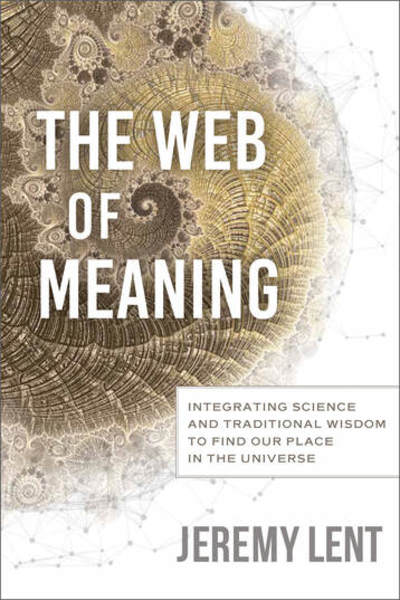
“The Web of Meaning: Integrating Science and Traditional Wisdom to Find Our Place in the Universe” (2021) is a meaningful book for we progressives. It is so because, like us, it is critical of what capitalist countries have done to non-European peoples and cultures and to the natural world. It states that “life is under attack from our civilization–it is being systematically ravaged at a pace that is rapidly increasing.” It criticizes “that a couple of dozen billionaires own as much wealth as half the world’s population”; that “there has been a 68 percent decline in animal populations since 1970”; that “Greenhouse gas emissions have caused the climate to lurch out of control, creating conditions that haven’t existed on Earth for millions of years”; that “fires, storms, droughts and floods that used to be called ‘once in a century’ have become a regular staple of our daily news”; that “we’re on track, by the middle of this century, to see the annihilation of coral reefs worldwide, 95 percent of arable land degraded and five billion people facing water shortages–and at the current rate, there will be more plastic in the oceans than fish”; and that by “the later part of the century, the Amazon rainforest will have become a searing desert.”
As a mid-August 2024 article on LA Progressive (LAP) indicated, many of these environmental concerns are progressive ones. Moreover, Lent emphasizes, something else that I and LAP have stressed before in an essay on “Why Values Matter”—values. At one point, Lent writes, “If we are to redirect our civilization’s trajectory away from catastrophe, we must change the underlying foundation of values on which this global cultural and economic system has been based.” But as the title of this present essay indicates, these matters are not only progressive ones, but also meaningful for “everybody else.”
I don’t know enough about biology to confirm with certainty that what Lent says about cells is accurate. For example, “most bacteria. . . comprise the majority of single-celled organisms”; “intrinsic intentionality....is the defining characteristic of cells”; and “each cell must be aware of itself as a self: it knows what is within its membrane and what is outside; it determines what molecules it needs and which ones to discard; it knows when something within it needs fixing and how to get it done; it determines what genes to express within its DNA and when it’s time to divide and thus propagate itself.” But I do know that living things, like dogs, birds, horses, and other life we see around us, are more complex, more profound, and deeper than we have been led to believe by many so-called scientific minds during the past few centuries.
Here I am reminded of what economist/environmentalist E.F. Schumacher (1911-1977) had to say about science, both before and after the time of Descartes (1596-1650). Before, it “ looked upon nature as God's handiwork and man's mother”; afterwards, it tended “to look upon nature as an adversary to be conquered or a resource to be quarried and exploited.” Like the subtitle of Lent’s book suggests, Schumacher believed that science had to be integrated with traditional wisdom. He wrote, “Science and technology....have to open their doors to wisdom and, in fact, have to incorporate wisdom into their very structure.”As he told the physicist Fritjof Capra, “Western civilization is based on the philosophical error that manipulative science is the truth, and physics has caused and perpetuated this error. Physics got us into the mess we are in today. [It said,] the great cosmos is nothing but a chaos of particles without purpose or meaning, and the consequences of this materialistic view are felt everywhere.”
That same Capra, to whom Schumacher spoke in the 1970s, wrote about the present author and book being reviewed: “Jeremy Lent is one of today’s most eloquent cultural observers. In this captivating book he addresses with frightening clarity how humanity’s loss of balance within ourselves and with the natural world has brought civilization to the brink of collapse. He also shows us a way out—a path of integration, recognizing our deep interconnectedness, that could lead toward a new ecological civilization. I highly recommend this inspiring book to anyone concerned about the future of humanity.”
What Lent suggests is the adoption of a trait that we have too often ignored in modern times—humility, not only in relating to other humans, but also regarding our knowledge of non-human life. He also suggests that we learn from other cultures and belief systems. He writes, for example, that “Buddhism shares with both traditional Chinese and Indigenous wisdom the fundamental insight of the interconnectedness of all things,” and that we should cultivate that insight as well as the “principles of compassion and lovingkindness (metta)” that Buddhism advocates. (Schumacher displayed a similar appreciation of Buddhism, including its application to economics.) Or as Lent quotes an ancient Chinese thinker, “Everything from ruler, minister, husband, wife, and friends, to mountains, rivers, heavenly and earthly spirits, birds, beasts, and plants, all should be truly loved in order that the unity may be reached.”’ The progressive poet Carl Sandburg voiced a similar insight when he wrote “though meanings vary, we are alike in all countries and tribes.”
Lent’s view is that “when Indigenous cultures viewed all of nature as family, they were in touch with a profound truth that has since been scientifically validated by evolutionary biology.” And that “the findings of modern scientific research” [as opposed to scientific research of earlier decades] have validated that “every organism in nature demonstrates stunning intelligence....that has evolved on Earth over billions of years into a dazzling variety of forms.” Scientific research, he believes, should produce “feelings of awe and reverence as we glimpse the vast mystery at a scale beyond our comprehension.”
He writes, for example, that in “recent decades, however, plant biologists have transformed our understanding of what goes on inside a plant. . . . Plants have their own versions of our five senses—they can smell, see, taste, touch and hear–and also use up to fifteen other ways to sense their environment for which we don’t have analogues....Plants act intentionally and purposefully: they have memory and learn, they communicate with each other and can even allocate resources as a community....Perhaps most intriguingly, plants also exhibit unique personalities.”
Among animals Lent also indicates that they are more complex and advanced than we once thought—e.g., “prawns and crabs feel pain and remember it, modifying their behavior based on what’s happened to them previously.” And “impressive acts of altruistic behavior have been reported among apes, elephants and dolphins, who will risk their own lives to save the lives of others.”
Yet, because of “the ideology of human supremacy,” we “maltreat animals in factory farms, blow up mountaintops for coal, turn vibrant rain-forest into monocrop wastelands, trawl millions of miles of ocean floor with nets that scoop up everything that moves....claiming that nature exists only to serve human needs.”
Like Schumacher and other progressive thinkers—see, e.g., here and here, Lent criticizes the modern overemphasis on individualism, advertising, profit-making, and consumerism. Instead he praises wise values, especially love—“An ecological worldview leads naturally to acting out of love” and “revolutionary love means having compassion even for those who are the oppressors.” Emphasizing the basic oneness of all being, his aim is human flourishing, wellbeing (eudaimonia), and the common good. He writes, “Both inequality and runaway consumerism are maladies of a global civilization built on values that align with hedonic impulses but virtually obliterate any conception of eudaimonia.” And “the modern corporation is . . . a relentless force with the overriding objective of turning humanity and the rest of life into fodder for endlessly increasing financial profit.”
In addition to demonstrating knowledge and appreciation of past cultures and non-Western belief systems and nature, Lent devotes major chunks of his book to spelling out all sorts of recent findings by neuroscientists and others, findings that often reinforce earlier insights by non-Western thinkers. He writes, for example, “In recent years modern neuroscience has validated definitively these ancient insights” of ancient Chinese thinkers and of Buddhism. And “a large number of evolutionary biologists have coalesced around a consensus that it’s our ability to cooperate with each other–even those who are not kin–that differentiates us from other primates.”
Like many progressives, Lent is more critical of unbridled capitalism than of democratic socialism, as often practiced in Scandinavian countries. He praises the latter’s schools, for example, where “mandatory classes in empathy [exist], teaching schoolchildren to share emotional problems and collaborate nonjudgmentally with others in finding solutions, thus establishing a partnership ethos at the sensitive time when children internalize ethical norms into their moral intuition.” Finally, however, as physicist Capra noted (see above), Lent goes beyond the present to detail what a new “ecological civilization” might look like, as well as how—through more government and legal regulations over economic developments—we can achieve it. From the 1890s until WWI and again under Franklin Roosevelt, progressives used such methods to improve human life. Applied wisely, Lent believes such methods could again be successful.
He realizes that transitioning from our present individualistic and profit-driven culture to an ecological civilization will not be easy. But he see signs of hope in the past—e.g., ending slavery and southern U. S. segregation and the global spread of voting rights to women—and in recent times—e.g., the 2015 environmental encyclical of Pope Francis “that demonstrates the deep interconnectedness of all” and the emergence and climate-crisis activities of the Swedish teenager Greta Thunberg.
Although this essay has stressed the positive aspects of “The Web of Meaning,” the former is not implying the latter is faultless. As with many books, Lent’s could have benefited from an editor that cut out some excessive wording—it should be noted, however, the actual text is under 400 pages, with bibliography, endnotes, and index adding more than 100 additional pages. Nevertheless, this work is a valuable contribution to enlightening us how we might transition from moving toward self-destruction to a path leading to mutual flourishing.
