




The Enduring Lessons of Paul Thomas Anderson’s "Inherent Vice" and Ridley Scott’s "The Counselor"
Paul Thomas Anderson claimed in a 2015 Rolling Stone interview to have first encountered the work of Thomas Pynchon in high school—an impressive selection on any list of youthful literary explorations. The reading experience that Anderson shares would seem exceedingly uncommon now in an American educational system increasingly surveilled by political ideologues, uninformed school boards and fascistic academic watch groups that exert pressure and attempt to restrict access to a whole host of renowned writers and thinkers who may be seen as challenging conventional thinking.
The climate of hostility to critical thinking and the celebration of unabashed anti-intellectualism, which continues to spread, perhaps, as another type of epidemic, is indicative of increasingly strenuous and belligerent efforts to inhibit intellectual freedom across the country. The chilling effects of these concerted and well-coordinated efforts, often cloaked behind a facade of faux-grassroots organization, to restrict access to literary, philosophical and scientific texts that challenge dominant histories, conventional ideas and religious orthodoxies have given rise to a social milieu that seems more and more like a parody of Mike Judge’s 2006 film Idiocracy.
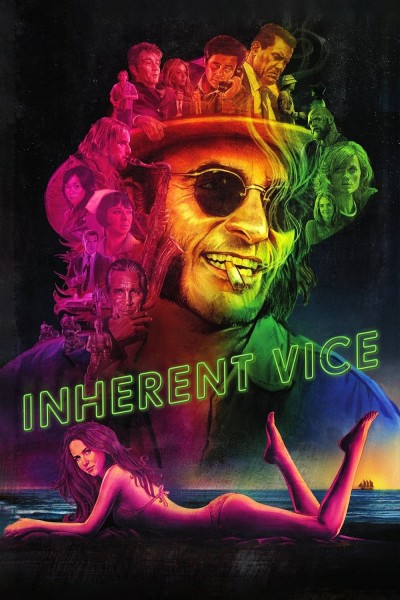
The reception of Anderson’s 2014 adaptation of Pynchon’s 2009 novel, Inherent Vice, exposes some of the core tensions of this ideological conflict and, thus, serves as a useful case in point. Drawn from the larger body of Pynchon’s work, which includes the notoriously challenging novels V, The Crying of Lot 49, Gravity’s Rainbow, Mason & Dixon, Bleeding Edge and Against the Day—in which readers encounter stories teeming with strange and irreverent characters and driven by bizarre themes that flout narrative conventions. Given such qualities, and the utilization of chaos, undecidability and fractured temporality, Pynchon’s works have come to exemplify American postmodernism.
Due to the disorienting effects Pynchon’s innovations had on some readers, bolstered by prudish claims of “obscenity,” one that has been leveled against artists since the age of yore to, well, suppress that which is human and make profane desire and sensuality in art and literature (as anyone who has happened upon a piece of ancient Greek statuary with a penis lopped off or genitals covered with fig leaves has seen the results of), the jury’s selection of Pynchon’s ‘ambitious’ Gravity’s Rainbow for the Pulitzer Prize for Fiction in 1974 became mired in controversy. The result of all this cultural handwringing was that the award, which one critic writing in The New York Times described as already degraded to near irrelevance after having “been bestowed with dreary regularity on the lame, the halt, the blind and the folksy,” was not given at all. Indeed, cancel culture, even amongst the learned and intellectual, is nothing new.
Rather than putting Pynchon in his place, the kooky and narrow-minded decision of the hopelessly bland Pulitzer Advisory Board, which has a history of faithlessness in its own jurors, did little more than drive even greater sales—not a small feat for a novel clocking in at a cool 760 pages even by the standards of the seventies. The decision also brought increased attention to Pynchon, amplifying a status that was already becoming renowned due to his reclusive personality.
Far from damaging Pynchon’s reputation and depriving him of his livelihood, the decision validated his eschewal of the cult of personality that many iconoclasts seek to cultivate in favor of the image of a mysterious literary hermit, one that perfectly mirrored the alleged inscrutability of his fiction. It’s an image celebrated in an illustration on the cover of a critical study of Pynchon’s work published in 1974, in which the subject is portrayed in a headshot taken from behind. Pynchon’s elusiveness was similarly highlighted in an appearance on The Simpsons—a sure sign one has achieved American pop culture fame—as depicted wearing a paper bag over his head to disguise his appearance.
In paying homage to this American literary icon, Anderson’s brilliant cinematic adaptation of Inherent Vice follows the bumbling, drug-addled detective, Larry ‘Doc’ Sportello (Joaquin Phoenix) in trying to solve a mystery that soon multiplies and tangles into a mishmash of other mysteries in ways that make it irresolvable. With Anderson replacing Pynchon as the mysterious figure centered amongst a group of weavers working in a tower to create reality as depicted in the Remedios Varo painting referenced in Lot 49, the world projected back to us through Inherent Vice is made less dense and lighter in tone. A move, even with its limitations, that strives to introduce Pynchon’s style and mode of inquiry to a new generation of fans.
Even with Pynchon’s disorienting take on Los Angeles, a city Jean Baudrillard referred to in America as “merely an inhabited fragment of the desert,” and the expansive but baffling storyline, Anderson’s take on Inherent Vice was still met with positive reviews. One reviewer writing in The New Yorker, for example, said that Anderson “deserves an award for valor” for his attempt at adapting Pynchon’s work, which is something that had never been done “for the same reason that nobody has managed to cram the New York Philharmonic into a Ford Focus.” While Matt Zoller Seitz on RogerEbert.com, in comparing it to the Coen Brothers’ comic masterpiece, The Big Lebowski, called it “a richer, deeper, sweeter, equally funny movie.”
Despite such lofty praise, not all viewers were in agreement about the film’s artistic achievement. From its release, a high number of audience walk-outs were reported at theaters across the country, even while critics asserted that it was a film that “impresses us by seeming uninterested in impressing us.” The prevalence of such divergent reactions amongst critics and moviegoers can seemingly be traced to its postmodern trappings--elements that have bolstered the film’s cult status.
For admirers of Pynchon’s work, one of the most interesting things about the vexation the film produced amongst audiences is its sheer irony. Adding substance to this situation, Steve Rose writing in The Guardian called Inherent Vice the “season’s most baffling experience,” attributing the negative viewer response to the inability of some viewers to understand the film’s storyline and peculiar narrative style. For those familiar with the novel, or any of Pynchon’s other indulgently complicated works, the lack of narrative cohesion is to be expected.
After all, in the realm of Pynchon’s mind-bending storylines and love for narrative play, the interpretive challenges presented by Inherent Vice are precisely the point. This is reflected in Sancho Smilax’s (Benicio Del Toro) response to Doc’s musings about a large sailboat somehow associated with the enigmatic and inexplicable entity of the Golden Fang that he stumbles upon during his investigative wanderings, “she's not just a boat Doc . . . she's much more than that.”
It’s not that facts and truth don’t exist; we simply lack access to them. Faced with the kind of existential uncertainty central to Inherent Vice, perhaps, the accounts of audience walkouts can be best perceived as flight from the sense of distress and confusion the narrative is intended to provoke.
Such reactions recall a similar, although less acute, sense of bewilderment wafting through the lobby of a chic movie theater in a suburb of Denver following a screening of Ridley Scott’s The Counselor a year before. From what I could pick out from the mutterings of that largely affluent, youthful audience as they left the theater, and whom no doubt saw themselves as hip and intellectual, came from a similar place of confusion and dissatisfaction as one person exclaimed, “what the fuck did I just watch?” Like Inherent Vice, The Counselor is a story written by another icon of contemporary (postmodern) literature, Cormac McCarthy, with Scott’s film reductively described in the New York Times as a “tale of mostly evil.”
In contrast to the strong sense of uncertainty that pervades Inherent Vice, with The Counselor it is the spiraling of horrific and inescapable consequences set into motion by the decisions and actions of the film’s characters, motivated by greed or lust, that gives the film its visceral punch. Westray (Brad Pitt), the go-between who organizes the sizable drug deal forming the film’s central action, serves also to reveal the film’s morality. In a conversation with the Counselor (Michael Fassbender) to shore up the deal, Westray shares his decidedly cynical worldview in justifying his actions, “I’ve seen it all, Counselor. It’s all shit. It’s all shit.” A statement that emphasizes the core distinctions between a film that arrives at a conclusion that forces us to reflect on our own entanglements in worlds we would rather see ourselves apart from, and Anderson’s in its simple refusal to provide any resolution at all.
Such narrative dissimilarities are further emphasized by Westray in remarking on the Counselor’s unsettledness, before offering a final warning about the people they will be dealing with: “Here’s something else for you to consider. The beheadings and the mutilations? That’s just business. You have to keep up appearances. It’s not like there’s some smoldering rage at the bottom of it.” In a subsequent meeting after the deal has gone to hell, Westray reminds the Counselor of the nature of his associations, “if you think you can live in this world and be no part of it, then all I can say is you’re wrong.”
The sense of utter hopelessness for the fates of the characters that settles by the time one gets to the bleak conclusion of The Counselor carries with it the realization that despite how much we might try to control the world, all the energy we might expend towards such ends will be revealed as impotent. Whereas, in Anderson’s Inherent Vice, the intellectual impasse results from our inability to ever get a clear sense of the status of reality itself. These are distinctions further emphasized in Scott’s final scenes, for instance, in which viewers witness in quick succession the violent deaths of most of the main characters as little more than the unavoidable result of their own actions (and inactions). The logic behind these pitiless eventualities are left to be revealed by the cartel Jefe in response to the Counselor’s desperate appeal for mercy as he is told, “actions create consequences which produce new worlds . . . you have to acknowledge the reality of the world you’re in . . . you are the world you have created.”
These chilling words, and the larger conversation from which they are drawn, mark the inescapable doom that the titular character bears witness to as a state of utter hopelessness, horror and despair. His story culminating in the ghastly image of his fiancé’s (Penélope Cruz) headless corpse being bulldozed under a wave of garbage in a municipal landfill. This grim resolution is interspersed with cuts to other scenes showing the graphic deaths of both Westray and the Counselor’s partner, Reiner (Javier Bardem), who brought him in to the get-rich-quick drug smuggling scheme. Reiner is unceremoniously gunned down by cartel bagmen in an attempted kidnapping outside his posh El Paso estate, while the fleeing Westray is tracked to London and decapitated on the street in front of horrified onlookers via a grisly mechanized device--foreshadowed in the story--known as a bolito.
The Counselor is left alive to be forever haunted by the path of destruction and death his thoughtless actions have wrought. The other survivor from his group is Reiner’s partner, Malkina (Cameron Diaz), who plays the role of sexy femme fatale and apex predator to perfection. It is she, of course, who is revealed to have orchestrated the highjacking of the drugs that results in much of the carnage that takes place throughout the film and in its searing final scenes. In a conversation with a banker (yeah, they are often complicit in the murder and mayhem McCarthy builds his stories around) with whom Malkina works to secure the fruits of her schemes, she coolly articulates the desolation that the film glaringly exposes, “I suspect that we are ill-formed for the path we have chosen. Ill-formed and ill-prepared. We would like to draw a veil over all the blood and terror that have brought us to this place. It is our faintness of heart that would close our eyes to all of that, but in so doing it makes of it our destiny.”
The point, of course, is that once we have set our paths through our own actions, there is no escape from the fate that awaits us. Who, having read any of McCarthy’s works from the likes of Outer Dark, Child of God, Blood Meridian, No Country for Old Men, or the 2006 Pulitzer Prize winner, The Road, would expect anything different?
Although reflecting a wide divergence of themes and issues, the trouble that some viewers of films adapted from such books have lies not merely in the aesthetic qualities that their respective directors employ to achieve a successful transition from word and text to sound and image. Another salient point lies in the natural resistance of audiences to films that refuse easy interpretation, a feature that is practically inherent to the complexity of postmodern fiction. While those familiar with the novels of this category are often more accepting of common features associated with them, the carrying over of these strategies into the realm of film in which the resistance of redemptive endings and foreclosure of prospects for blissful resolution as a form of escapism, can be especially disorienting to moviegoers not expecting it.
After all, twenty first-century cinematic adaptations of other contemporary works of literature such as No Country for Old Men (2007), Incredibly Loud & Extremely Close (2011) as well as American Psycho (2000) and The Informers (2008), play much like their author’s intended but also much to the chagrin of some audiences. Despite the literary pyrotechnics these writers employ to complicate their stories, all work to express similar ideas and philosophic perspectives highlighting the absurdity and danger of blinding optimism, or worse yet, the high costs of social and political withdrawal.
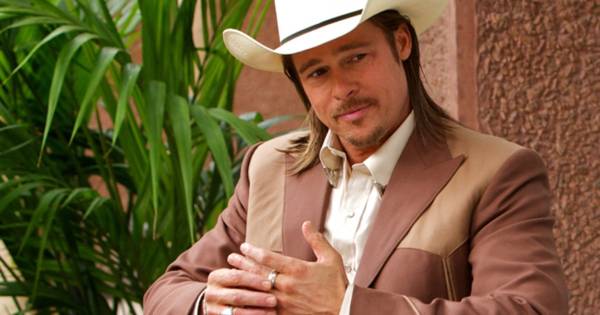 The Counselor
As a troubling example of such real-world impacts, we need only look back at Trump’s morphing from a boorish and goofy New York City socialite, who even made an ironic appearance in Bret Easton Ellis’ American Psycho, into a deranged would-be dictator and true American psycho. All this, despite being soundly defeated in the 2020 election, while continuing to claim the election was stolen and make belligerent calls for the suspension of the Constitution itself. To say nothing of his stacking of the federal judiciary with rightwing ideologies that, if the Supreme Court’s last session is any indication, will have a corrosive effect on American democracy for decades to come.
The increasingly hostile social environment and sharp turn towards historical relativism in which basic facts are now routinely called into question under waves of ever-more deluded and outlandish conspiracy theories, only contribute to a broadening collective paranoia. Such are the suspicions and fears that writers like Thomas Pynchon have long been drawing on, feelings and sentiments that have become turbocharged since the release of Inherent Vice. What we are now seeing, which films like The Counselor and Inherent Vice try to convey, is the truth, seen as nihilistic to some, that “right” and “good” do not always, or even usually, prevail in a world where selfishness, greed, apathy and willful ignorance have displaced the erstwhile hollow Christian virtues and conservative moral imperatives of our mythic American past.
A significant point of intellectual estrangement and dysrecognition within this more expansive epistemological context lies not just in the articulation of a writer or director’s unique artistic vision. It also dwells in the responses of audiences (or are we speaking purely of consumers now?) made up of increasingly less well-read and socially engaged people having also grown more averse to thinking critically about the world in which we all live. Perhaps such an effect is only to be expected given the challenging nature of contemporary literary fiction and the cinematic adaptations that such work inspires.
A situation exacerbated by needs and desires driven by the wide availability of knowledge made possible by the internet, whereby practically anyone can play the role of hipster intelligentsia and purveyor of literature, film and the arts without the bother of having to actually study any of these fields, or at least deeply. The proliferation and diffusion of such textually detached perspectives is merely to be expected in an age in which Wikipedia has rendered the Encyclopedia Britannica and other once-essential reference books obsolete. But maybe that’s a good thing, too.
Returning to Inherent Vice, it seems clear that part of the challenge implicit to acts of reading and interpretation, along with the failure of critical thinking that contributes to audience attrition, spring, at least in part, from the destructive and intellectually debilitating effects of ongoing cuts to public education and the resulting devaluation of the arts and humanities among large segments of the American population. This, at least if Anderson’s story of encountering Pynchon in school himself is to be taken seriously. Hence, the inability and/or unwillingness of readers and audiences to embrace the role of active participant in the social and cultural experience of film (and literature) through a perception informed by an openness to new ideas and critical thought, rather than as passive consumers, diminishes the potentiality of what a world infused and given meaning through art and literature can be and become.
The most accomplished and influential writers and filmmakers will continue to be those who display a boldness and confidence in the expression of their creative visions, while striving to meet audiences at a place where defining and knowing are put in question and are always uncertain. If we are to wonder whether and what writers and filmmakers like Pynchon and Anderson or McCarthy and Scott think about how audiences react to their work, I’d expect that they might just find the bewildered reactions to Inherent Vice and The Counselor both sad and yet oddly satisfying. Not for what it says about the nature of the stories they’ve created, but as a reflection and confirmation of the most fundamental object and aims of their aesthetic and philosophic projects.
