

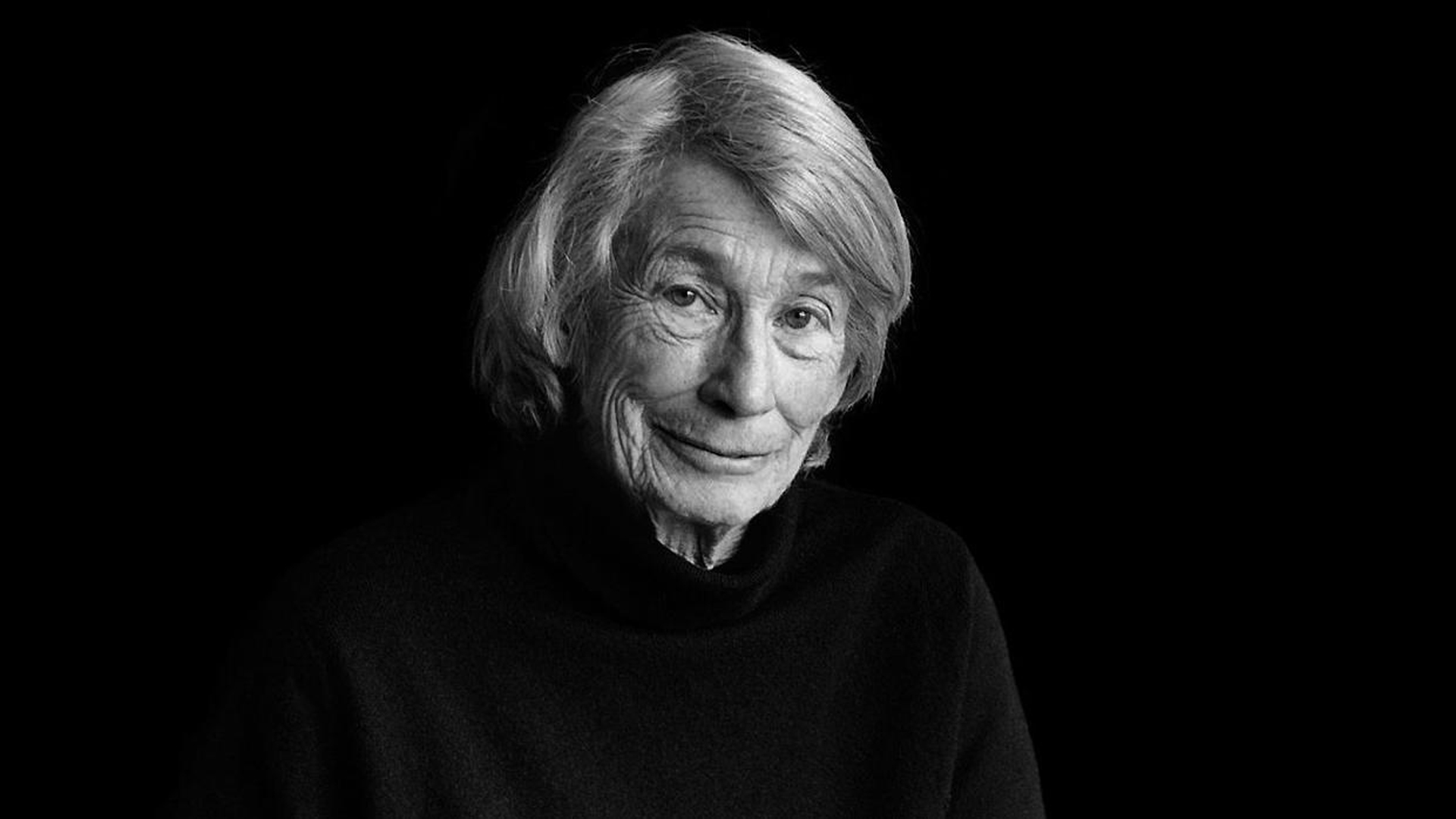

Living by the seaside in Provincetown, Massachusetts for about a half century, she had plenty of opportunities to observe sea as well as land life, and the inanimate world that accompanied both.
As more people began working at home and avoiding social contacts during the covid-19 pandemic, loneliness became increasingly widespread. Even earlier in 2019 in the U. S., however, three in five people surveyed reported feeling lonely, and almost one-fourth of those 65 and older were considered socially isolated. In an 8 January, 2023 segment of the PBS Newshour, Yale psychology professor Laurie Santos indicated that the loneliness problem was “pretty bad. It's often talked about as an epidemic.…Some surveys reveal that around 60 percent of people in the U.S. right now report feeling lonely on a pretty regular basis…This is worse than rates of obesity.”
Increasing our human contacts is one way to overcome loneliness, but another is for us to realize our oneness with other forms of life—the non-human ones found in nature, whether they be in the animal or non-animal world like the sun, moon, flowers, or trees.
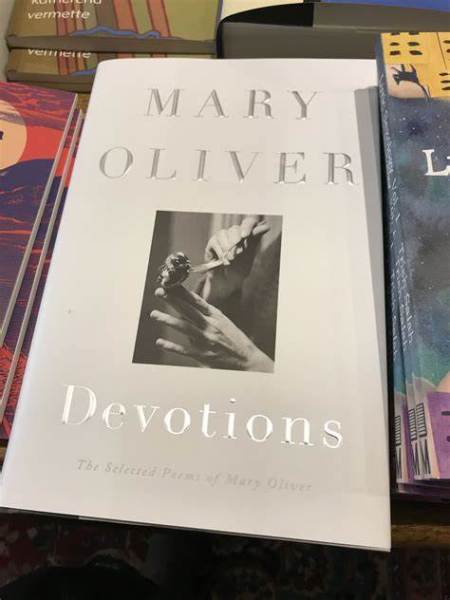
One modern poet—she died in 2019—who wondrously helps us toward that realization is Mary Oliver, whose poetry earned her a Pulitzer Prize in 1984 and a National Book Award in 1992. Before me, I have Devotions (2017), which one reviewer described as “a greatest-hits compilation,” and which starts with selected poems from her 2015 collection From Felicity and ends with selections from collections in 1965 and 1963. (Many of Oliver’s poems are also available on the Internet, see, e.g., here.) To keep this essay from being too lengthy, with the exception of “Wild Geese” (one of her best known poems, published in 1986’s Dreamwork), I’ll limit it to just citing her poems published from 2000 to 2015 (241 pages of poems) and reprinted in her Devotions.
To begin with there is a poem from a 2014 collection which speaks to “mother earth” helping us to overcome loneliness.
“Loneliness”
I too have known loneliness.
I too have known what it is to feel
misunderstood,
rejected, and suddenly
not at all beautiful.
Oh, mother earth,
your comfort is great, your arms
never withhold.
It has saved my life to know this.
Your rivers flowing, your roses opening in the
morning.
Oh, motions of tenderness!
Then from her earlier poem “Flare” we read, “When loneliness comes stalking, go into the / fields, consider / the orderliness of the world. Notice / something you have never noticed before.” And from still earlier,
from “Wild Geese”:
Whoever you are, no matter how lonely,
the world offers itself to your imagination,
calls to you like the wild geese, harsh and exciting
—
over and over announcing your place
in the family of things.
Starting with the inanimate world, Oliver senses her oneness with it, and believes it testifies to a creator. In “Why I Wake Early” she writes, “Hello, sun in my face…best preacher that ever was.” In her poem “At the River Clarion” we read, “Said the river: I am part of holiness. / And I too, said the stone. And I too, whispered / the moss beneath the water.” Sometimes she even half wonders if inanimate existence is really without life—see, e.g., “Do Stones Feel?”
Living by the seaside in Provincetown, Massachusetts for about a half century, she had plenty of opportunities to observe sea as well as land life, and the inanimate world that accompanied both. But even before moving to Provincetown when she was in her late twenties, she had been a careful observer of nature. Near the area where she was born (in 1935), a Cleveland suburb, is Stebbin’s Gulch, which is also the title of one of her poems. In it she writes of the water that flows in it, “to descend / and to be beautiful / while it does so; / as for purpose / there is none, / it is simply / one of those gorgeous things / that was made / to do what it does perfectly / and to last.”
She often writes of flowers, for example in “I Know Someone” there are these lines: “Flowers are sweet. They have / short, beatific lives. They offer / much pleasure. There is / nothing in the world that can be said / against them.” In “Passing the Unworked Field” she states that the flower “Queen Anne’s lace…makes all the loveliness it can.” Similarly, she loves a wide variety of trees. In “When I Am among the Trees” she writes, “especially the willows and the honey locust, equally the beech, the oaks and the pines, they give off such hints of gladness. I would almost say that they save me, and daily.”
In “Just Lying on the Grass at Blackwater,” she muses “that it might be wonderful to be lost and happy inside the green grass.” And she finds pleasures in the changing seasons. In “Whistling Swans” there are these lines: “There is no proof of the soul. / But isn’t the return of spring and how it springs / up in our hearts a pretty good hint.” In “I Own a House” she writes of the “beautiful faces” of summer clouds.
In the animate world, she appreciates all sorts of animals, both on land and sea. In “Mink” she writes, it “was the gift of the winter to see him.” In “Almost a Conversation” she tells us that she has “not yet, talked with otter about his life. He has so many teeth, he has trouble with vowels…He has no words, still what he tells about his life is clear. He does not own a computer…He does not envy the dry house I live in.” “Winter at Herring Cove” recalls two seals she once saw—“Of all the reasons for gladness, what could be foremost of this one, that the mind can seize both the instant and the memory!” In “One Hundred White-Sided Dolphins on a Summer Day,” she writes that “each one, as God himself / could not appear more acceptable.”
Birds and dogs, however, seem to be her favorite living subjects. Three of her twenty-first century collections—Owls and Other Fantasies (2003), Red Bird (2008), and Swan (2010)—mention birds in their titles, and the flicker, dipper, thrush, meadowlark, goldfinch, mockingbird, vulture, bluebird, catbird, sparrow, tern, heron, swan, goose, and loon are among the birds she mentions. Typical of her sentiments are these lines from “The Swan”: “And did you feel it [the swan], in your heart, how it pertained / to everything? / And have you too finally figured out what beauty / is for?”
From her 2013 collection, Dog Songs, Devotions offers us ten poems. Being a former professor and for decades being a father to not only three kids, but sort of a surrogate dad to 5 dogs (and now fostering three-legged “Junior”), my favorite among the ten is “The Poetry Teacher.” It begins,
The university gave me a new, elegant
classroom to teach in. Only one thing,
they said. You can’t bring your dog.
It’s in my contract, I said. (I had
made sure of that.)
And ends:
Then they would all arrive—
Ben [her dog], his pals, maybe an unknown dog
or two, all of them thirsty and happy.
They drank, they flung themselves down
among the students. The students loved
it. They all wrote thirsty, happy poems.
At times, Oliver mixes in the inanimate and animate with God: “If God exists he isn’t just churches and mathematics. / He’s the forest, He’s the desert. / He’s the ice caps, that are dying…He’s every one of us, potentially. / The leaf of grass, the genius, the politician, / the poet.” In her poem “Six Recognitions of the Lord” she writes, “I have always known you / are present in the clouds, and the / black oak I especially adore, and the / wings of birds. But you are present / too in the body.” And her “On Thy Wondrous Works I Will Meditate” reads, “So it is not hard to understand / where God’s body is, it is / everywhere and everything; shore and the vast / fields of water, the accidental and the intended / over here, over there…[But] where, do you sup / pose, is His / pale and wonderful mind?”
Her last line, asking where is God’s mind, is typical of her approach and why I find her poetry so appealing. She enjoys—even relishes—the beauty of the world—in “Mindful” she begins, “Every day / I see or I hear / something / that more or less / kills me / with delight.” She possesses good values, yet she has the humility to recognize there is much she doesn’t know. And she realizes that, like all humans, she has her flaws and imperfections.
Consider the following. In “On Thy Wondrous Works I Will Meditate” she writes: “Every morning I want to kneel down on the golden cloth of the sand and say some kind of musical thanks for the world that is happening again.” “Six Recognitions of the Lord” possesses these lines, “in summer there is / everywhere the luminous sprawl of gifts, / the hospitality of the Lord and my / inadequate answers as I row my beautiful, tempo / rary body / through this water-lily world.” In her poem “Sometimes” she admits, “I don’t know what God is. / I don’t know what death is.” “Daisies” states, “I could be wrong…What do I know.” And What Do We Know? is the title of her 2002 poetry collection.
Among her top values, besides humility, are gratitude for the beauty of the world (“A lifetime isn’t long enough for the beauty of this world”), love, and empathy. In “From the Book of Time” she quotes Plato, “Whoever shall be guided so far towards the mysteries of love, by contemplating beautiful things rightly in due order, is approaching the last grade.” In her “Sometimes” she tells us, “Pay attention. / Be astonished.” And then she adds, “Two or three times in my life I discovered love. / Each time it seemed to solve everything. / Each time it solved a great many things / but not everything. / Yet left me as grateful as if it had indeed, and / thoroughly, solved everything. In “To Begin with, the Sweet Grass,” she writes: “Love yourself. Then forget it. Then, love the world.” In “Honey Locust” we read, “So it is if the heart has devoted itself to love, there is not a single inch of emptiness. Gladness gleams all the way to the grave.”
Her empathy is reflected in her “Gethsemane,” where she understands how human imperfection kept the few apostles who accompanied Jesus from staying awake: “Oh the dear bodies, slumped and eye-shut, that / could not / keep that vigil, how they must have wept, / so utterly human.”
Her realization that we are all imperfect, however, does not mean that she is reluctant to criticize our culture. In “Of the Empire” she states, “We will be known as a culture that taught and rewarded the amassing of things, that spoke little if at all about the quality of life for people (other people), for dogs, for rivers. All the world, in our eyes, they will say, was a commodity.” To many progressives this will seem a fair criticism of our consumer culture which pays too little heed to climate change, maintaining a sustainable world, and social justice.
Oliver’s empathy stems in part from her realization of her own imperfections. In “I Worried” she starts off saying, “I Worried a lot,” and later on asks herself, “Is my eyesight fading or am I just imagining it, / am I going to get rheumatism, / lockjaw, dementia? / Finally I saw that worrying had come to nothing. / And gave it up.” Like the ideal Christian, she realizes that worrying so much is not the way of Jesus and tries to follow the advice he gave in the Bible: “Therefore I tell you, do not worry about your life, what you will eat or drink; or about your body, what you will wear. Is not life more than food, and the body more than clothes? Look at the birds of the air; they do not sow or reap or store away in barns, and yet your heavenly Father feeds them. Are you not much more valuable than they? Can any one of you by worrying add a single hour to your life?”
Although her poetic caution not to worry too much fits in with advice from Jesus, a short piece on her spirituality observed that “her faith doesn't neatly fit into any one organized religion.” Rather her viewpoint is more akin to what Aldous Huxley once described as the “perennial philosophy” a “metaphysic that recognizes a divine Reality substantial to the world of things and lives and minds.” And one, as Huxley added, that “may be found among the traditional lore of peoples in every region of the world, and…has a place in every one of the higher religions.” It also “has a place” in much of the poetry of poets like Blake, Wordsworth, Keats, Shelly, and Whitman.
Mary Oliver’s poetry—wondrous indeed.
