

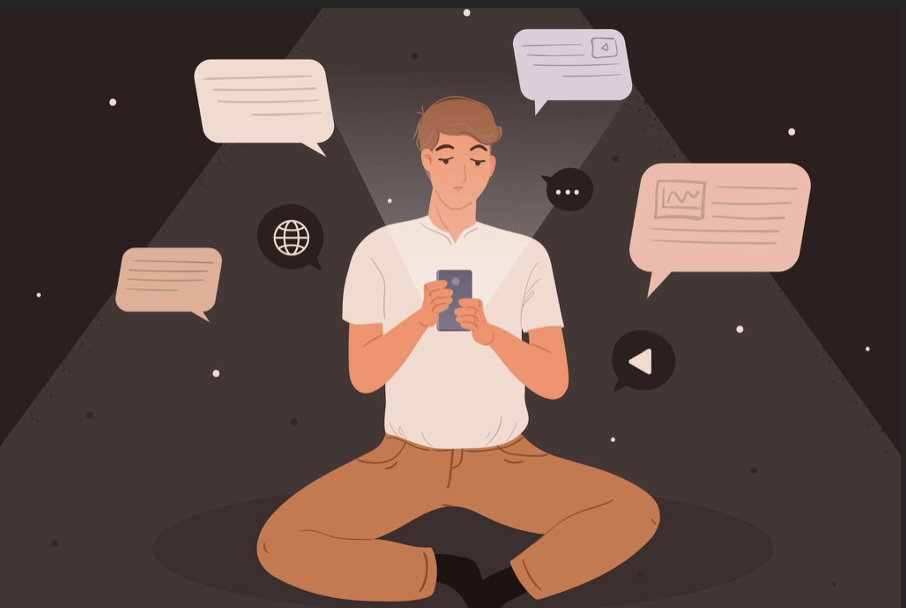


The length of your attention span is on a decline, and the statistics tell you the whole story.
Did you realize that now on average you have a shorter attention span than that of a goldfish? This radical change in the capacity of attention is referred to as the attention economy.
You had plenty of attention a long time ago; lately, you have little of it. Ironically, this implies that as a maker, you are not only not intended to produce good stuff, you have to produce stuff that will make your audience stand up and pay attention before scrolling down.
The current article takes a deeper look at the science beyond attention spans, the effect it has on your content strategy, and the next steps you may consider to win the battle for views and interaction.
The Shrinking Attention Span - By the Numbers
The length of your attention span is on a decline, and the statistics tell you the whole story. The commonly shared study shows that your attention span of 8.25 seconds has now dropped down to that of a goldfish (9 seconds) — a shocking statistic.
Under the study of Dr. Gloria Mark, your average time spent focusing on a screen has fallen from 2.5 minutes in 2004 to approximately 47 seconds. No wonder many people now accuse “doomscrolling” with cognitive decline and over 50% of teenagers saying that their attention span has deteriorated with time.
Researchers at LMU Munich found out that quick-cycle platforms adversely affect prospective memory and your capacity to remain on task. Human brains are increasingly acclimatized to rapid and passive consumption due to the astonishing figure of 138.9 million Reels watched every minute.
Why Your Brain Loves to Scroll (The Science of Distraction)
● Scrolling is not a chosen behavior; in fact, it is primarily physiological.
● Your brain corresponds closely to a constant dopamine loop that social platforms created in reaction to variable rewards.
● The human cognitive system is rudely hijacked by colorful notifications and eye-catching designs.
● Each transition from a film to a video results in a “switching cost”—the cognitive lag and energy loss inherent in forcing rapid switches.
● As neurons become more attuned to bursts of distraction, your body slows down and presses the panic button constantly.
● You're effectively multitasking when in fact you're simply shifting between tasks rapidly— this limits the potential for reaching a "flow state".
The Creator's Dilemma: Crafting Content for a 47-Second Window
As a creator, you are confronted with a baffling dilemma with these scientific understandings. You have up to 3 seconds to convince your audience that your material is worth it or your content gets lost in the noise. The world has grown sensitive to raw and authentic content, and vintage and polished videos are rarely popular.
In order to engage the distracted consciousness, breaking the scroll pattern is also essential; unexpected visuals, segments of audio, or text over the screen works well.
With micro-cinema, short content must be imaginative to make the most of these few seconds and become cinematic. Furthermore, modern creators do not need to chase views; they must entice participation.
The 'Social Proof' Shortcut in a Low-Attention World
When the attention available is scarce, social status can be more precious than the actual content. Users in such settings only have a second to develop trust and thus rely on mental chunks; a video with a high follower count or a good engagement rate seems worth their time.
On social media platforms, the popular get even more popular. For new creators, encouraging social proof at the outset can enable algorithms to respond positively to their content altogether.
More likes mean higher value — so users are likely to stop scrolling when they see a promising video. Although natural growth is a must, visibility before burnout is required and services like the ones offered by subscriberz.com can be very useful in giving a head start.
Platform-Specific Strategies to Win Focus
To grab the attention of the audience within the restricted time frame, tailor strategies according to the platform. On platforms like TikTok and Instagram Reels, utilize combined storytelling and engaging content every second before losing your impact.
YouTube is experiencing a return of long, authentic content as viewers become ready to devote attention to deeper engagement. The carousel format re-engages people's minds visually because they force users to swipe deliberately, enabling slower consumption than passive video scrolling.
LinkedIn provides a thought-provoking dialogue, where it is simple to convey your message in a professional context. Contact becomes memorable in our constantly dependable digital world because of the new thrill of merging physical experience with online experience (pop-ups or events).
Conclusion
Creators, by definition, are battling not only against algorithms, but also against human biology, which has been evolving over millions of years. For you to win the battle, you need skillful scientific hook, genuine relationship, and social proof.
In the world where every minute of attention is sacred, every creator must strive to make the best of story-telling, find social proof, and involve viewers.
Sources
