

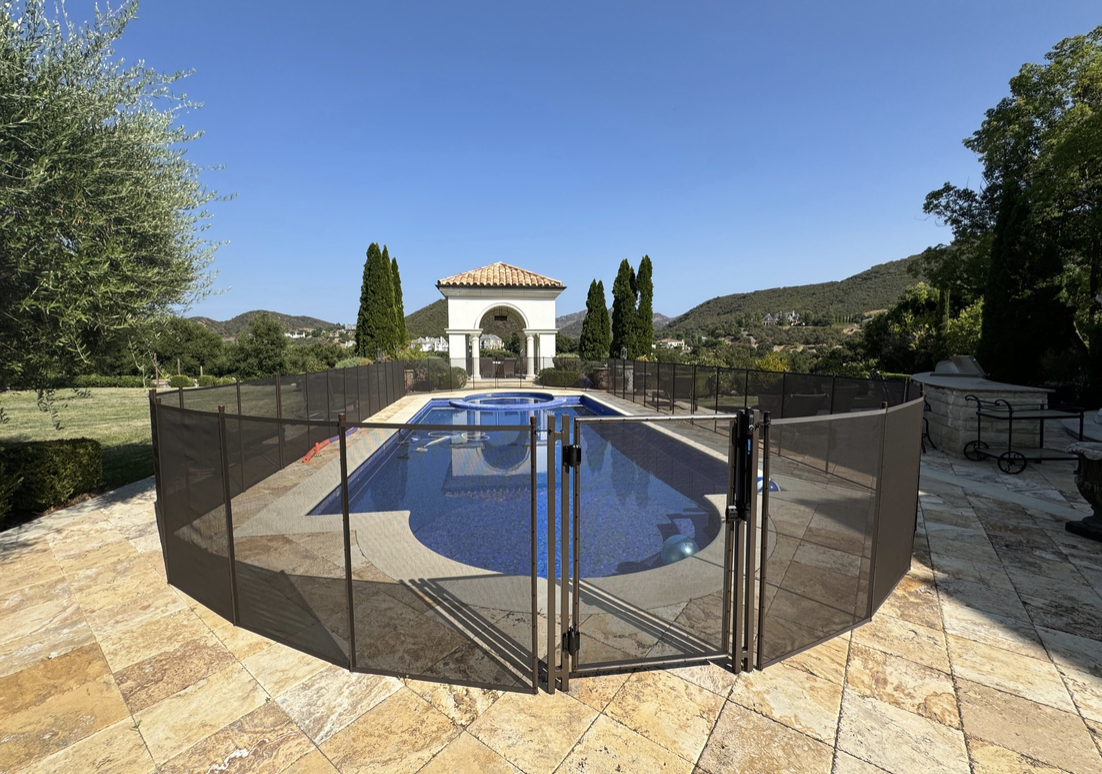


Mesh fencing depends on tension more than rigidity. In humid regions, materials hold a little elasticity. In dry climates, they don’t.
Mesh fencing almost always looks right when it’s new. The lines are straight, the tension feels firm, and nothing suggests future problems. In dry climates, that first impression is misleading. Sag does not show up early because it is not caused by installation error in the obvious sense. It shows up later, after heat, gravity, and time have had enough chances to work on the same weak points.
Post spacing determines where that weakness lives.
Dry Conditions Change How Mesh Loses Tension
Mesh fencing depends on tension more than rigidity. In humid regions, materials hold a little elasticity. In dry climates, they don’t. Heat dries everything out and removes whatever rebound the mesh had at install.
As temperatures rise during the day and fall at night, the mesh expands and contracts. Each cycle steals a small amount of tension. When posts are spaced too far apart, that loss concentrates in the middle of each span. The fence does not snap or fail. It just stops pulling itself straight.
Sag Starts Where You’re Not Looking
Most sag starts between posts, not at them. Wide spacing creates long unsupported runs where gravity has more leverage. The mesh stretches microscopically, then settles. The posts stay plumb, which is why installers often miss the early signs.
From a distance, everything still looks aligned. Up close, the mesh no longer carries load evenly. Once that redistribution happens, sag becomes part of the fence’s shape.
Heat Makes Gravity More Effective
Gravity is constant. Heat makes it efficient. In dry climates, high daytime temperatures soften mesh slightly, even if it doesn’t feel flexible when touched.
That softness allows downward creep over long spans. The process is slow enough that it doesn’t trigger concern until the visual line changes. By then, the mesh has already stretched into its new position.
Post Spacing Controls Stress Sharing
Closer post spacing gives the fence more places to distribute stress. Instead of one long section absorbing movement, shorter spans share the load.
This matters in dry climates because tension loss is permanent. Mesh does not tighten itself back up once it relaxes. Wider spacing assumes recovery that never comes.
Temperature Swings Matter More Than Peak Heat
Dry regions often cool off quickly at night. That swing is harder on mesh than constant warmth.
Repeated expansion and contraction cause micro-movement at sleeves and fasteners. With wide spacing, those movements add up faster. The mesh shifts slightly each cycle until the fence settles lower than where it started.
Corners And Transitions Reveal The Problem First
Sag rarely appears evenly across a run. It shows up near corners, gates, and layout changes.
This happens because spacing often varies near transitions. Tighter sections resist movement. Wider sections give way. The fence pulls unevenly against itself, making sag look like a local issue when it’s actually a spacing problem along the entire run.
Retensioning Has Limits In Dry Climates
Once mesh sags, tightening it back up is rarely a clean fix. The material has already stretched and redistributed load.
In dry climates, repeated retensioning accelerates wear. The mesh may look better temporarily, but the same forces are still at work. Sag usually returns faster the second time.
Thicker Mesh Doesn’t Solve Bad Spacing
Thicker mesh delays sag. It does not prevent it.
Load still concentrates at the center of wide spans. Over time, even heavy mesh gives way if spacing asks it to carry too much unsupported weight. Proper spacing does more for longevity than material upgrades alone.
Wind Adds Side Load That Steals Vertical Tension
Dry climates often come with steady wind. Wind pushes mesh sideways, bowing it between posts.
Each bow reduces vertical tension slightly. When the wind drops, the mesh does not fully rebound. That lost tension compounds with heat-driven relaxation, especially in wider spans.
Climate-Specific Planning Matters
Spacing guidelines that work in moderate climates don’t always hold up in arid ones. Dry air removes the margin of error that moisture provides.
This is why mesh pool fence installation in California requires spacing decisions that account for long-term behavior, not just code compliance. A fence can meet minimum requirements and still sag early if spacing ignores climate reality.
Sag Is A Structural Signal
Sag is often treated as cosmetic. It isn’t. It signals uneven load and accelerated wear.
As sag increases, stress concentrates at posts and fittings. Hardware loosens faster. Mesh fibers fatigue unevenly. The fence loses durability long before it loses function.
Spacing Is The Decision You Can’t Undo Later
Mesh fencing doesn’t fail suddenly in dry climates. It gives you years of warning, if you know what to look for.
Post spacing decides whether that warning turns into a maintenance issue or a full replacement. When spacing is conservative, the fence stays straight with minimal intervention. When spacing is stretched for speed or cost, sag becomes part of the design whether anyone planned for it or not.
