

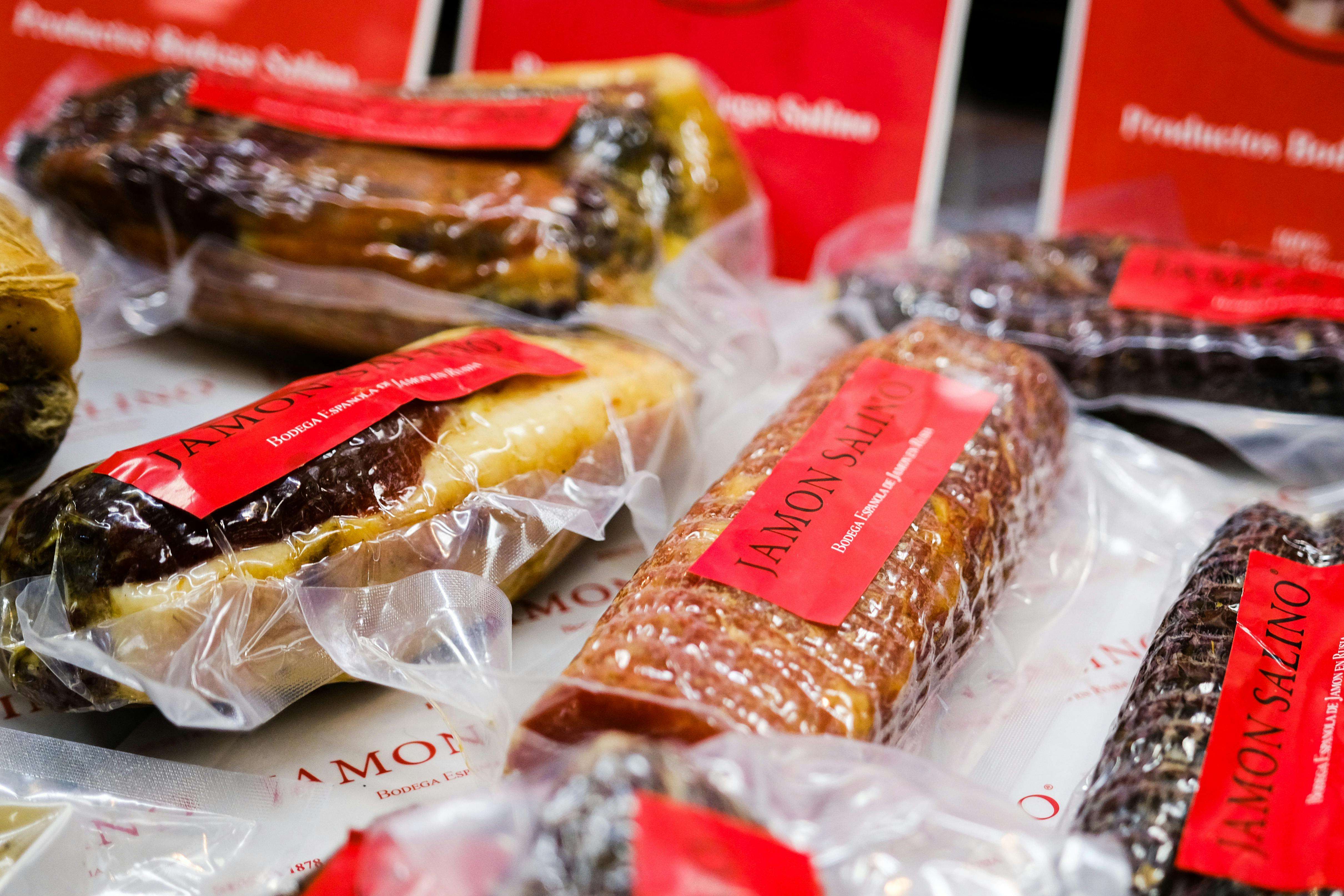


Oxygen plays a role in how volatile compounds lift off the surface when the meat is exposed. Remove oxygen completely, and those compounds stay bound longer.
Vacuum packing solved a lot of practical problems for cured meats. It stabilized shelf life, simplified transport, and made portioning predictable. What it did not solve is flavor expression. In some cases, it quietly reshapes it.
This becomes most noticeable in shelf-stable packs. With it, curing is technically finished while flavor is still evolving. Once air is removed, the environment changes in ways that are easy to overlook and hard to reverse.
Flavor Development Does Not Stop At “Finished”
Cured meat does not lock into a final state the moment it becomes shelf-stable. Enzymatic activity slows, but it does not disappear. Fat continues to soften, and aroma compounds shift subtly over time.
Vacuum packing interrupts how those changes present themselves. Without oxygen, certain volatile compounds never fully express. The meat may be stable and safe, but the flavor profile tightens instead of opening.
Oxygen Absence Changes Aroma More Than Taste
Most people describe vacuum-packed cured meats as muted. They are not saying that it’s wrong. That distinction matters. The salt level is usually unchanged. The texture is intact. What feels missing is aroma.
Oxygen plays a role in how volatile compounds lift off the surface when the meat is exposed. Remove oxygen completely, and those compounds stay bound longer. When the package is opened, the aroma release can feel delayed or flattened compared to traditionally wrapped product.
Fat Becomes More Dominant In Sealed Environments
Fat behaves differently under vacuum. In the absence of air exchange, fat oxidation slows dramatically. That sounds beneficial, but it also alters balance.
In open or breathable environments, subtle oxidation contributes to complexity over time. Under vacuum, fat stays cleaner but heavier. The flavor leans rounder, sometimes waxy, with fewer high notes. Lean portions can taste quieter, while fat carries most of the sensory load.
Compression Affects Perception
Vacuum packing applies physical pressure. Over time, that compression changes how moisture and fat redistribute within thin cuts. The structure becomes more uniform, which can dull contrast.
This is especially noticeable in sliced products. Layers press together. Fat migrates slightly. When separated later, the slices lack the sharp transitions that give cured meats their character. The meat tastes smooth, but less expressive.
Shelf Stability Encourages Earlier Packaging
Many shelf-stable products are vacuum-packed as soon as regulatory requirements are met. From a safety standpoint, this makes sense. From a flavor standpoint, it can be premature.
Early sealing locks the meat into a low-oxygen environment before certain secondary flavors have fully developed. What might have gained depth with brief air exposure instead stabilizes early. The result is consistency.
Temperature Control Interacts With Vacuum Effects
Shelf-stable packs experience wider temperature swings during storage and transport. Vacuum packing protects against spoilage, but it does not protect flavor equally.
Without airflow, temperature changes influence fat texture more directly. Warmth softens fat and redistributes aroma compounds inside the package. Cooling firms everything back up without allowing release. Over time, this cycle dulls aromatic lift.
Traditional Products Show The Difference Clearly
The effect of vacuum packing becomes easiest to notice in products with strong regional identity. Take country ham slices as an example. Traditionally, aroma plays as much of a role as salt or smoke.
Aromatics compress inward while the meat is vacuum-packed. The first bite tastes correct, but the room note is subdued. The ham feels quieter, even though nothing is technically wrong.
Opening The Package Is Not Instant Recovery
Letting vacuum-packed meat “breathe” helps, but it does not fully restore what was never allowed to develop. Aroma compounds can release, but structure and balance have already shifted.
This is why thin slicing magnifies the issue. Less mass means less internal reserve of volatile compounds. Once expression is muted, it does not rebound easily.
Why Consistency Wins Over Expression Commercially
Vacuum packing prioritizes predictability. Every pack tastes the same. Shelf life is clear. Handling risk drops.
Flavor expression becomes secondary because it is harder to measure and easier to compromise. The tradeoff is rarely obvious until the product is compared side by side with less sealed versions.
When Vacuum Works And When It Does Not
Vacuum packing excels when the goal is preservation without change. It struggles when the product relies on aromatic nuance and gradual evolution.
For producers, the decision is less about safety and more about intent. Is the goal stability or expression. Shelf life or sensory range. Those priorities determine whether vacuum packing supports the product or quietly reshapes it.
Flavor Is A System
Cured meat flavor is not a switch that flips to “done.” It is a system that responds to air, time, pressure, and fat behavior.
Vacuum packing alters that system in subtle ways. The meat remains stable, recognizable, and safe. What changes is how openly it speaks. Understanding that tradeoff allows producers and buyers to decide what matters more before sealing the bag.
