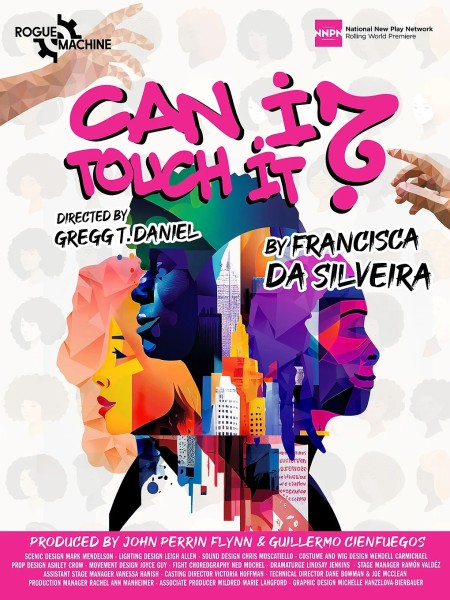

“Can I Touch It?” What Black Women Face

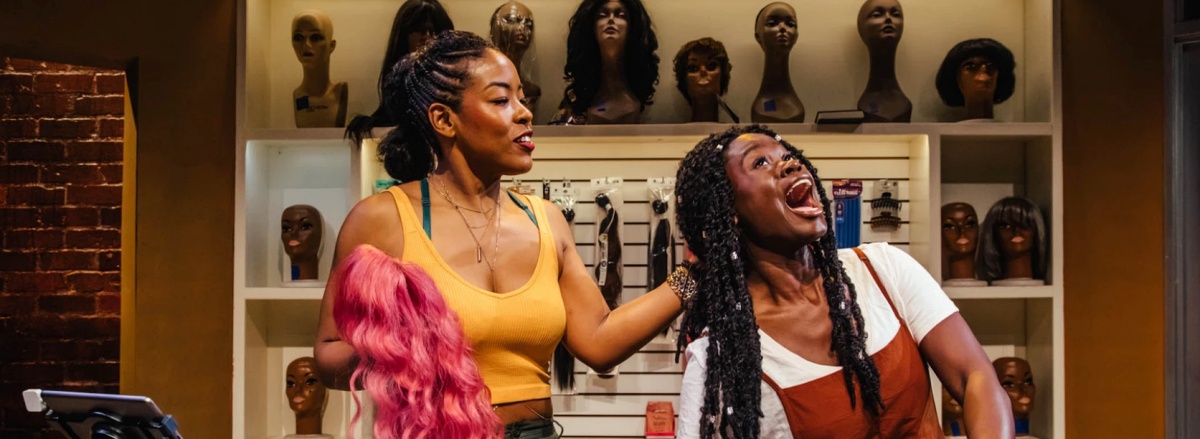
In “Can I Touch It?” a Black widow with a teenage daughter—stands tall, fighting to save her wig shop from a predatory bank that’s gentrifying her long-time home.
We’ve all heard too many stories of Black women blocked from meaningful entry into a white-dominated world. Denied jobs for refusing to cut off their locs, ridiculed for their natural hair and African bodies, asked to touch their dreads: Starting at a young age Black girls and women have to decide to stand tall for who they are or slip on a wig that makes them look more like a white woman.
In “Can I Touch It?” now playing at the Rogue Machine Theatre on Melrose, Shay—a Black widow with a teenage daughter—stands tall, fighting to save her wig shop from a predatory bank that’s gentrifying her long-time home in a Black section of Boston.
In this vibrant, well-acted play, the way well-meaning white people sometimes—too often—ask to touch a Black woman’s natural hair is a metaphor for the struggle Black women and Black people in general must wage to establish their personal dignity while also keeping their own traditional neighborhoods together. That seemingly innocent gesture also signifies an aspect of white supremacy.
Played by Safiya Fredericks, Shay plays the game straight, applying and reapplying for a much-needed loan from the bank that funded her business originally, only to be turned down again and again for suspect reasons
Her younger niece Meeka (Suzen Baraka), who works at the beauty supply store, takes a more disruptive approach—in the streets, on social media—refusing to take the assault lying down. Ruth (Iesha Daniels), the teenage daughter, is willing to give up her scholarship to Northeastern so her Mom can save her business.
Suzen and Iesha play multiple characters, as does Scott Victor Nelson—alternatively a white childhood friend, bank loan officer, and barber—all changing their demeanor and appearance most effectively. In places, the play seems a bit disjointed, but the acting, directing, stagecraft, and sound track are marvelous throughout.
The play’s social justice theme rings strong, as cities like Boston, San Francisco, and Denver—and certainly Los Angeles—have lost striking percentages of their Black population in recent decades, partly because rents have risen so dramatically, but largely due to the systematic racism that denies Blacks real entry into mainstream society in every way you can imagine.
Rogue Machine at The Matrix, 7657 Melrose Avenue, Los Angeles 90046. 855.585.5185. Friday, Saturday, Monday at 8 p.m., Sunday at 3p.m. Through June 11th. More info here.