

It’s Time To Rethink Method Acting


Developing my own approach to acting, divorced from toxic Stanislavski teachers and normative approaches to sense and emotion, has meant creating a method that works for me as an Autistic performer.
When most people outside of the arts think about acting, one technique tends to dominate the imagination: Method acting. Defined as “extreme immersion in a role,” the practice, popularized by Lee Strasberg and inspired by Constantin Stanislavski’s early theories, has long held mythic status as the path to artistic truth. But in recent years, headlines have focused less on artistic achievements and more on its psychological toll.
Actors like Daniel Day Lewis–who reportedly suffered hallucinations as Hamlet in the aftermath of his own father’s death–and Heath Ledger–whose total immersion and weeks of isolation preparing to play DC’s Joker preceded his death from addition-related causes–have fuelled debate over the Method’s darker side.
For some, the Method’s ideal of “truth” on stage has come to justify unhealthy extremes. Yet, many performers and educators now argue that the wellbeing of the artist must be prioritized over the very subjective notion of pure truth and naturalism onstage, and for letting parts of the character “find their hooks” in you and move you to the point of catharsis in the role. There is an alchemy to live arts that perhaps does not need theorising, or is safer when viewed as "opening the channel" to respond in the moment rather than consciously dredging up personal matters in service of the story.
I’m not a Method actor, nor do I think I could have healthily sustained a 10-year career including such roles as Lady Macbeth, Elizabeth Taylor and Hamlet had I been. Since 2019, I have often spoken publicly about the net harms of Method acting, from the exploitation that can happen under the guise of pushing for truth in hierarchical teaching dynamics at drama school to the mental health impact of Method acting on numerous high-profile actors. Both those statements notwithstanding, there have been times in my career where circumstance arguably necessitates a “Method”, or somewhat Method, performance.
In the wake of the #MeToo movement, feminist commentators have questioned the Method’s culture of permissiveness. As one commentator notes, people are finally listening to women who say the behavior typically associated with Method practices creates a toxic work environment. Take Jared Leto’s unhinged “gifts”of live rats, dead pigs and used condoms to castmates, to which to which I would add that I agree with Robert Pattinson that high-profile (often male) stars rarely "go Method" when they’re playing a really nice guy, preferring to reserve “extreme immersion” for when they play assholes.
Let alone the mental health impact, something discussed in further detail in my 2019 TEDxRoyal Central talk "Deconstructing the Ideal of the Suffering Artist", which traced these patterns back to the classists origins of the Method–where the artist should endure, or have the resource to more easily endure, both financial and emotional hardship in order for their work to be excellent or meaningful. Even Stanislavski himself later admitted that his early exercises, designed for amateurs, were not practical for professional actors.
While still resolutely against the Method, or more compassionately phrased, the ways in which the Method has abused and been abused by celebrity male actors, my recent experience as understudy Dr Frankenstein in a recent UK tour prompted me to explore and perhaps reconsider my history with Stanislavski’s naturalism through the new lens of my (discovered-post-drama-school-training) neurodivergence.
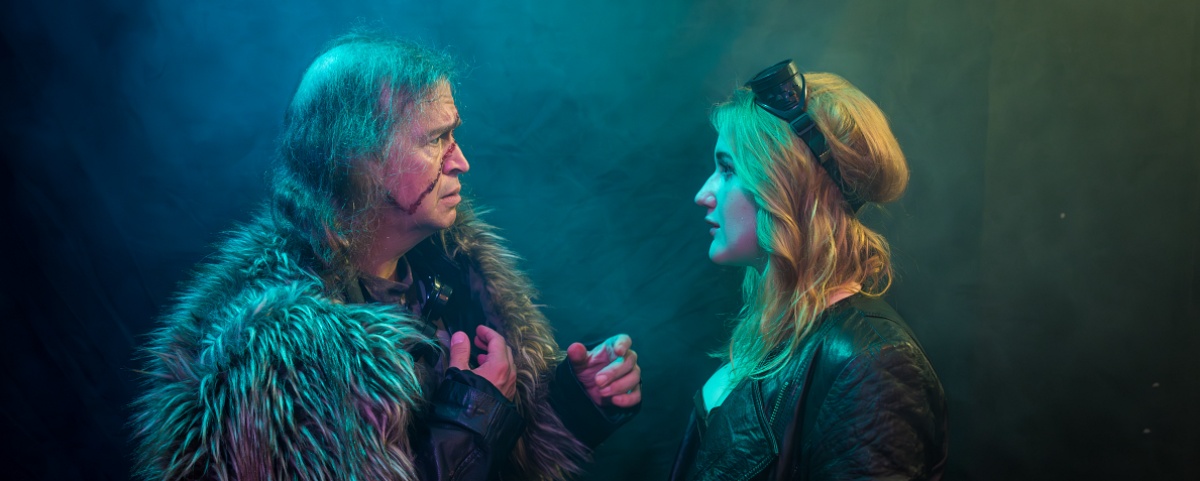
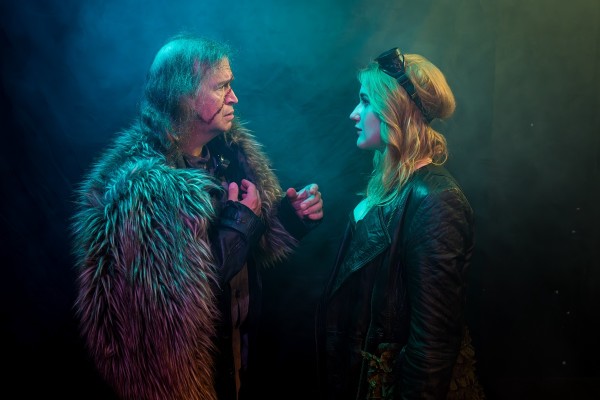
Developing my own approach to acting, divorced from toxic Stanislavski teachers and normative approaches to sense and emotion, has meant creating a method that works for me as an Autistic performer. I’ve learned to “open the channel” between myself and the character, allowing genuine emotion and connection to flow, without losing my sense of self. Sometimes that means complete identification with characters for the duration of my time on stage, as I did with Benedick in Much Ado About Nothing. Other times, it’s more subtle. When I understudied bereaved, addictive Dr Frankenstein in the world premiere of Andrew and David Hobbs’ adaptation of Shelley’s Frankenstein, I found myself unexpectedly slipping into a Method-like state, as I was myself six months sober and marking the five-year anniversary of a personal loss. Despite being in an Autistic shutdown, I channeled that raw energy into the performance. It was strange to tap into that depth while unwell, and to receive so much praise from the press and audience after effectively bringing on stage my raw, beating heart.
That experience made me rethink the idea of “divine inspiration” often associated with great performances. I began to wonder if that spark might be linked to neurodivergence–a creative attunement that allows some of us to access deep emotion and imagination in less conscious, more instinctive ways. After all, Gil Junger, director of "10 Things I Hate About You" and mentor to Heath Ledger described him as neurodivergent, “as all creatives are” in his opinion. I myself also draw upon lived experience in subconscious and less tangible ways akin to Carl Jung’s dream analysis.
My Autism and Stanislavski’s theory certainly didn’t mesh together well during my training, particularly in early acting classes I attended before classical training, where one tutor insisted that students mine the depths of their trauma unsupported to create “real” emotion. But in the intervening years between my experience with that tutor and the ‘Method by circumstance’ Frankenstein premiere, I have realised that theories around the subjective idea of what is or looks ‘true’ onstage are often shaped by neurotypical expectations. There is no one consensus on healthy performance; for some, it is entirely imaginative work, for others the vulnerability of clowning or a balance between life and art which preserves autonomy and safety while still tapping into those “hooks in the self”.
When I’m acting, particularly in Meisner work or cue-scripted Shakespeare performance, I entirely ‘open the channels’ that I need to close or at least muffle to move through life with Autistic sensory and emotional sensitivities; rather than protect my senses with noise-cancelling headphones and dark glasses as I would on the bus (or at the Jobcentre), I can safely allow every flicker of muscle in my scene partner’s face to affect me, resulting in grounded and open performance described as “such active listening from [Andrews as] Oswald [in King Lear], reacting to the scene even though she's not speaking. It's outstanding,” something I’m particularly proud of given the stereotype of Autistic people not listening,
Ultimately, I’m still wary of the Method, and caution all actors I’m directing against drawing on personal experience to a debilitating level, but can equally acknowledge that, with the bodymind as a vessel for performance, acting always to some extent draws on the diamond mine of the self. While I would never condone actors consciously choosing to Method it the way I did the first performance of Frankenstein, I am proud to have worked on a production whereI could open that channel and still breathe life into the script in a successful way. That said, as 5-year-old me stated after coming offstage in the school Nativity, unaware of her future 10-year career as an actor, “I’m never bloody doing that again.”
