

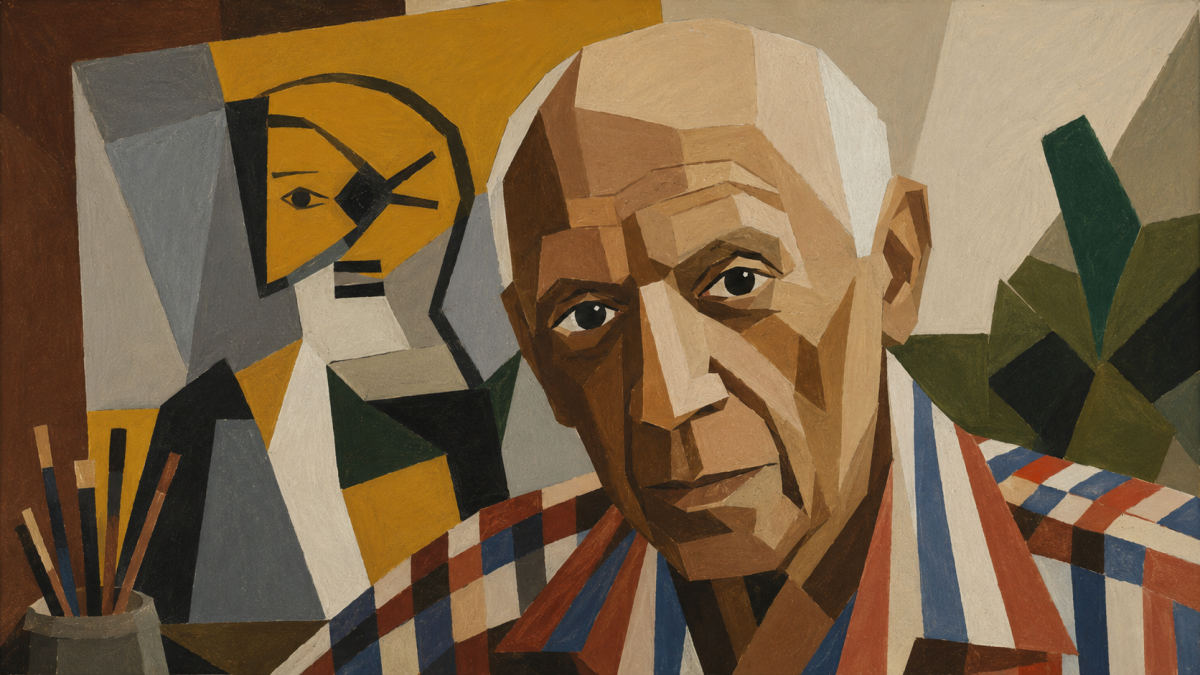
Sacré Bleu Period: One-Dimensional One-Man Show
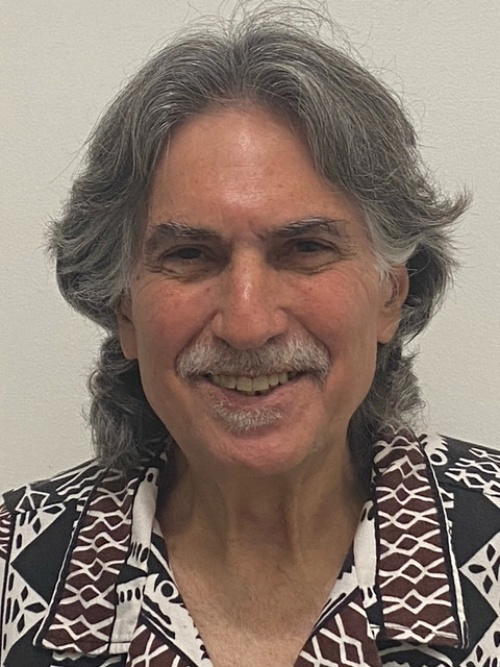

Are we still “allowed” to enjoy notables' paintings, sculptures, movies, even if they allegedly behaved despicably towards women, especially much younger females (even children)?
PICASSO, LE MONSTRE SACRÉ : Theater Review
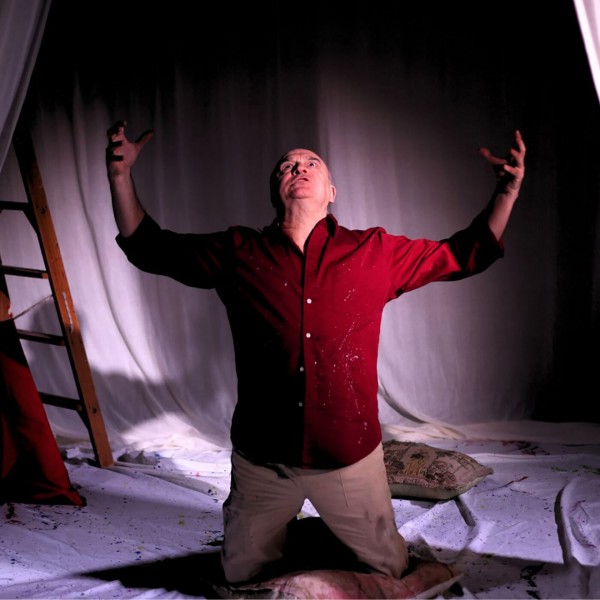
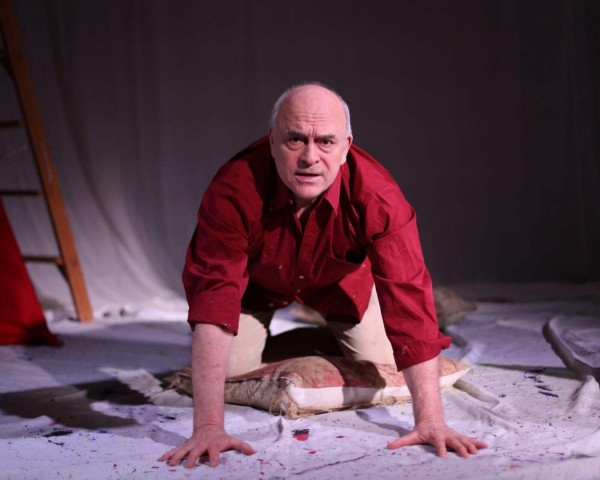
Pablo Picasso may have been the co-creator of Cubism, which among other things dynamically showed objects from multiple perspectives, but the one-man show Picasso, Le Monstre Sacré featuring Peter Tate is a one-dimensional interpretation of the painter and his life. Adapted from Terry D’Alfonso’s play with the telling title The Loves of Picasso, this 70-ish minute solo-show zooms in on the artist’s sex life, as Pablo gets the TMZ treatment. There is little about this towering talent’s art or creative process, and absolutely nothing about Picasso’s membership in the French Communist Party (PCF) from 1944 until his death in 1973.
With the assistance of images projected onto a backdrop, there is the familiar parade of Pablo’s amours who also likely served as his muses: Olga, Marie-Thérèse, Dora Maar, Françoise Gilot, Jacqueline, plus Genevieve Laporte (the only one I’d never heard of before, so I learned something new). According to Tate, the person responsible for the play’s projections is “Terry D’Alfonso, who originated the original script on which Picasso: Le Monstre Sacré is based,” which Tate and director Guy Masterson adapted for this solo-show, which also has an effective use of sound (I spied a microphone tied to the “rafters,” which Tate used to good effect).
This play raises a number of questions. Do famous people have a right to a private life (especially if they don’t hold public office at taxpayer expense)? We think nothing of reading the personal letters of world historical figures, but isn’t it an intrusive invasion of privacy to do so (without their explicit permission)? Especially if they are dead and no longer able to defend their right to privacy in the courts, etc. In this day and age of social media and more, snooping has become de rigueur and grist for the mill of for-profit productions that those whose lives are being pried into usually don’t benefit from.
The subtitle of this one-man show – which translates as “the Sacred Monster” – also suggests another moral dilemma, especially in our era of the #MeToo and #TimesUp movements. There have been debates about notables who have created great art, such as Picasso and more recently, say, Woody Allen, but who are believed to have committed transgressions, especially of a sexual nature against women. Are we still “allowed” to enjoy their paintings, sculptures, movies, even if they allegedly behaved despicably towards women, especially much younger females (even children)? Whether or not they were actually charged with, let alone convicted of crimes, must they be canceled? Along with any appreciation and viewing of their work? I’m the only critic I know who not only watched Allen’s little seen 2020 Rifkin’s Festival, a loving, droll ode to cinema, but who will go on the record to say that he enjoyed it and that it was good (if not outstanding like 1977’s Annie Hall, which deservedly won four Oscars, including for Best Picture, Best Director, Diane Keaton as Best Actress, plus in a writing category).
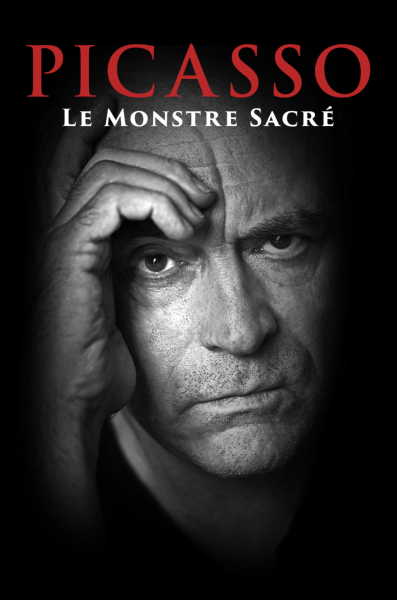
Can we separate artists from their art? Can one enjoy and appreciate the latter – the “sacred” – while condemning the former, the “monster”? As Simone de Beauvoir rather famously asked in 1951, “Must we burn de Sade?”
If it’s true that Picasso treated his lovers monstrously, would knowing that he was a Communist for 30 years who created the iconic international peace symbol of a dove provide some balance and give us a fuller picture of who he was? None of this is remotely related in Picasso: Le Monstre Sacré; the closest this play comes to acknowledging that Pablo had a social conscience and consciousness is that his antifascist, antiwar masterpiece Guernica is mentioned in passing, a massive mural which I often admired at Manhattan’s Museum of Modern Art in my youth.
I’m certainly no Picasso expert, but when I was a little boy, I visited Picasso’s studio at Vallauris in the Côte d’Azur, France. My parents bought ceramics, including (something like) a flute, which were brown, white and black, plus a lithograph of a Harlequin with a green background. I’ve read at least three books about Picasso; one biography had what I believe is Pablo’s 1907 self-portrait on its cover. Another biography was by Arianna Huffington, 1988’s Picasso: Creator and Destroyer, which was adapted by James Ivory for the 1996 biopic Surviving Picasso, starring Anthony Hopkins. In it, Natascha McElhone has a very sexy, seductive nude scene as Françoise Gilot, who wrote my favorite book about the artist, her rather hilarious 1964 tell-all memoir Life With Picasso. What an amusing muse Françoise was. She lived to be 101, so I guess you could certainly say that she did survive Picasso – and to kiss and tell.
Around 2011 I also saw Culture Clash’s Herbert Sigüenza’s A Weekend with Picasso at LATC, which presented a far more well-rounded depiction of the revolutionary artist, which included discourses on politics. Literally during his one-man show, Sigüenza rather memorably painted Picasso-like images on canvases, and as I recall, actually sold them to audience members.
According to his playbill bio, British actor Peter Tate has quite an impressive stage resume, which includes studying with Stella Adler and playing opposite Alan Bates at the UK’s National Theatre. He also appeared in a short film based on Terry D’Alfonso’s The Loves of Picasso. Nevertheless, during his 70-ish minute one-man show performed without an intermission, Tate never convinced me that he was Picasso. While being nosy about Pablo’s sex life (which really is none of our goddamned business) may be of prurient interest, his creative process and radical politics are far more important.
Picasso, Le Monstre Sacré is being performed on Thursday, Friday and Saturday at 8:00 p.m. and Sundays at 3:00 p.m. through May 17 at The Odyssey Theatre, 2055 S. Sepulveda Blvd., West Los Angeles, CA 90025. Reservations: OdysseyTheatre.com; (310) 477-2055, ext. 2.
The fourth book co-authored by Ed Rampell and Luis Reyes about filmmaking in Hawaii drops in August:https://mutualpublishing.com/product/on-location-in-hawaii/.
