

Why BlackKkKlansman Is More Relevant than Ever

The bias or empathy deficit of many Trump supporters overwhelms any feeling that might move them toward more sympathy with Blacks.
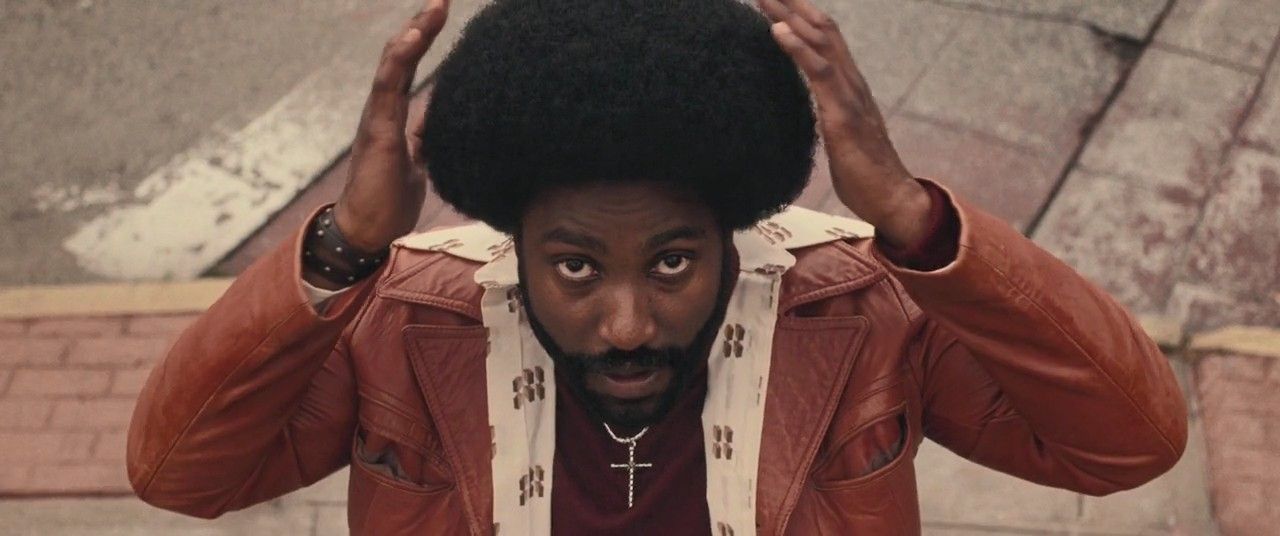
At one point in director Spike Lee’s 2018 film BlackKkKlansman (Now on Netflix) Ron Stallworth (Denzel Washington’s son John David), who is an Afro-American, is working undercover for the Colorado Springs police department, and a police sergeant tells him about David Duke. The sergeant says that Duke is the Grand Wizard of the Ku Klux Klan, which he was from 1974 to 1980, but that he is trying to move away “from the old violent, racist style,” trying to appear more “mainstream.” The sergeant indicates that on issues like Affirmative Action, immigration, and crime the old bigotry has not disappeared, but they’re being presented in a way so that “everyday Americans can accept it, support it, until eventually, one day, you get somebody in The White House that embodies it.”
Stallworth’s response is to laugh and say, “Sarge, Come on. America would never elect somebody like David Duke president of the United States of America.” Sarge’s comeback? “Coming from a Black man, that’s pretty naive. Why don’t you wake up?”
Remember, however, the film came out in 2018, when Donald Trump was president. It also appeared after the 2017 “Unite-the-Right” white-supremacist rally in Charlottesville, Virginia, with neo-Nazis and Klansmen being among the marchers. Near the very end of this two and a quarter hour film, Lee shows clashes there between racists and anti-racists. One woman was murdered during the mayhem by a white supremacist. Lee also has Trump speaking from the Trump Tower (which he actually did a few days later) and saying, “You had a group on one side that was bad. And you had a group on the other side that was also very violent.” And then adding, “Not all of those people were neo-Nazis, believe me. Not all of those people were white supremacists. You also had people that were very fine people.”
Shortly thereafter, Lee has David Duke repeating what he actually said at the “Unite-the-Right” rally: “I believe that today in Charlottesville, this is a first step toward making a realization of something that Trump alluded to earlier in the campaign, which is . . . taking America back.” (In 2016, Duke told his supporters that voting for anyone besides Donald Trump “is really treason to your heritage.”)
In his movie, reminding viewers of the Trump-racist connection, Lee also has someone say at a Colorado KKK dinner, “I can make America great again.” Of course, Trump and many of his supporters deny he’s a racist.
But such charges against Trump go way back. In 1973 the Justice Department sued (in the case of “United States of America v. Fred C. Trump,Donald Trump and Trump Management, Inc.”) the Trumps for “refusing to rent and negotiate rentals with blacks.” In 2017 The Nation ran an article entitled “Economic Anxiety Didn’t Make People Vote Trump, Racism Did.”
Lee’s film is based on an actual true story Black Klansman: A Memoir (2014 ) by Stallworth, a Black Colorado detective who retired in 2005.
Lee’s film is based on an actual true story Black Klansman: A Memoir (2014 ) by Stallworth, a Black Colorado detective who retired in 2005. (To join the Klan, as he did, Stallworth needed a white officer to act as him in all personal dealings with it. That white officer is “Flip,” played by an excellent Adam Driver.)
In a 2018 interview, after seeing the movie, Stallworth commented, “I hope they [viewers of the film] recognize that racism is alive and well, that the Klan has never gone. It’s always been around, and will continue to be around, and that you shouldn’t focus on just a group called the Klan. It’s the whole white-supremacist movement, no matter what they call themselves—be it Klan, Nazis, alt-right, skinheads—the basic ideology is the same. They consider themselves superior to others because of their white skin.” He then added, “I also would like them to take away the fact that Donald Trump is the de-facto leader of the white-supremacist movement right now, because he gives them a wink and a nod, and basically allows them to say the things that they’re saying and do the things that they’re doing, like in Charlottesville, without condemning them.”
Since 2016 there have been numerous attempts to analyse what has driven Trump voters and to what extent racism or bigotry plays a part. Author George Saunders identified some of the early fears of Trump supporters in his essay “Who Are All These Trump Supporters?” He referred to many of them as suffering from “usurpation anxiety syndrome,” which he defined as “the feeling that one is, or is about to be, scooped, overrun, or taken advantage of by some Other with questionable intentions.” The “some Other” could be such groupings as Blacks, feminists, illegal immigrants, or university professors.
In his 2017 article “Who Are We?” conservative columnist Ross Douthat indicated that Trumpites’ one-sided view of American history was part of the problem. They preferred “the older narrative” of U.S. history, the one that glorified Columbus, the Pilgrims, the Founding Fathers, Lewis and Clark, and Davy Crockett, the one that emphasized the melting pot (not multiculturalism), and the U.S. Christian tradition. “Trump’s ascent is,” added Douthat, “an attempt to restore their story to pre-eminence.” The columnist recognized that it “required correction,” for example incorporating the “truth about what befell blacks and Indians,” but he still somehow hoped that we could come up with a truer history that the Trumpites could “recognize as their own.”
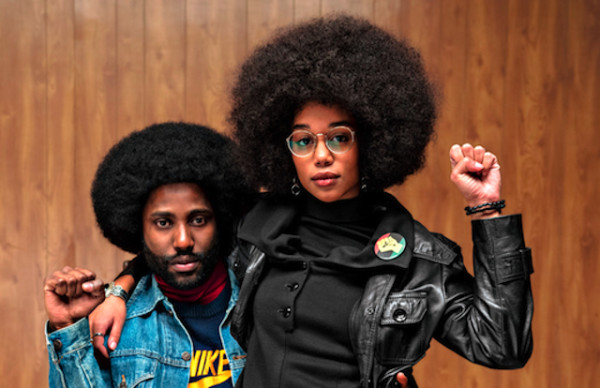
The problem, however, is less the lack of historical knowledge, and more that bias is stronger than the search for truth. The Trumpites view of history and the present reminds me of what Sen. Garrett Davis of Kentucky once said during the Reconstruction era: “I want no negro government; I want no Mongolian [Chinese] government; I want the government of the white man which our fathers incorporated.” (Spike Lee mirrors such sentiments in a speech at the beginning of his film given by a southern segregationist, Dr. Kennebrew Beauregard [Alec Baldwin] : “Yes, my friends, we are under attack. . . . We are living in an era marked by the spread of integration and miscegenation. . . . The Brown decision [1954], forced upon us by the Jewish-controlled puppets on the U.S. Supreme Court, compelling white children to go to school with an inferior race, . . . is the final nail in a black coffin towards America becoming a mongrel nation. . . . We had a great way of life until the Martin Luther Coons of this world and their army of Commies started their civil rights assault against our holy white Protestant values.”)
The bias or empathy deficit of many Trump supporters overwhelms any feeling that might move them toward more sympathy with Blacks. Take for example the real-life story of Jesse Washington, a Black man who was lynched in 1916 in Waco Texas after being accused of the rape and murder of a white woman. In Lee’s film it is actor Harry Belafonte, himself active in the civil rights struggle of the 1960s, who tells the story. As Jerome Turner (apparently fictional) he says, “They marched Jesse through the streets. They stabbed him and beat him. . . . and cut off his testicles. . . . cut off his fingers. . . . threw coal oil all over his body. They lit a bonfire and raised him and lowered him over these flames over and over and over again.”
Unfortunately, the Jesse Washington story was far from unique. On the LA Progressive website a few years ago I cited the Equal Justice Initiative,which documented over 5000 “racial terror lynchings” between 1877 and 1950, overwhelmingly in the South. In many cases the Blacks who were lynched were innocent of the crimes for which they were hanged. Besides the lynchings, there were of course all the others crimes and mistreatment inflicted upon Blacks during the days of slavery and segregation. And besides that heinous behavior, there are all the other crimes committed against Native Americans and other minorities. But too many Trumpites would rather focus on their own fears rather than acknowledge past wrongs to non-whites.
Further insight into the fears of Trump supporters regarding their fading American Dream is supplied by New York Times columnist Thomas Edsall in his 2020 “The Resentment That Never Sleeps.” He writes: “Roughly speaking, Trump and the Republican Party have fought to enhance the status of white Christians and white people without college degrees. Edsall quotes Cecilia L. Ridgeway, who wrote: “Status has always been part of American politics, but right now a variety of social changes have threatened the status of working class and rural whites who used to feel they had a secure, middle status position in American society.” But various forces, including demographic changes, “have greatly undercut that sense and fueled political reaction.”
In January 2021 Vox posted a piece featuring “a comprehensive timeline of Trump encouraging hate groups and political violence.” And in August of this year, long-time Washington Post columnist Eugene Robinson wrote an article entitled “Trump’s most racist supporters are coming to his defense.” As the indictments against Trump multiply, “the masks, or hoods, are coming off,” and “threats against the public officials and everyday citizens who are holding Trump accountable became explicitly violent and racist.” Moreover, “as his legal peril mounts, Trump is nakedly using race as a wedge to animate his most racist White supporters.”
During the same month a similar charge against Trump, which appeared on the PBS Newshour website, was made by Associated Press reporter Ali Swenson. She wrote, “Donald Trump’s aggressive response to his fourth criminal indictment in five months follows a strategy he has long used against legal and political opponents: relentless attacks, often infused with language that is either overtly racist or is coded in ways that appeal to racists.” She reminds readers that “the rhetoric is a reminder of Trump’s tendency to use coded racial messaging as a signal to supporters, an approach he has deployed over several decades as he evolved from a New York City real estate tycoon to a reality television star and, eventually, the president. Even if he doesn’t explicitly employ racial slurs, his language recalls America’s history of portraying Black people as not fully human.”
Thus, what the real detective Stallworth said in 2018—“Donald Trump is the de-facto leader of the white-supremacist movement right now”—is still true today, five years later. And with Trump now being the leading Republican candidate for the presidential contest now less than a year away, the danger remains great indeed. Not only for the Democrats, but more importantly for our democracy, for “a citizenry [that could be] made better, and stronger (according to Frederick Douglass), not in spite of its many elements, but because of them.”
