


What the series confronts us with then is how to live on in the midst of great pain.
Most of us want life to go as we plan it. Maybe graduate from college. Maybe even get an advanced degree. Regardless, however, eventually get a good job, i.e., one that pays well and we enjoy, one at which we’re good. And, of course, we wish to find the love of our life, someone we can live happily with for the rest of our earthly days. But...life doesn’t always proceed as we wish. Besides a major illness and death—two really big unfortunate occurrences and sometimes even disasters—there are many lesser happenings that derail our plans and intentions. Amazon Prime’s “Expats,” six-part series presents one example, and a film I reviewed last month (“A Good Person”) presents another.
Coincidentally, the cause of both derailments, the death of two people in an auto accident in “A Good Person” and the disappearance of a pre-school son in “Expats,” are due to the same cause. It is one that in our Internet age occurs too frequently—paying more attention to our cell phones than whatever our prime responsibility of the time is. Driving a car in the first case, looking after a little boy, Gus, in the second. Like wars, so too with our latest major technological developments, whether the Internet, cell phones, or today AI, the “Law of Unintended Consequences” seems to operate. The inventors of cell phones probably never envisioned the phones would lead to more deaths due to distractions.
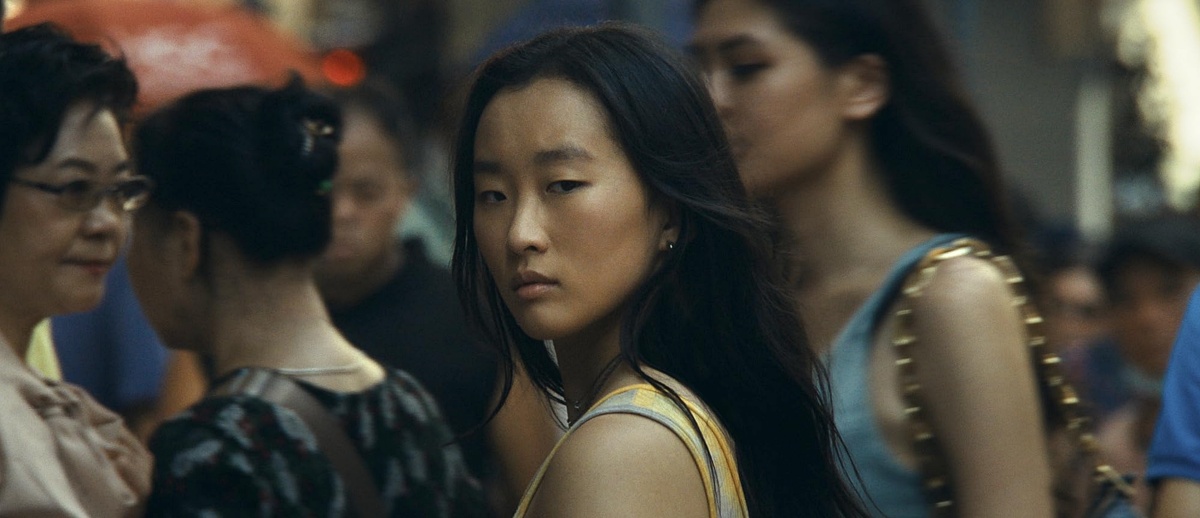
At the start of Episode 1 of “Expats” (the six episodes are about an hour long each, except for the 5th, which is 1:40) a narrator sets the tone for the tragedy to follow. We soon discover she is Mercy (Ji-young Yoo), the young woman paying more attention to her cell phone than to the little boy she lost. She says:
A doctor known in the community for her charitable work drove into a group of pedestrians at a local fruit market, killing three and injuring five. After long shifts, the doctor occasionally napped in the on-call room before driving home. On this particular day, she didn't. She was on her way to her daughter's birthday party and fell asleep at the wheel. She didn't make it to the party that day, nor did she celebrate her daughter's birthday ever again. That day became a different kind of anniversary. One that the doctor didn't wish to commemorate.
Three pilots were inside a small aircraft that flew too close to a ski lift. There was heavy fog that day, affecting visibility. They did not see the gondolas carrying skiers up and down the mountain, and the plane's right wing cut into the steel cables. The cable car fell 264 feet, instantly killing all 20 of its passengers. Later, one of the pilots tried to reach out to the families of the victims, but nobody returned his calls.
A 12-year-old boy caused his twin brother to incur a C7 spinal injury that left him paralyzed from the neck down. Despite their mother's warnings to stop roughhousing, the boys' play was nothing out of the ordinary. The coffee table he fell on had always been there. The twins were identical, but from that point forward, there was nothing identical about their lives. [All quotes are from the series scripts, Episode 1 is here.)
The narrator then adds that such stories always focus on the victims, but she wants “to know about the people who caused the tragedies,” people like her. “Are they ever forgiven? Do they ever move on?” “Not a moment goes by,” she says, “where I'm not thinking about what I've done. Not a moment goes by where I'm not thinking about you [Margaret (Nicole Kidman), the mother of the boy]. About what you're doing. How you're doing. And how you go on living when I've completely shattered your life.”
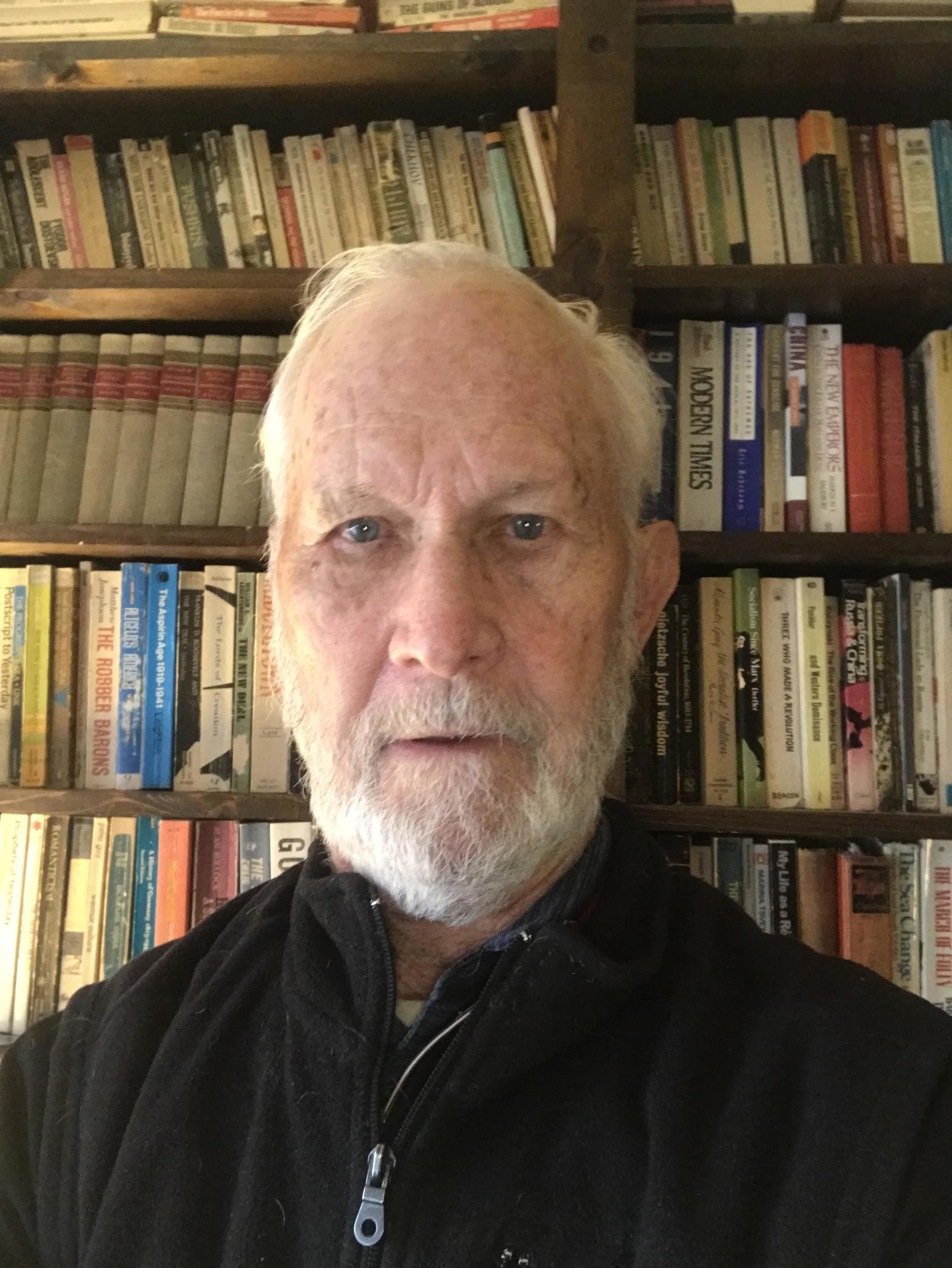
“Shattered your life.” I’ve thought about these words because about a half-century ago I also had a lapse where I paid insufficient attention to my toddler son, Tom, and he broke through ice into a small river and almost drowned. Most of us, if we have lived long enough, have had our irresponsible moments—like the three occasions mentioned above involving a doctor, three pilots, and a 12-year-old boy, or my own case—and we are lucky if no tragedy resulted.
In my review of “A Good Person,” I wrote that the main problem of Allison (Florence Pugh) “after the crash is her guilt—she cannot forgive herself for causing the accident by glancing at her cell phone. Reflecting upon her situation, my takeaway is that we should be willing to forgive ourselves, as well as others. . . . We are all flawed human beings, and we all make mistakes. Usually they do not result in grievous harm, but sometimes . . . they do. No matter how fatal such unintentional mistakes might be, however, we must be willing to forgive, to remember that we are all flawed.”
Good advice. But easier said than done. After my own son fell through the ice I often thought of the terrible consequences that might have followed. For example, could my wife, Nancy, ever have forgiven me? Not just intellectually, but also emotionally?
The tragedies mentioned at the beginning of the “Expats” TV series are not the same as ones mentioned a little way into the novel it’s based on, Janice Lee’s The Expatriates: A Novel (2016). In the book Mercy reads about other tragedies such as one about a man who “had driven his girlfriend’s two sons to school, only he had been drunk (at eight in the morning!), and they had been killed in a car crash, because he hadn’t put them in their car seats.” But in the book, like in the TV series, Mercy is more concerned about the “perpetrators” of the tragedies rather than the victims. “What did all those people [perpetrators] do?”
In the last episode (#6) of the series Mercy (by now age 25) repeats some of the words muttered in Episode 1 and adds others:
Not a moment goes by where I'm not thinking about what I've done. Not a moment goes by where I'm not thinking about you [Gus’s mom, Margaret]. I had hoped for a specific event. An unimaginable act of kindness. A forgiveness that would reset everything. That would give me permission to start living again. But there is no miracle that can reset everything. You must hold the pain and keep on living. The pain becomes a part of you. And soon you can't recognize yourself without it. More than anything, I wish that, at some point in the future, you might be happy. That you might find yourself forgetting the pain once in a while. I . . . I hope to be happy, too. For my daughter [Mercy is now pregnant]. For myself. Only we can make the choice to start living again. To put one foot in front of the other. Take one breath after another.”
Mercy has become convinced that she will always have to live with the pain of causing the loss of a boy, but she has to make “the choice to start living again.”
Thus, Mercy has become convinced that she will always have to live with the pain of causing the loss of a boy, but she has to make “the choice to start living again.” And how about Margaret, the mother whose boy, Gus, was lost? She was at the airport with her family (minus Gus) about to return from Hong Kong to the USA, but at the last moment she says, “I can't leave him here. I can't.” (Whether the boy is found at the last minute in the series, I’ll not reveal. Shortly before the airport scene, however, Margaret states, “The first days after Gus went missing, I was wild with pain. Pain you can't even imagine. I wanted to die. But I couldn't, because I had to stay alive to find Gus” and for her other two children, Daisy and Philip.)
What the series confronts us with then is how to live on in the midst of great pain. How to live on when one of those great uncertainties of life rise up like a monster to completely derail us. Mercy is only 25, Margaret is of an undetermined age, but perhaps about twice the age of Mercy. Thus, Mercy is perhaps less experienced in dealing with life’s tragedies, but Margaret seems to have lived a more privileged life.
The problem that both women confront is that their education (and life itself) had ill prepared them to confront such uncertainty as how to act in the face of a great tragedy. About a half-century ago the environmentalist E. F. Schumacher diagnosed our contemporary problem: “The main problem . . . with modern education was that it had abandoned the incorporation and guidance of traditional wisdom, which helped us answer questions like ‘What is our purpose in life?’ and ‘What are our ethical obligations?’ . . . Schumacher maintained that what people really needed were “ideas that would make the world, and their own lives, intelligible to them. . . . If the mind cannot bring to the world a set—or, shall we say, a tool-box—of powerful ideas, the world must appear to it as a chaos, a mass of unrelated phenomena, of meaningless events.”
The philosopher Bertrand Russell once stated, “To teach how to live with uncertainty—and yet without being paralyzed by hesitation—is perhaps the chief thing that philosophy in our age can still do for those who study it.” More recently, Jennifer Hecht in her book Doubt wrote, “If I needed a definition of foolish, it would be ‘to have too much certainty.’” And still more recently in the Hulu series “Shogun” we come across the lines, “We live, and we die. We control nothing beyond that.”
But such wisdom has little place in modern education, too much of it (as Schumacher lamented already many decades ago) focused on career preparation. To embrace (or at least tolerate) greater uncertainty we need more patience and humility and less dogmatism, attributes in short supply these days.
Besides posing the questions of how to deal with uncertainty and tragedy the series has other features to recommend it. The acting is generally good. There are plenty of plot twists involving not only Margaret and Mercy, but also a third woman, another Hong Kong “expat” named Hilary (Sarayu Blue). Like Margaret, she is married and among the well-to-do in Hong Kong. But as with the unmarried Mercy, she has “man” problems—her husband sleeps with Mercy.
One of the traits of the “Expats” that I like is that it reflects the ethnic diversity of the United States. Of the three main women—Margaret, Hilary, and Mercy—the first is married to a man of Asian background; the second is an Indian-American who is fluent in Punjabi; and the third is a Korean-American. The depiction of U. S. citizens is thus more like the composite nation desired by Frederick Douglass rather than the sort of dominating White country preferred by Donald Trump and many of his followers.
Reflections on “A Good Person”
A final big “plus” for me is the series’ depiction of Hong Kong. Under very loose British rule until 1997, it then came under the rule of mainland (and communist) China, which promised to respect its autonomy and not impose China’s communist economic and political system upon it. About six times the size of Washington, DC, Hong Kong is one of the most densely populated areas of the world, and possesses more skyscrapers than any other city. Although it has many rich people (like Margaret and Hilary), it also has its poorer ones—like the servants of those two women (their chief housekeepers are Filipino), as well as Mercy.
According to a recent World Factbook, “dissatisfaction with the Hong Kong Government and growing Chinese political influence has been a central issue and led to considerable civil unrest, including large-scale pro-democracy demonstrations in 2019.” Increasing restrictions imposed by Beijing continued into 2020 and 2021. (The last few episodes of “Expats” depict opposition to the growing Beijing tightening.)
With Beijing becoming more hawkish over another Chinese territory that has experienced many decades of independence from Communist China, the focus of “Expats” on Hong Kong is a welcome reminder that among all of our global problems we should not forget China.
