


I had no idea that the soldiers were given a choice of whether or not to kill Jewish men, women, and children.
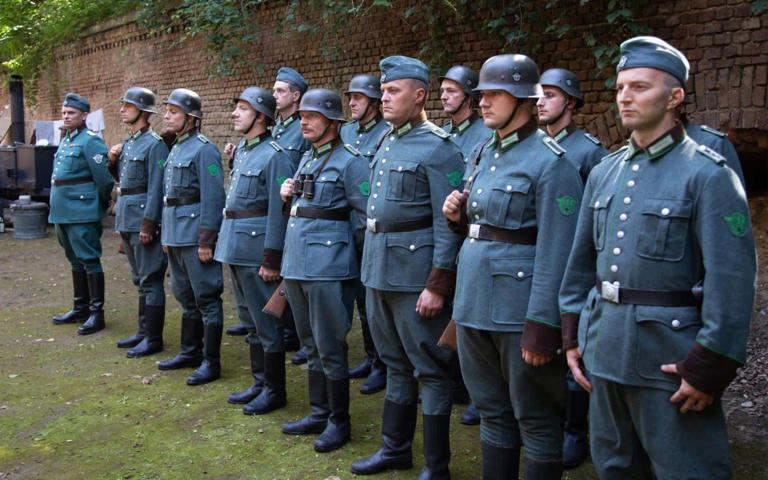
I just watched the new Netflix documentary “Ordinary Men: The Forgotten Holocaust” (58 minutes). It taught me some things I didn’t know. It is partly based on Ordinary Men: Reserve Police Battalion 101 and the Final Solution in Poland (1992 and 2017 eds.) by historian Christopher Browning, who is also one of the experts who speaks to us during the program. But the documentary also contains segments that are not found in the book. For me, a historian of Russia, not Germany, the program’s most significant revelation was the following: “Not a single case has been found where a subordinate’s life was in danger if he refused to shoot unarmed civilians.” This is told to us by the excellent Scottish actor, Brian Cox, who narrates the documentary and also stared in the HBO series Succession” (2018–2023), for which he won the Golden Globe Award for Best Actor in a Drama Series.
In that this German battalion’s job was primarily to kill Polish Jews, I had no idea that the soldiers were given a choice of whether or not to kill Jewish men, women, and children. Just after the battalion’s commander, Major Trapp, first tells his men on 13 July, 1942 that they are to kill unarmed Jews, he adds, “If any of the rank and file don’t feel up to it, you can step out and you don’t have to take part.” Author Browning then tells us, “One man does step out . . . and then about a dozen people follow his example”—thus only about 13 out of a 400-500 men battalion refuse the order to kill individuals whose only offense is that they are Jewish. Further on we’re informed that nothing really bad happened to the 13 members of the battalion who refused to kill the innocent Jews. Instead they were assigned such jobs as cleaning latrines and subjected to name-calling, such as bastard, dirty rat, and sissies.
The question for us then is why did something like 97 percent of the battalion agree to kill the Jews.
The question for us then is why did something like 97 percent of the battalion agree to kill the Jews. And was such behavior unique to this battalion, or perhaps to the German people in Nazi Germany?
In regard to the first question, a German social psychologist pointed out that even though the consequences for that 3 percent that refused to kill Jews might not seem that dire, social ostracism coming from the overwhelming majority they spent almost all their time with—the insults, the exclusions, etc.—could be devastating. Also each one of the dominant majority worked out a way to justify the killing to himself. He might say, “we have a historic duty to fulfill” or “someone’s got to do the dirty work.” (We can imagine some of them thinking what Stalin sometimes repeated, “You can’t make an omelette without breaking eggs.”) The documentary also indicated that many of the battalion’s men became desensitized to the killing—after the first incident of 13 July, 1942 it became easier. Toward the end of the program, Cox tells us that the members of the battalion were “involved in the shooting of 38,000 Jews” and responsible for sending another 45,000 to extermination camps.
These killing men were just “ordinary” Germans, mostly from Hamburg. Many were not initially Nazi sympathizers nor especially hostile toward Jews, at least before Nazi propaganda began influencing them. They had ordinary jobs like being bakers or carpenters, or working in an office. Some were older family men.
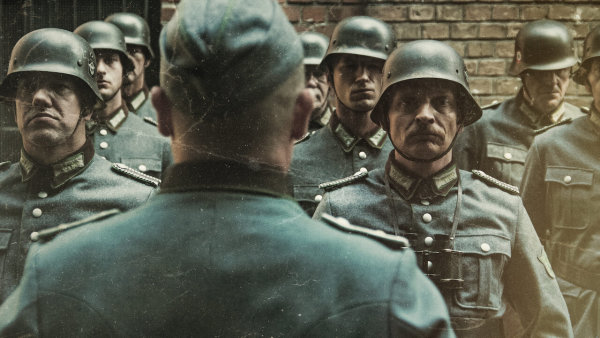
Regarding our second question, “Ordinary Men” indicates that the murderous actions of the battalion were not a uniquely German phenomenon. As Browning states toward the end of the documentary, “All sorts of people can become killers under certain circumstances.” And Cox adds, “To this day, people continue being killed for belonging to a different group” adding various examples like Rwanda, 1994 and Bosnia, 1995. More recently he could have added Myanmar and Sudan. The program’s German social psychologist concludes that wherever people can say to themselves, “I am only a cog in the wheel, I am not responsible,” then “almost anything is possible.”
Since Browning’s book first appeared, others such as Daniel Goldhagen’s Hitler’s Willing Executioners: Ordinary Germans and the Holocaust (1996) have been published. And he is not alone in thinking that Browning minimizes German guilt by indicating how susceptible ordinary people from various nations are (as Browning states in the documentary) to becoming “killers under certain circumstances.” Browning characterizes Goldhagen’s view as being that ordinary Germans “wanted to be genocidal executioners,” that most of them killed with “gusto,” for “pleasure.” In 2019 another book, this one containing 20 essays, examined the whole question of German motivation that Browning had originally introduced.
Thus, to what extent the mass killing of the Holocaust can be explained by its German roots or to what degree it reflects possible universal human behavior is still an open question. But I am inclined to think the latter more important. Further, I do not exclude U. S. citizens from being susceptible to employing holocaust-like behavior.
Three years ago my “Unlike the Germans We Have Failed to Recognize and Atone for Our Holocausts” appeared, and it argued that the term holocaust “captures best the enormity of what European colonizers and then white Americans have done to Native and African Americans.” Earlier the first chapter of my An Age of Progress? Clashing Twentieth-Century Global Forces (2008) contained this quote from a U.S. officer who had participated in the Spanish-American-Philippine War (1898-1902), in which at least 200,000 Filipino combatant and non-combatant deaths occurred.
Our men have been relentless, have killed to exterminate men, women, and children, prisoners and captives, active insurgents and suspected people, from lads of ten up, an idea prevailing that the Filipino was little better than a dog, a noisome reptile in some instances, whose best disposition was the rubbish heap. Our soldiers have pumped salt water into men "to make them talk," have taken prisoners of people who had held up their hands and peacefully surrendered, and, an hour later, without an atom of evidence to show that they were even insurrectos, stood them up on a bridge, and shot them down one by one to drop into the water below and float down as examples to those who found their bullet-loaded corpses.
In that same chapter I pointed out that “except for absolute pacifists, most people justified some killing but condemned the taking of other lives. Such judgments were seldom based on any logically consistent principles such as those enunciated in the Christian theory of a Just War. For example, most U. S. citizens condemned any form of communist or terrorist activity that led to deaths, especially that of ‘innocent civilians,’ but were inclined to ignore or justify the massive taking of civilian lives that resulted from Allied bombing, both conventional and nuclear, during WWII.”
Furthermore, there are many “reasons that help to explain how individuals from almost all nations . . . were able to justify killing enemies, whether from other nations, classes, religions, or some other criteria of ‘otherness.’” As one expert explained it, “the illusion of a unique and choiceless identity,” like that of nationality or race, “can also overpower any human sympathy or natural kindness that we may normally have.”
In “Ordinary Men” one of the members of the killing battalion later confessed that he didn’t see the Jews as human beings.
In “Ordinary Men” one of the members of the killing battalion later confessed that he didn’t see the Jews as human beings. In my Age of Progress? I indicated that in WWII some Americans looked upon the Japanese “as something subhuman and repulsive; the way some people feel about cockroaches or mice.” During the Vietnam War, one U. S. sergeant testified: “[Our] colonels called them [the Vietnamese enemy] gooks, the staff all called them gooks. They were dinks, you know, subhuman.”
In addition, some people in all societies, including our own, are susceptible to falsehoods, which is one reason I once insisted that the historian’s main responsibility was truth-telling. One motivation for one of the leading antisemitic Nazis, so the documentary relates, was his false belief that Jews controlled the Soviet government.
By the apex of the Vietnam War in 1968, after being in the army from 1960 to 1962 and therefore no longer at risk, I concluded that if the draft still existed (which it did not), I would flee to Canada rather than be drafted and risk having to kill Vietnamese. In the documentary the chief prosecutor for the U. S. Army at the postwar Nuremberg war crime trials, states about one of the accused Germans, he “carried out what he thought was in the interest of his country. But that’s not an argument that a normal human being should be allowed to make and walk free.”
I agree. Just because my government says it’s okay to kill somebody does not mean it is. What is necessary for each of us is to develop a code of ethics, a hierarchy of values, that tells us what is right or wrong. We don’t have to accept the religion of our family or community, or even any religious beliefs at all, but it is still incumbent upon us to develop a well-thought-out ethical system.
Such a code should make us wary of “othering” people of different countries, races, or nationalities, of treating anyone as less than a human being. I have been to Holocaust museums such as in Auschwitz, Poland and D. C., and been horrified at what some Nazi policies and practices inflicted upon Jews (and some others) during the Holocaust.
But that “othering” still occurs. We see it in Myanmar and Sudan. We see people like Russian soldiers committing atrocities in Ukraine because Vladimir Putin orders or lets them do so. And in the USA, extreme political polarization often dehumanizes the other side and leads to the type of behavior exemplified by the 6 January 2021 insurrection at the US Capitol building.
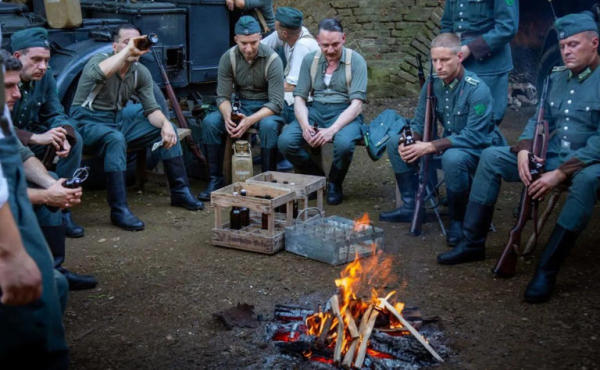
Improving formal education is not the whole answer, but it’s a start. Psychologist and wisdom scholar Robert Sternberg writes, “Traditional education, and the intellectual and academic skills it provides, furnishes little protection against evil-doing.” And he points out that “many top-ranking Nazis were highly educated.” The main goal of education should not be preparation to participate in some government-favored economic/social system, but to obtain help and insights on how to live a fruitful life—and what such a life might encompass. As adults, however, the main responsibility, lies not with others, not with our friends and peers, not with our culture or subculture, not with our government, but with each of us as individuals, ones who have prepared themselves to correctly discern right from wrong.
