

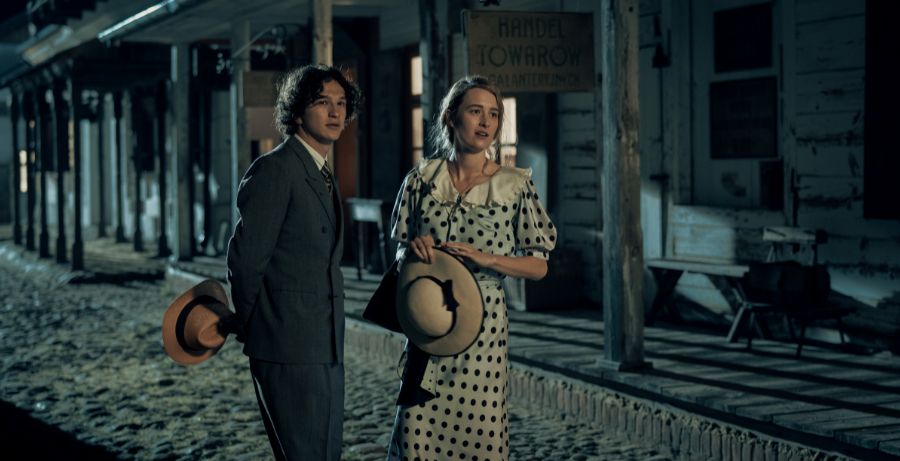

Will Rafal receive a prison sentence for practicing medicine after he forgot he was a licensed doctor—and as one woman testified, he “never charged”?
Lately I’ve been having a hard time finding on my streaming services any new films or series that sounded good. But finally I discovered a movie, in Polish but subtitled in English, that I greatly enjoyed, and it was about a very good man. It was Netflix’s film Forgotten Love and surprise, that “forgotten love” did not involve the typical romantic couple, but a father and a daughter. The former being a well-known Polish doctor, Professor Rafal Wilczu, who in the 1920s receives a head injury and is struck with amnesia. The daughter—a pre-school child when the doctor’s wife leaves with her, abandoning Rafal shortly before he had his injury—is a grown young woman throughout about four-fifths of this two-hour-and-twenty-minutes movie, which deals mainly with father, daughter, and their acquaintances in the 1930s.
The story is based on a famous novel, Znachor (The Quack), written in 1937 by the Polish Tadeusz Dołęga-Mostowicz. And it was first adapted for the screen and given the same title in 1982. It became a “became a cult classic in Poland,” and “for many, an annual re-watch when it is aired during either Christmas or Easter Sunday (or both).”
The movie’s Polish status sort of reminds me of that of It’s a Wonderful Life in the USA. And like that of American film, the 1982 Polish one was basically a heart-warming story about a good man who triumphs over adversity.
For some reason, I’m a sucker for movies about good people. I know that all we humans are flawed. And that too often we are as St. Paul described in Romans 7:19: “For the good which I have a mind to do, I do not: but the evil which I have no mind to do, that I do.” But it is refreshing to see people, who despite our common human nature, act in a loving, honorable, and heroic fashion. One of my favorite novels, as I’ve indicated in an essay a decade ago, is Victor Hugo’s Les Misérables, and it is primarily because its hero, Jean Valjean (like Jimmy Stewart’s George Bailey in It’s a Wonderful Life) is just such a person.
But the present review/essay is not about the 1982 Polish classic, but about this new version commissioned by Netflix, which has already produced more than 30 Polish films and series. (The production of many foreign films and series, from countries like Poland and India, is one of Netflix’s most attractive features.)
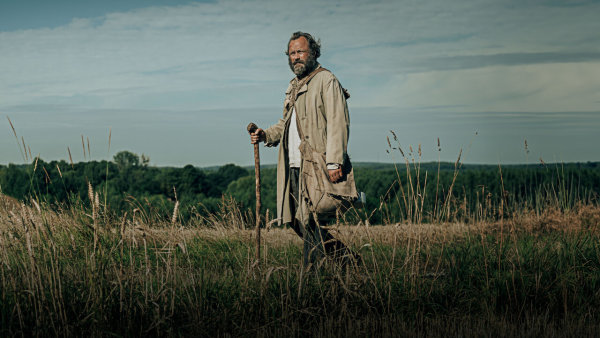
Luckily, the present movie version continues to depict the main character, Dr. Rafal Wilczu (played by the well-known Polish actor Leszek Lichota), as a genuine humanist who champions the poor and loves his daughter before his amnesia and continues lovingly to treat others in a similar fashion even though 15 years elapses between his injury (occurring about 22 minutes into the film) and his reappearance later, which extends for the rest of the film.
Besides its appealing main character, the bearded Rafal, Forgotten Love has much more to recommend it. The acting is first rate, especially that of Lichota and Maria Kowalska, who as his daughter Marysia reminds me of a young Meryl Streep. But the fine acting by others in the cast is also notable, including Anna Szymanczyk as Zoska and Ignacy Liss as Count Leszek Czynski, who respectively become the love interests of father and daughter.
The Polish scenery, both rural and urban, also appeals, as does the occasional Polish music. Moreover, the film does a pretty good job of depicting interwar Poland in the twentieth century. The technology depicted like the cars and phones; the differences in the homes of rich (like Count Czynski’s family) and poor; urban poverty (like that of a young boy whom Rafal takes care of early in the film); and the prominence of Jews in Polish life (the tavern where Marysia works as a waitress is owned by a Jew); all are rendered accurately.
Moreover, the film is plotted well. There’s plenty of drama to keep us guessing, and it moves at a brisk pace, with villainous as well as good people to observe. Among the villains are the mother of Marysia’s love interest (Count Leszek), who tries to prevent the marriage of her son and Marysia. At one point the count’s father says to his wife, “You’re a self-righteous, and a pompous, bumptious crone.” Another villain is a young rival of the count for Marysia’s affections, who tampers with Leszek’s motorcycle, causing he and Marysia (who is riding on it behind him) to have a serious accident. And Dr. Jerzy Dobraniecki (Miroslaw Haniszewski), a colleague of Rafal, is far from honorable.
Because I don’t want to spoil the watching of the film for potential viewers, I will not reveal much of the plot. But here are some of the crucial questions that it hinges on: Will Rafal recover his memory? Will he and Marysia recognize that they are father and daughter? Will Zoska, the widowed mill woman who Rafal come to work for, be successful in winning his affections? Will Count Leszek and Marysia live after their motorcycle accident? Will they marry each other, as they both come to hope? Will Rafal receive a prison sentence for practicing medicine after he forgot he was a licensed doctor—and as one woman testified, he “never charged”? And finally, will the Nazi invasion of Poland on 1 September 1939 occur before the film ends?
I should mention that the movie had special meaning for me in all sorts of ways. First, I have some experience with memory loss, wondering about the multi-faceted implications of what that loss means, and marveling about how, despite the horrible confusion it must cause, the afflicted can still be kind and loving. (My wife of 58 years spent the last nine of it with Alzheimer’s.)
Secondly, like the heroic father in the story, Professor Rafał Wilczur, I have a grown daughter (Jenny) about whom I care and love.
Thirdly, being a Russian historian I have a special interest in Poland. A considerable amount of it (in the present), including Warsaw, was part of the Russian Empire during the nineteenth century—in 1939, Jews made up about one-third of the Warsaw population. I (and various members of my family) have visited Polish cities such as Warsaw, Krakow, and Gdansk, as well as the famous death camp at Auschwitz. I also have some interest in Jewish history—many of Europe’s Jews in the nineteenth century lived in the Russian Empire, where widespread discrimination existed. Moreover, one of my granddaughters, Jenny’s Amanda, has a Jewish father, and at least one of his ancestors came to the USA from an area that was part of nineteenth-century Russia.
In the film the Jewish tavern owner who hires Marysia as a waitress and occasional piano player is depicted favorably, on one occasion giving Marysia a sympathetic hug and at a late celebration providing some drinks and saying “Mazel tov! [Good luck!] L’chaim! [Long Life!].” Such wishes, however, occur close to 1939. Unfortunately, within a few years, life would become increasingly horrific for many Poles, especially if they were Jewish.
