


One of the main tasks of Save Ukraine is to recover abducted Ukrainian children, and “60 Minutes” reported that “so far, they've rescued more than 200 kids, from kindergarteners to teenagers.”
In November 2023 TV’s “60 Minutes” ran a segment on “Ukraine’s abducted children.”According to the report, “the Ukrainian government has documented more than 19,000 children taken by Russia, but told us they worry the actual number could be closer to 300,000 children. The International Criminal Court has charged Russian President Vladimir Putin and his commissioner for children's rights with the war crimes of unlawful deportation and transfer of children.”
An earlier UN report of August 2023 noted that the “UN still does not have the necessary access to verify allegations of violations against children in the territory of Ukraine under Moscow’s control or in the Russian Federation itself.” But it reported that a Ukrainian “legal official” said that the more than 19,000 documented seized children had “Russian Federation citizenship...imposed on them, and they are forbidden to speak and learn the Ukrainian language or preserve their Ukrainian identity.”
This same report quoted another Ukrainian, Mykola Kuleba, the founder of the non-profit Save Ukraine, who pointed out that in 2014, “more than 1 million Ukrainian children ended up on the occupied territories of Crimea and Donbas and were further deported to Moscow. Stolen and turned into weapons, thousands of them now fight against their motherland.” One of the main tasks of Save Ukraine is to recover abducted Ukrainian children, and “60 Minutes” reported that “so far, they've rescued more than 200 kids, from kindergarteners to teenagers.”
The TV program also interviewed Kuleba, and he told its interviewer (Cecilia Vega) that Russia’s goal “is to steal the Ukrainian kids' future by erasing their past...to destroy Ukrainian identity. They brainwash them, indoctrinate them, Russify them. They have special classes for Ukrainian children when they teach them what is the Russian empire, what future they can have in Russia.”
In the remainder of the “60 Minute” segment, Vega interviewed two Ukrainian families that had been separated but then, aided by Save Ukraine, reunited. The Save-Ukraine aid involved training and advice on tactics to use with the Russians in order for family members to get their youngsters back. One case involved Vlad Rudenko (age 16 when taken a year ago) and his mother, Tetiana Bodak. The other, grandmother Polina and her 9-year-old grandson, Nikita.
Vlad told Vega that in a Russian-occupied area of Ukraine, armed men came to his door, ordered him to pack up, and put him on a bus taking him to a Russian-controlled camp in Crimea. The bus was “part of a 16-vehicle convoy full of kids” taken to the camp, where they mixed with Russian children. According to Vlad, they were not allowed to speak Ukrainian, talk about their country, or wear Ukraine's colors. Plus, they “were forced to sing the Russian national anthem.” When he violated one of the camp rules—the obligation to display a Russian flag—he was locked up in a “detention ward for five days.”
In dealing with the other case, that of grandmother Polina and Nikita, Vega mentioned that “last year, Vladimir Putin changed the law to make it easier for some Ukrainian children to receive Russian citizenship, allowing them to be adopted by Russian families.” In October 2022, Russian authorities seized Nikita and 85 other kids from “a boarding school for disabled children” and transferred them “deeper into Russian-controlled territory.” And, after a long trip to locate Nikita, Polina came to believe that he “was also about to be adopted.”
After she told Vega this the latter replied, “It's almost hard for me to get my head around this. Your grandson is a Ukrainian citizen, and you're telling me, you believe the Russians were on the verge of giving him to a Russian family, of adopting him out to another family.”
Before handing Nikita over to Polina, however, Russian authorities made her take a DNA test, and eventually made her one final offer. A Russian official asked her, “Would you like to stay with us in the Russian Federation maybe? We will give you some money. We will give you a car.” Polina refused, and with Nikita was allowed to return to Ukraine
Such attempts to seize Ukrainian children, to separate them from their families and let them be adopted by Russians, was hard, said Vega, “to get my head around”—as it might be for many of us—but it should not be if we are familiar with own country’s history (or that of Canada) with Native Americans.
In 1976 the U. S. Association on American Indian Affairs reported that in the years 1941-1967, up to one-third of Native children were taken from their families. According to a report that Congress received, an initial determination of parental neglect was made and then children were “are all too frequently placed in non-Indian homes, thereby depriving the child of his or her tribal and cultural heritage.”
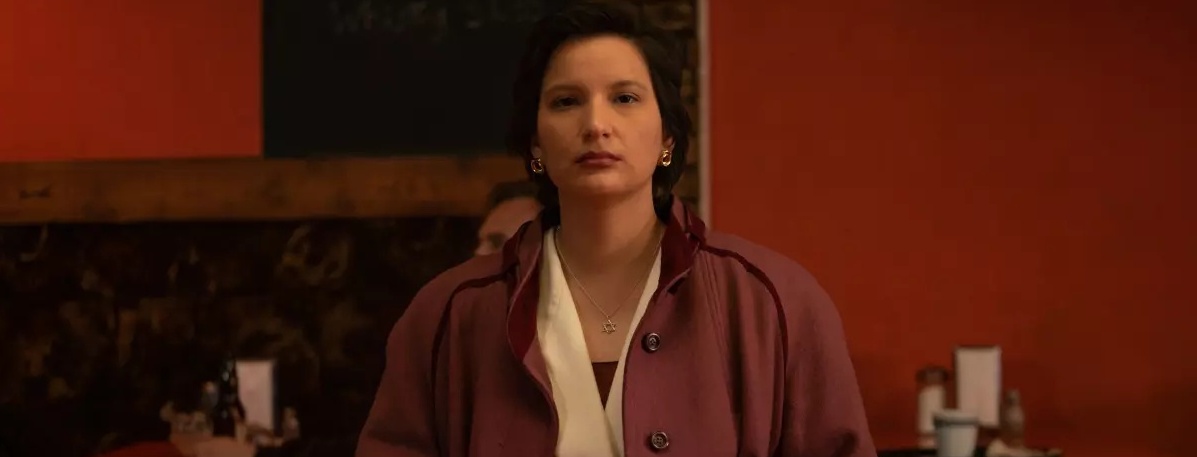
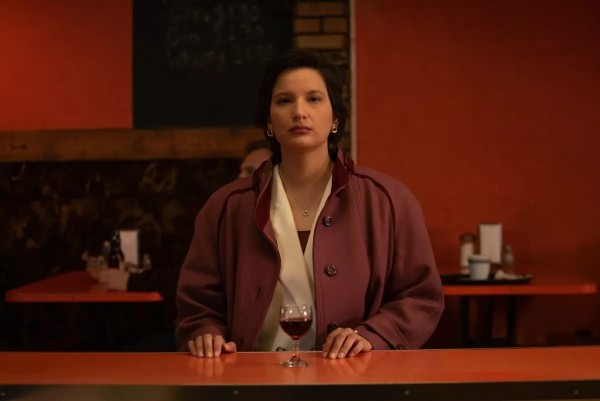
Insight into this process was recently provided by watching the heart-wrenching six-part Canadian series “Little Bird,” which was aired in the U. S. on PBS. Although the seizure of children in the production occurred in the Canadian area of Saskatchewan in 1968, in the “Sixties Scoop” as it was called, it was paralleled in the USA, as a Los Angeles Times review of the series indicated.
A Harper’s Bazar piece of almost exactly a year ago, “The Long History of Native American Adoptions,” indicates that not only did U. S. developments parallel the Canadian “Sixties Scoop,” but preceded them. After earlier measures to “dismantle tribal lands, borders, culture, and political identity,” in the 1950s during the so-called “termination era,” the U. S. “federal government again promoted taking Native kids away from their families. With the help of churches and adoption agencies, the federal government, in what is known as the Indian Adoption Project, encouraged the removal of Native children from their families and then their adoption by non-Native families.”
In 1978, however, Congress passed the Indian Child Welfare Act (ICWA) to protect Native families from the egregious type of white adoptions of Native children that had occurred earlier. And in 2023, the Supreme Court in the case of Haaland v. Brackeen (Debra Anne Haaland is Secretary of Interior and a Native American) the court ruled (7-2) that the ICWA was constitutional, and so it remains federal law. (Canada has also reversed its past practices of the “Sixties Scoop.”) Thus, neither we nor Canada are any longer engaged in the type of cultural offenses that presently characterize what the Russians have been committing against some Ukrainian children.
Yet, in the past both of the North American nations have engaged in such practices. Moreover, besides adopting Native American children, there were other methods of drumming their native heritage out of them and imposing “white” values. The U. S. TV series 1923, a prequel to Yellowstone, indicated some of the cruel tactics used.
The question is why. What led both the USA and Canada to regard Native Americans as possessing inferior civilizations and being inferior peoples? To answer this question we need look no further than our U.S. past, coupled with that of the white European behavior worldwide.
At the beginning of the twentieth century the U. S. was engaged in subduing Filipino guerrilla forces resisting the our takeover of their country, which we had taken from Spain. One U.S. officer had this to say about the conflict (see the same article for U.S. policy versus Native Americans):
Our men have been relentless, have killed to exterminate men, women, and children, prisoners and captives, active insurgents and suspected people, from lads of ten up, an idea prevailing that the Filipino was little better than a dog, a noisome reptile in some instances, whose best disposition was the rubbish heap. Our soldiers have pumped salt water into men "to make them talk," have taken prisoners of people who had held up their hands and peacefully surrendered, and, an hour later, without an atom of evidence to show that they were even insurrectos, stood them up on a bridge, and shot them down one by one to drop into the water below and float down as examples to those who found their bullet-loaded corpses.
The justification for U. S. policy at the time came from President McKinley: “There was nothing left for us to do but to take them all, and to educate the Filipinos, and uplift and civilize and Christianize them.” (Whether or not he realized that many Filipinos were already Christian is not clear.)
Regarding Europe, by the early twentieth century, nine western European countries controlled over four-fifths of the earth’s lands. In 1895 British Prime Minister Lord Salisbury tied the white man’s sense of superiority with the quest for profits, in a way that often occurred ever since the days of Christopher Columbus. “We must be prepared,” said Salisbury, “to take the requisite measures to open new markets for ourselves among the half civilized or uncivilized nations of the globe.” (See here for source of quotes.)
At present, many on the far Right resist the teaching of our full history—“The Good, the Bad and the Ugly” to borrow the title of a 1966 film. But to slightly alter a George Santayana quote,“Those who...[don’t know] the past are condemned to repeat it.”
