

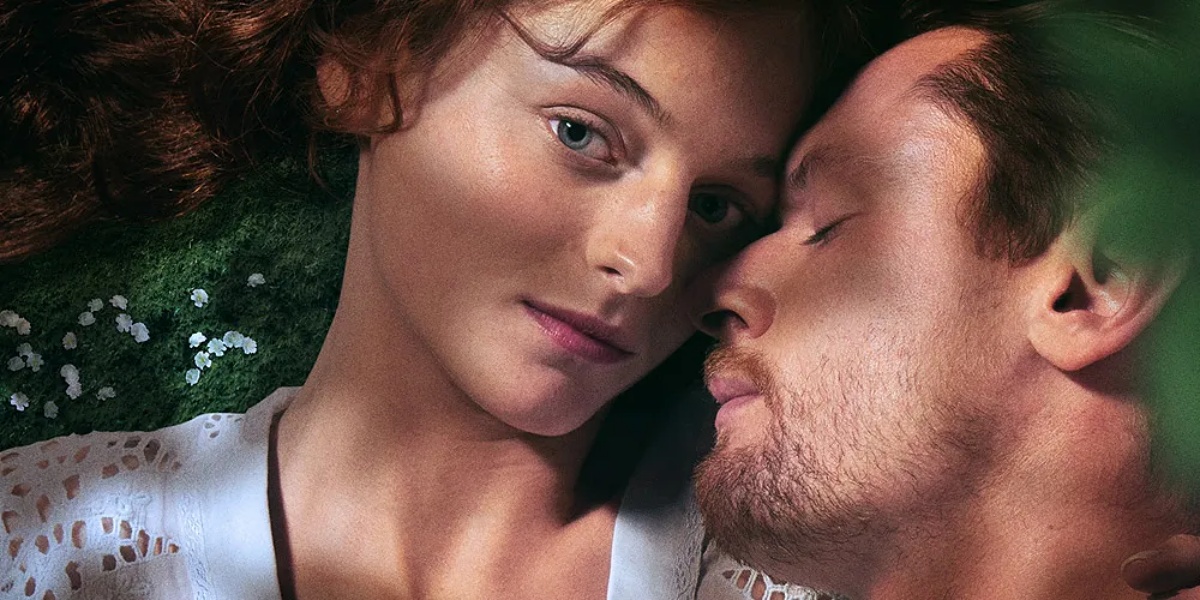


The ethical question here is similar to that in Lady Chatterley's Lover: Is it okay to have an extra-marital sexual relationship if one can no longer have a sufficient one one with one’s spouse?
Near the end of Netflix’s 2022 adaptation of D. H. Lawrence’s Lady Chatterley's Lover (1928), Mrs. Bolton, the main housekeeper at the Chatterley’s estate, tells a group of local working women, “I’ll not hear a word spoken against them. This is a love story.” The “them” is the adulterous Lady (Connie) Chatterley (played by Emma Corrin, Princess Diana in the latest season of “The Crown”) and her lover, the estate gamekeeper, Oliver (Jack O’Connell). And indeed the film, as well as the novel it’s adapted from, is a love story.
But what is love? As Shakespeare’s Hamlet said, "ay, there's the rub." Late in the film, Connie’s sister Hilda tells her that she confuses sex for love. Is that the case?
Perhaps more than another word, “love” has caused turmoil in literature, drama, and films. From Helen of Troy and Paris in The Iliad through Shakespeare’s Romeo and Juliet to the twentieth-century’s Rhett Butler and Scarlett O’Hara in Gone with the Wind, “love” has propelled plots just as it does in Lady Chatterley's Lover.
And perhaps no other word’s meaning has been as analyzed and contested as has “love.” But in the Netflix film we are concerned with primarily two kinds of it, romantic and spousal. The drama has plenty of the first, but not much of the second, which is not surprising because the first has more appeal to audiences and is easier to depict.
Romantic love occurs when we are smitten or intoxicated by the loved one. One source describes it this way: “When you’re smitten, there is an easy assumption of goodwill, benefit of the doubt and an absence of malice. There is an infectious and affectionate connection between the two of you that gives each person the feeling that s/he is walking on air. That anything is possible. That all my hopes and dreams are coming true—and I feel fully and totally alive.”
Spousal love is different and much more complex. It may begin with romantic love, and aspects of that type of love may continue long into a marriage, but true spousal love must also contain other elements. Primarily, it should be concerned with seeking the good of the spouse. That it is more complex than romantic love was signaled to Nancy and myself the day we were married when we both promised to “to have and to hold, from this day forward, for better, for worse, for richer, for poorer, in sickness and in health, until death do us part.”
Aiming to increase a spouse’s happiness involves much more than feeling and emotion. Our intellect also comes into play, but also actions, not just feelings and thoughts. One woman who both Barack Obama and Pope Francis consider a great American, lover-of-the-poor Dorothy Day, expressed some important truths about love that also apply to the spousal type. “To keep on loving, and showing that love, and expressing that love, over and over, whether we feel it or not, seventy times seven…and to be oblivious of insult, or hurt, or injury—not to see them, not to hear them. It is a hard, hard doctrine.”
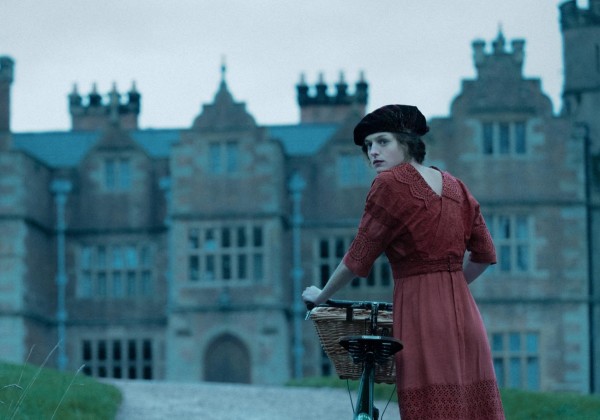 Emma Corrin (Photo by Parisa Taghizadeh/Netflix)
Maximum spousal love also means openness, empathy, and good listening. The French philosopher Simone Weil and Leslie Jamison, in her essay “The Empathy Exams” (2014), had some important words to say about these subjects. Weil thought that really paying attention to someone else meant trying to empty our soul “of all its own contents in order to receive into itself the being it is looking at, just as he [or she] is, in all his [or her] truth.” Jamison suggests some of the multifaceted dimensions of empathy when she writes: “Empathy isn’t just listening, it’s asking the questions whose answers need to be listened to. Empathy requires inquiry as much as imagination.”
Some of the best descriptions of spousal love in fiction come from Wendell Berry. Here are just a few quotes from his novel Hannah Coulter.
- Love is what carries you, for it is always there, even in the dark.
- [Hannah in old age looking back:] among the world’s wars and sufferings two people could love each other for a long time, until death and beyond…
- But to know you love somebody, and to feel his desire falling over you like a warm rain, touching you everywhere, is to have a kind of light.
- We had differences…There were the differences of nature and character that were sometimes happy and sometimes not.
- My mind, I think, has started to become, it is close to being, the room of love, where the absent are present, the dead are alive, time is eternal, and all creatures prosperous.
- My steadfast comfort for fifty years and more had been to know that I was on his [her husband Nathan’s] mind. Whatever was happening between us, I knew I was on his mind, and that was where I wanted to be.
- You can't give yourself over to love for somebody without giving yourself over to suffering.
Connie Chatterley and her husband, Clifford do not reflect much spousal love. The Netflix film only devotes about six minutes to the couple’s pre-WWI life before Clifford goes off to war. He comes back from it wheel-chair bound and unable to have sexual intercourse with his wife.
At this point in the film I thought again, as I often have before, what a foolish war was WWI. Two years ago in “The Needless Dead of Foolish Wars," I wrote the following about that war: “A main problem with many war accounts is their failure to evoke the full tragedy that people suffered. As one historian has written, ‘Among the major [European] combatants, it is not an exaggeration to suggest that every family was in mourning: most for a relative–a father, a son, a brother, a husband–others for a friend, a colleague, a lover, a companion.’”
Although not killed, Clifford was among the approximate 21 million who were wounded in the war, and a good deal of the discord that followed in the Chatterley’s marriage (sporadically depicted for the next two hours of the film) flowed from his WWI maiming. Unable to have intercourse with Connie, he displays no interest in exploring other ways to satisfy her sexual desires—he does, however, encourage her to have sex with a suitable man of her own choosing in order to produce a Chatterley heir.
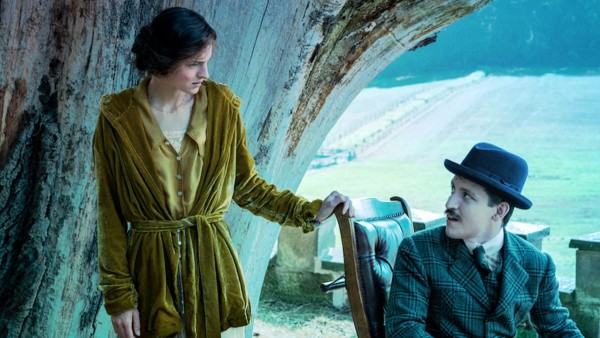 Emma Corrin and Matthew Duckettundefined(Photo by Parisa Taghizadeh/Netflix)
Clifford’s sexual inability and lack of creativity and imagination are not, however, the only impediments to his spousal love. There are a host of others. Toward the end of the film, Connie tells him that she wants a divorce, that she tried to follow his rules, but he gave her nothing in return, “not the slightest drop of affection or kindness.” He replies, “I’ve loved you in the only way I know how…Talk to me Con. Help me understand. Show me how I can prove to you how I feel.”
What that back and forth displays is what troubles so many marriages and relationships—not enough empathy and poor communication. Not once in the film do we see the couple make a real effort to discuss the differences and wants that keep dividing them. Never do we sense that seeking the good of the spouse is a major aim for either of them.
Instead they both pursue their own interests. He becomes increasingly interested in modernizing a mine under his control—“I know the mine seems to be all I speak of these days.” She, like D. H. Lawrence himself, is more interested in books and nature. On one of her bucolic walks she discovers the cottage of the estate gamekeeper, Oliver Mellors. And before the first hour of the film is over, she’s having sex with him, sex that she engages in as willingly and passionately as he.
It is at this point that the two different types of love—romantic and spousal—come into conflict. Trysting with Oliver is not what Clifford had in mind when he encourages Connie to conceive a child with a “suitable man.” An aristocratic snob, Clifford considers Oliver, who works for him, inferior. There is also the ethical question, “Is it right or wrong for the married Connie to have an extra-marital affair?”
Her situation reminded me of a January-2019 Washington Post article entitled “Lifestyle guru B. Smith has Alzheimer’s. Her husband has a girlfriend. Her fans aren’t having it.” The article went on to state that 20 years before Ms. Smith “was on TV, on the cover of magazines and books,” and owned restaurants. It also mentioned that she was African American and that Alzheimer’s rates were higher among that minority than among the U. S. population in general. But what particularly grabbed my attention was that she had been diagnosed with Alzheimer’s six years earlier. That would have been about the same time that I first detected signs of that dreaded disease in my spouse, Nancy, a disease that finally claimed her life earlier this year.
The Post piece mentioned that after a while Dan Gasby, B’s “husband and business partner of more than two decades…took over their Facebook page, sending near-daily missives to their 30,000 followers on the realities of caring for a spouse who was rapidly forgetting him.” And then, shortly before the Post article appeared, Dan “posted a Facebook photo of himself with a woman [Alex] with a thick blond mane and delicate features,” and he told B. “that Alex is his girlfriend, and he said it doesn’t seem to register”with B. It did, however, register with many of those who read Dan and B.’s Facebook page. “You don’t bring your mistress in the house where your WIFE lives. She’s not dead,” one wrote. A friend of Dan’s, however, “Michael Schnayerson, a journalist who co-wrote the couple’s 2015 book on Alzheimer’s, Before I Forget,” had a different perspective: “Anybody that would judge Dan knows nothing about the disease and the toll it takes” on one’s marriage.
The ethical question here is similar to that in Lady Chatterley's Lover: Is it okay to have an extra-marital sexual relationship if one can no longer have a sufficient one one with one’s spouse?
Responding to Dan’s friend, I would say I am someone who knows “about the disease and the toll it takes,” but I still would not “judge” Dan. Nor would I “judge” Connie in Lady Chatterley's Lover. The Bible’s “Judge not lest ye be judged” (Matthew 7:1) has always seemed like good advice to me. All I can say is that in my own case with Nancy, I could never have thought it would have been right to engage in any extra-marital affair. I began my rembrance of of our nine Alzheimer's years together with these words, "Love, love, love." If I really was to act on my spousal love, I simply could not cheat on her. One of the great temptations we all face is rationalizing. When we really want to do something our conscience tells us we shouldn’t, we are devilishly clever at finding a way around our best self, which tells us no! I am not applying these words to Dan Gasby or Lady Chatterley, only to my own situation, for no two cases are ever exactly alike.
Compared to the sex and romantic love engaged in between Connie and Oliver, the relations between her and Clifford seem drab indeed. Most of the time, he’s in their mansion sitting in his wheelchair wearing a tie, she’s often in Oliver’s cottage, with a stream babbling nearby. There her and Oliver often engage in passionate sex, which is equally enjoyable to both of them. Sometimes they have sex outdoors amid grass, trees, and sunshine—music also is provided. In one scene they frolic in the nearby water, in another she runs out of the cottage into a hard rain and takes off all her clothes. Oliver watches her with delight, then follows her example. For about a minute they gambol about like a couple of frisky colts, occasionally touching or hugging each other.
But, as much as we might wish otherwise, life is more complex than the pleasures of romance and sex. Hilda (Connie’ sister) is off base somewhat when she tells Connie she is confusing sex with love, for her affair with Oliver reflects many characteristics of romantic love, which can occur even without much sex. Connie loves him for his tenderness and kindness, and her values are much closer to his than to those of her stuffy aristocratic husband. But Hilda’s advice to Connie—“Come to Venice [with their family] and take the time to think through what your really want”—makes some sense, especially after husband Clifford fires Oliver and tells him to leave the cottage. Even Oliver tells Connie that her sister is right and that “we haven’t thought beyond tomorrow.”
Romantic love can have its wonderful moments, but Oliver is right to suggest that our feelings should be guided by our minds. Earlier I indicated that true spousal love involved not only feelings, but also thoughts and actions. And part of that combination is our hierarchy of values. When Hilda advises Connie to “think through” what she really wants, she is hinting that Connie should make use of a similar collection of attributes. Good advice it seems to me.
What Connie does do is go to Venice, which looks lovely as it usually does in films. And she finally receives a letter from Oliver, telling her he is in Scotland. What she does then and whether she ever reunites with him, I’ll leave to readers (and potential film viewers) to discover for themselves.
