

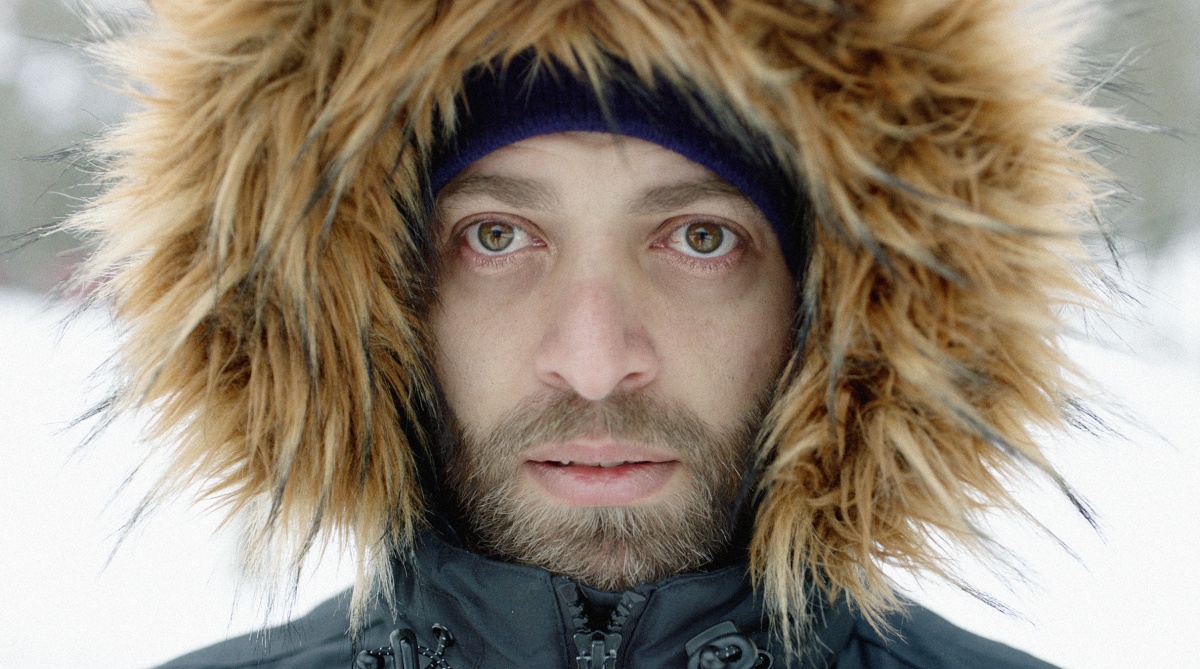
A Refugee Family: “Peace by Chocolate”

Even in non-immigrant families, generational differences have often occurred, in other countries as well as the U. S. and for a long time.
Maybe I’m becoming a “softie” in my old age. Two of the last three movies that I reviewed for Hollywood Progressive were about really good people. In the first of these reviews I noted, “For some reason, I’m a sucker for movies about good people.” In a recent LA Progressive essay, Rob Okun wrote, “Many spiritual traditions believe that positive qualities, such as a good heart, reflect human beings’ true nature. They teach that even amidst intense suffering there can be dignity and beauty.” I hope those traditions are right. I hope that our “true nature” is to be goodhearted and that all of our bad behavior—or at least most of it—comes from ignorance, confusion, and the influence of evil people like Donald Trump.
Or maybe...I’m trying to overcompensate for all of the bad news coming our way—for example, the Israeli-Hamas and Ukrainian wars, the mass killing in Maine with a weapon no civilian should have, the dysfunctionality of the Republican-led House of Representatives, and the continuing popularity (despite all his indictments, etc., etc., etc.) of Trump among Republican voters. At any rate, here’s another review about a movie that highlights good people. It’s on Amazon Prime. It appeared in theaters in 2021-22, but I just discovered it.
It’s about a young Syrian refugee, Tareq Hadhad (Ayham Abou Ammar), and his family fleeing a civil war in his native country and becoming a refugee in Canada. A very small town there (a tad less than 5,000), Antigonish, in Nova Scotia. Tareq comes first, but he is soon joined by his father, Issam (Palestinian actor Hatem Ali), and his mother, Shahnaz (Yara Sabri), and much later his sister, Alaa (Najlaa Al Khamri), and her daughter.
About six months ago for Hollywood Progressive I reviewed another film about Syrians refugees, young sisters who also fled because of the civil war, but to Germany. In that review I mentioned that a half million Syrians had “lost their lives in it, and by the end of 2022 another 6.7 million refugees had left Syria.” That review also deals more generally with many of the problems that refugees encounter and differing responses to them from Donald Trump’s fearmongering to Pope Francis’s empathy.
In “Peace by Chocolate” we see both fear and empathy, but mainly the latter, especially from Frank (Mark Camacho), who along with his wife, Heather (Cary Lawrence), take Tareq and later his parents into their home. When Tareq first comes to Canada (December 2015) he is greeted at the Halifax airport by Heather and Zariah (Kathryn Kirkpatrick), who seems to work at a local church.
Whether linked to a specific religion or not, what distinguishes (in real life and the film) helpers like Frank, Heather, and Zariah of refugees is their positive core values.
The film does not mention religion much, but the movie is based on real-life characters and events. And we know that church groups have often sponsored and helped refugees, and not just in Canada. Whether linked to a specific religion or not, what distinguishes (in real life and the film) helpers like Frank, Heather, and Zariah of refugees is their positive core values.
For example, we constantly see Frank trying to help Tareq’s father, Issam. Especially after Issam starts making chocolates—he was a very successful chocolatier in Damascus, Syria—does Frank pitch in. Unlike son Tareq, Issam speaks and understands almost no English, and Frank is right there helping him when he first starts selling his chocolates in a church room. Later on Frank buys a very small prefab house-like structure and gives it to Issam to use as his chocolate-making “factory.” And at one point, he tells Issam that they are more than friends, they’re brothers.
The film is plotted and acted well, with father Issam being especially effective. The main drama revolves around two themes:
- the Hadhad family’s attempt to adapt to life in a new country, and
- Tareq’s wish to complete his medical school training, begun in Syria, and become a doctor.
Regarding the first point, Issam’s main difficulty is that he speaks almost no English. In addition, the family has little money—though the Canadian government provides 2,000 Canadian dollars per month for one year—but despite that help and that of Frank, it is tough to start a new chocolate business. Issam cannot get a bank loan because, as he and Tareq point out, their religion (Islam) opposes interest (see here). Plus, some people in town are hostile to refugees like the Hadhads and suggest to city officials that Issam is not abiding by legal regulations in trying to run his chocolate-making business.
In a speech Tareq gives before a group, he outlines the general plight of refugees. (For a modern heartbreaking report on refugees, see here regarding the 1.7 million Afghan refugees who have lived in Pakistan now being expelled from there.) In his talk Tareq says, “If you looked at the comments online, you would think refugees were like rats. The truth is simple. We have families like everyone else. We love like everyone else. We seek peace like everyone else. But we don’t die like everyone else. We lost my sister’s husband to the war. If that makes us lucky, what is it like for the unlucky ones? Becoming a refugee means you lose everything. Your home, your history, your family. I’m here to say to you: thank you for your kindness. But there’s many of us suffering.”
Online comments suggesting refugees are like rats? Reminds one of Nazi propaganda portraying the Jews as less than human, comparing them with rats, lice, vermin, and the plague. Or one might think of Donald Trump’s speech in 2015, announcing his run for the presidency: “When Mexico sends its people, they're not sending their best...They're sending people that have lots of problems, and they're bringing those problems with us. They're bringing drugs, they're bringing crime, they're rapists...They're sending us not the right people. It's coming from more than Mexico. It's coming from all over South and Latin America, and it's coming probably, probably from the Middle East...Islamic terrorism is eating up large portions of the Middle East.”
When Tareq says that refugees have families and want love and peace “like everyone else,” he reminds me of poet and Lincoln biographer Carl Sandburg’s Prologue to a book of photographs, The Family of Man (1955), by his brother-in-law. The photos were taken from almost 70 countries and were meant to demonstrate humanity’s oneness. Sandburg wrote, “Everywhere is love and love-making, weddings and babies from generation to generation...Alike and ever alike we are on all continents in the need of love, food, clothing, work, speech, worship, sleep, games, dancing, fun.”
In contrast to Trump’s fearmongering, we also have the example of Lincoln’s contemporary Frederick Douglass. As I pointed out in “Do We Want the America of Frederick Douglass or Donald Trump?” Douglas advocated a “composite nation,” an idea that historian Jill Lepore called “strikingly original and generative....about a citizenry made better, and stronger, not in spite of its many elements, but because of them.”
Ultimately, with help from people like Frank, Issam does succeed. As John Kennedy (then a senator) wrote in his 1958 book, A Nation of Immigrants, “Everywhere immigrants have enriched and strengthened the fabric of American life.” Only Issam’s enriching occurred in Canada, not the USA. So enriching in fact that Canadian Prime Minister Justine Trudeau mentioned it in a 2016 speech to the Leaders Summit on Refugees at the UN in New York. He noted that not only did the family open a chocolate factory in their new Canadian town, but they also “donated some of their profits to the Fort McMurray fire relief efforts.”
Trudeau’s mention is acknowledged in the film, and at the end of it we are informed that “since Tareq’s arrival, Antigonish has welcomed over 100 Syrian newcomers.” Another source (from August 2023) tells us that “since 2019, the Canadian government has resettled more refugees than any other country, with little public backlash.” In the film, however, we do see some negative reaction. In addition to the Antigonish opposition mentioned above, about a half hour into the movie Tareq reads a newspaper with the headline, “Trudeau Slammed on Refugees Amid Concerns of Terrorism.” (Just as an aside it should be mentioned that until recent decades the Canadian government’s dealing with Native indigenous peoples was much less enlightened than its recent refugee approach.)
In regard to the second main plot line in the film—Tareq’s wish to complete his medical school training—we see many disappointments. At one point he says that he was “so close” to finishing med-school in Damascus, but once in Canada, we see him time and again opening Canadian med schools’ letters of rejection. Finally, he is accepted at Mount Pearl University’s medical school, but it is 20 hours away in Newfoundland.
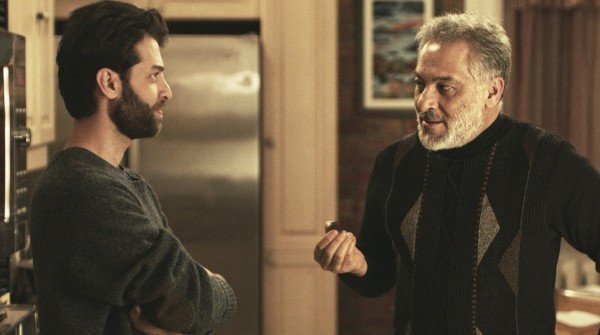
More importantly, his father, speaking and understanding almost no English, is extremely dependent on Tareq and reluctant to part with him. They have many arguments over the issue—Issam is a stubborn man. At one point he tells Tareq that he should be like sons in Syria, who obey their dads. But Tareq responds that in Canada things are different. Such arguments among immigrant father and sons (or daughters) are not unusual. Even in non-immigrant families, generational differences have often occurred, in other countries as well as the U. S. and for a long time—see, for example, Ivan Turgenev’s Fathers and Sons (1862).
Does Tareq finally go to med school and become a doctor or not? At the end of the film that question is answered. But I’ll leave that to readers and potential viewers to discover that answer for themselves. In the meantime, they can go to the very professional looking website if they wish to find out more about the Hadhad company, including how to obtain chocolate from it. And if one wishes to discover more ways to help refugees, he or she can go to the UN Refugee Agency.
