

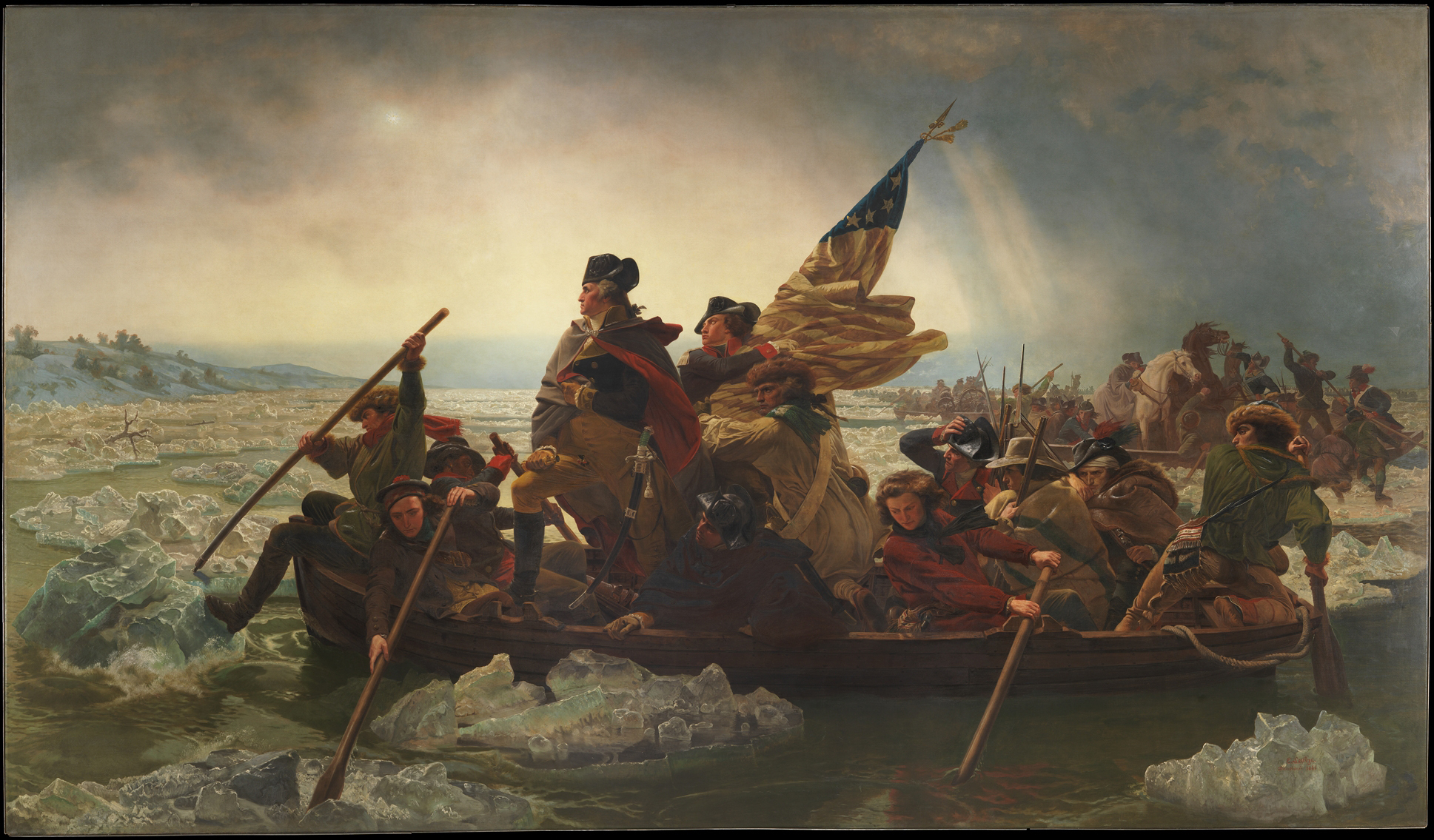

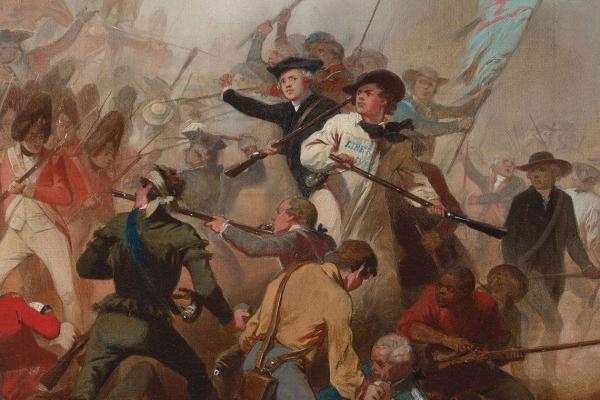
As important as African and Native Americans are to Burns’ story, it is primarily the various battles of the Revolutionary War that are his main focus.
If you missed Ken Burns’ 12-hour November series “The American Revolution,” you can still stream it on the PBS website, where a transcript of it all is also available. Like many of Burns’ earlier series, experts speak directly to us, and actors read the words of revolutionary personalities like George Washington and Abigail Adams. In both cases we’re treated to the voices of a distinguished group. In the case of the experts–many are professional historians from institutions like Harvard–we also see the persons speaking; but with the historical figures like Washington, we only hear the voices and sometimes a picture, but not a photograph in this pre-photographic era.
Among the actors voicing historical figures are Josh Brolin (George Washington), Paul Giamatti (John Adams), Jeff Daniels (Thomas Jefferson), Matthew Rhys (Tom Paine), Morgan Freeman (James Forten), Samuel L. Jackson (several Blacks including Boston King), Claire Danes (Abigail Adams), and Meryl Streep (Mercy Otis Warren). As he has often done in previous Burns’ productions, Peter Coyote acts as the general narrator.
As with many of Burns’s earlier series (e.g., on the Civil War and Baseball) he again demonstrates that he loves our country. But he also loves historical accuracy and is not afraid to portray our nation or its individuals in a bad light–if such is deserved. He realizes that people are human and have faults as well as virtues, and many of them share the flaws of their contemporaries–like Washington and Jefferson being slave owners.
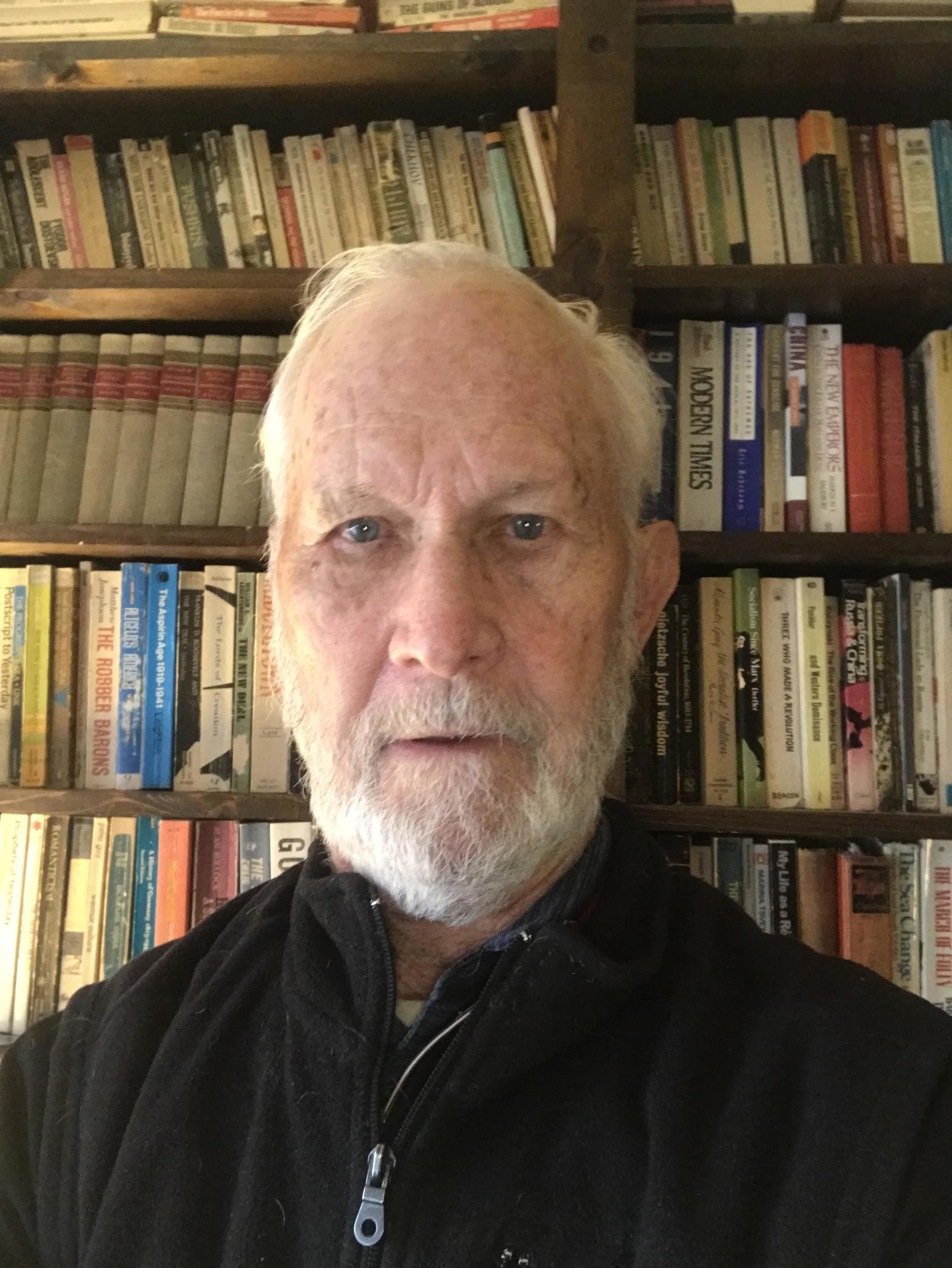
About a month ago, in LA Progressive, I contrasted the Burnsian approach to history to the “skewed ‘Trumpist view of history,’ which proposes to ignore or downplay its ignoble aspects.” I quoted historian Joseph Ellis, who sometimes speaks to us in Burns’ “The American Revolution.” In his The Great Contradiction: The Tragic Side of the American Founding (2025), he wrote of “two unquestionably horrific tragedies” of the revolutionary years–“the failure to end slavery, and the failure to avoid Indian removal.”
In Burns’ new series both tragedies are–without denying the greatness and heroism of individuals like Washington and Jefferson–given plenty of attention. Burns’ perspective is aided by incorporating the insights of Black scholars such as Annette Gordon-Reed and Native American historians like Philip J. Deloria, both at Harvard.
To underline Ellis’ point about not ending slavery, to appease some southern states the U. S. Constitution (1787) gave them compensation for their reliance on slaves. They received three-fifths representation in the House of Representatives and extra votes in the Electoral College for the slaves owned. The document also prohibited Congress from outlawing the Atlantic slave trade for twenty years, and it required the return of runaway slaves to their owners.
On several occasions the British promised slaves freedom if they deserted their American owners and took up arms for the British. Burns’ series points out that when the British forces attacked Virginia in early 1781 “some 4,500 ex-slaves now trailed along behind...Among those who threw in their lot with the British were 23 from Thomas Jefferson's estates and 16 from George Washington's Mount Vernon.”
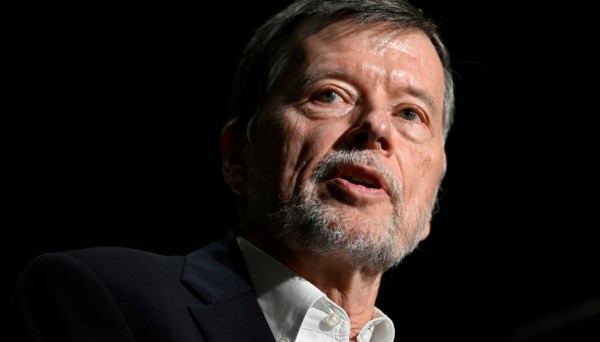 Ken Burns
According to the Burns’ series African-American Vincent Brown, who also teaches at Harvard, “about 15,000 Black people actually joined the British or ran away to the British lines versus about 5,000 ultimately entering the Patriot cause, and that's because, for many of those enslaved people, the British represented freedom. The Patriots did not. That's a hard story to tell to Americans.”
Used to glorifying Washington and Jefferson as heroes–and in many ways they were–when in the last episode after the American victory at Yorktown we hear that these two leaders re-enslaved former slaves (“5 enslaved people captured at Yorktown were returned to Thomas Jefferson. Two more, both women, were returned to George Washington's Mount Vernon”), we are saddened.
About Native Americans, in the last episode we also hear historian Ellis say about them that they probably would have been better off if the British had won. Although Indian tribes fought on both sides during the Revolutionary War, they tended more toward the British, believing–probably correctly–that continued British rule would be less likely to disrupt their traditional landholding.
Having seven years ago written “Which Presidents–If Any–Did Right by Native Americans?” I was not surprised that Burns depicts neither Washington nor Jefferson as favorable toward the American Indians. For I knew that Colin Calloway–who also speaks to us in Burns’ series–had written that “Washington...developed and articulated policies designed to divest Indians of their cultures as well as their lands and that would shape US-Indian relations for more than a century...He found little to admire in Indian life.”
I also knew, as I quoted historian Douglas Brinkley, that “no other president had ever helped Native Americans prosper with the heartfelt conviction of FDR [Franklin Roosevelt]. The New Deal encouraged Indian self-rule, the restoration of tribal government, and the resuscitation of native culture and religion.” Thus, neither our third president, Jefferson, nor even our 16th president (Lincoln) “exhibited much sensitivity toward Native Americans.”
Yet, as important as African and Native Americans are to Burns’ story, it is primarily the various battles of the Revolutionary War that are his main focus. However, other points also receive some coverage. Among them is the civil-war nature of our revolution against Britain. In The Atlantic (November 2025 issue), Burns and two other producers of the series write, “The bloody civil war at the heart of the Revolutionary story was far beyond what we had previously appreciated.” At times, members of the same family were on opposite sides. Ben Franklin’s son William, for example, sided with the British; and the series mentions that during the war, “as many as 50,000 Americans volunteered” to serve in British military units. (A significant percentage of these, but by no means all, were southern slaves to whom the British promised freedom.)
The producers of the series also mention the importance of disease during the struggle against Britain. For example, in Episode 5 we hear that at Washington’s headquarters at Valley Forge (Pennsylvania) beginning in December of 1777 that “over the next 6 months, 2,500 soldiers would die, mostly from typhus, typhoid, influenza, and dysentery.” In general, disease was the leading cause of death for soldiers, with far more dying from sickness than combat. Diseases like smallpox, typhus, and dysentery were among the leading ones.
In The Atlantic article mentioned above, we read that “weather became an unexpected and unheralded character in deciding battle after battle.” And the series often demonstrates that, pointing out, for example, that the “winter of 1779-1780 [was] probably the harshest winter in North America in the 18th century.”
The final episode in the series ends with a discussion of the peace that ended the war, the Peace of Paris, signed in 1783. And the episodes’ final words are those of Benjanin Rush, one of the signers of the Declaration of Independence. He reminded his audience–after the conclusion of the war–that “the revolution is not over.”And indeed it was not.
Our 1787 Constitution provided for amendments to be made to it, and it was not until the Civil War that the 13th amendment abolished slavery, and more than a half-century after that the 19th amendment granted women the vote in national elections. And now, more than a century after that amendment was passed, many believe that the continuing growth of American democracy is threatened by the second term presidency of Donald Trump. . Rush’s final words seem seem strangely appropriate: “Hear her [the USA] proclaiming, in sighs and groans, in her governments, in her finances, in her trade, in her manufactures, in her morals, and in her manners, ‘THE REVOLUTION IS NOT OVER !’”
