

Hulu’s “The Good Mothers”


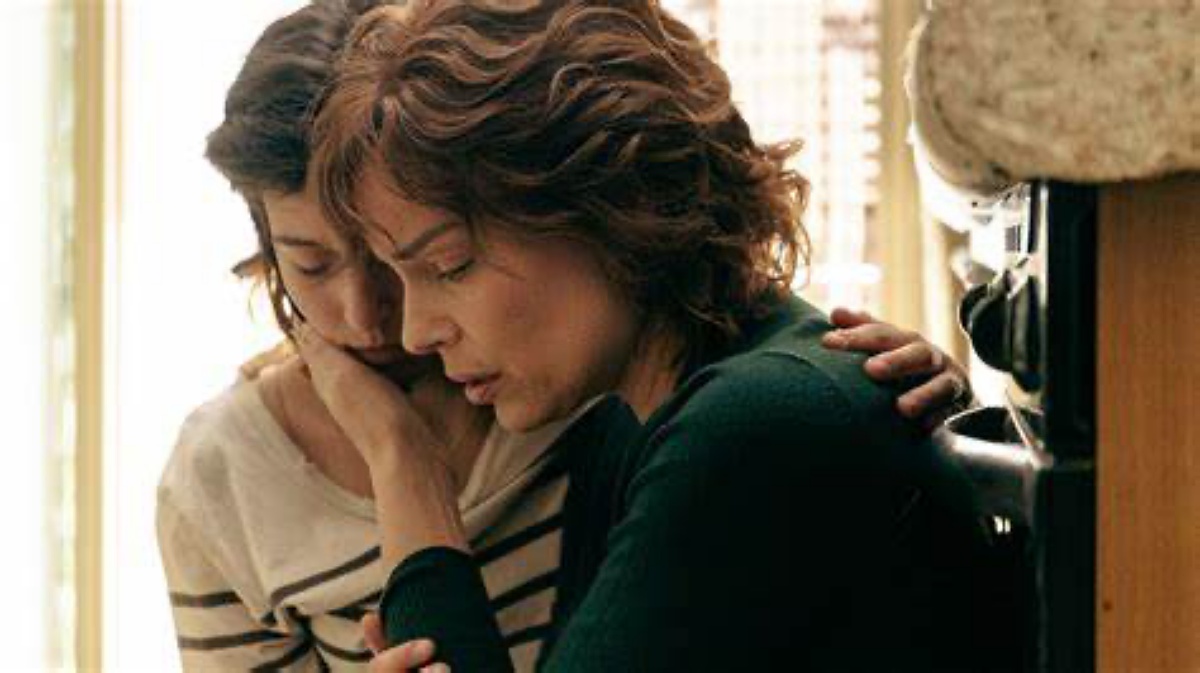
“The Good Mothers.” It’s mainly about the repressed, subjugated lives of several Mafia women in Italy’s southern region of Calabria.
On this Mother’s Day it seems appropriate to review the Hulu six-part series “The Good Mothers.” It’s mainly about the repressed, subjugated lives of several Mafia women in Italy’s southern region of Calabria. But within that story is the depiction of the strong, loving bond between mother Lea Garofalo (Micaela Ramazzotti) and her daughter Denise Cosco (Gaia Girace, who was Lila in the HBO production of “My Brilliant Friend.”) It’s also a story of competing values. Those of the Calabrian Ndrangheta (or Ndrangheta mafia) men versus those of several of their wives (and daughter Denise).
U. S. neuropsychologist and Nobel laureate Roger Sperry once stated, “Human value priorities…stand out as the most strategically powerful causal control now shaping world events. More than any other causal system with which science now concerns itself, it is variables in human value systems that will determine the future.” In his The Audacity of Hope (2006), Barack Obama (then still a senator) wrote that the question of values should be at “the heart of our politics,” and he devoted one of the book’s chapters to the subject. But in the U. S. and most other countries values receive little attention except from right-wing sources, which often dogmatically stress the wrong ones.
Before analyzing value conflicts, however, between the Ndrangheta mafia and a small number of Calabrian women, some background about the Hulu series and this mafia’s history will prove useful.
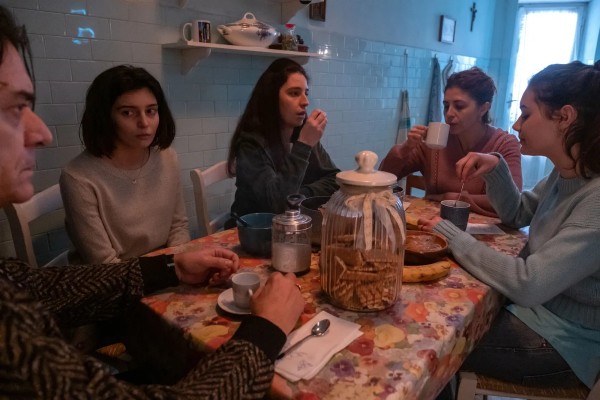
The series is based on the Alex Perry’s 2018 non-fiction book The Good Mothers: The Story of the Three Women Who Took on the World's Most Powerful Mafia. Like the book, the TV series has received rave reviews. Its first two episodes were screened in late February 2023 at the 73rd Berlin International Film Festival, where it won an award, and in April Hulu and Disney+ made it available for streaming. The series is set primarily in 2009-2010.
The origins of the Mafia and specifically the Calabrian Ndrangheta is clouded, but the latter seems to have existed already by the last decade of the 18th century. Various books on Italy have devoted chapters to the Mafia, including sections on the Calabrian Ndrangheta, and one of them will be referred to later. But for now we can cite Europol’s 18-page Threat Assessment Italian Organised Crime (2013), especially its section on the Ndrangheta.
Until the 1970s, the Ndrangheta was mainly localized in Calabria, but for a variety of reasons it subsequently extended its reach and influence into new areas. The Europol’s 2013 assessment states, “The ‘Ndrangheta is among the richest and most powerful organized crime groups at a global level. It has a dominant position on the European cocaine market...[It] is trying to colonise new territories and attempts to exert its influence over Calabrese migrant communities....The ‘Ndrangheta has a hierarchical structure and has repeatedly proven its skill in infiltrating political and economic environments and its remarkable capacity for corruption. Through the shrewd use of its immense liquidity (of criminal origin) in legitimate business structures it has been able to achieve a position of quasi-monopoly in selected sectors, such as construction, real estate and transport.” It addition to Italy, it “is mainly present in Spain, France, Belgium, the Netherlands, Germany, Switzerland, Canada, the USA, Colombia and Australia.”
In the 1970s and 1980s, the Ndrangheta acquired significant money from kidnapping ransoms. Some of that wealth the leaders used in fostering drug trafficking, especially cocaine, at which they became a global leader. By fraud, threats, connections, and money laundering they were also frequently able to divert public funds into their own criminal activities and pockets. In addition, they have been are involved in environmental crimes, such as illegal waste dumping.
“The Good Mothers,” however, focuses almost exclusively on Calabria and Milan, where Denise’s father, Carlo (Francesco Colella), has moved to; the Ndrangheta Italian operations; a few of their Mafia families including those against whom the brave heroines rebel; and public prosecutor Anna Colace, who convinces two of the rebellious wives to testify. The other wife, Denise’s mother, Lea, had provided police with information already back in 2002, had been in witness protection for several years, and then along with Denise moved around to evade possible Mafia revenge.
But Carlo, after being released from prison, persuades Lea to bring Denise to Milan so he can meet her. Lea, however, soon disappears, and Denise suspects her dad, but he insists that Lea just abandoned her daughter. Having for years witnessed her mother’s strong love, Denise cannot believe Lea would desert her. For most of the rest of the series she continues seeking to find out what happened to her.
The second of the three wives is Guisy, Giuseppina Pesce (Valentina Bellè). We see her visiting her husband in prison, and she has three children, the oldest apparently a teenager. She works with her father and brother, who are involved in Calabrian drug ring. Her dad is especially macho with her. On one occasion while eating a family meal he smashes her face into her plate. Like the third Mafia wife, Maria Concetta Cacciola (Simona Distefano), Guisy has a boyfriend who she keeps secret from her family. (Denise also has a romantic interest, a young Mafia man who works for her father.)
So as not to spoil the suspense for future readers—and there is plenty of it—I’ll reveal little more except to say that the mystery of the fate of Lea and whether or not prosecutor Anna Colace will be successful in sending some Mafia men to prison continues until almost the end of the series.
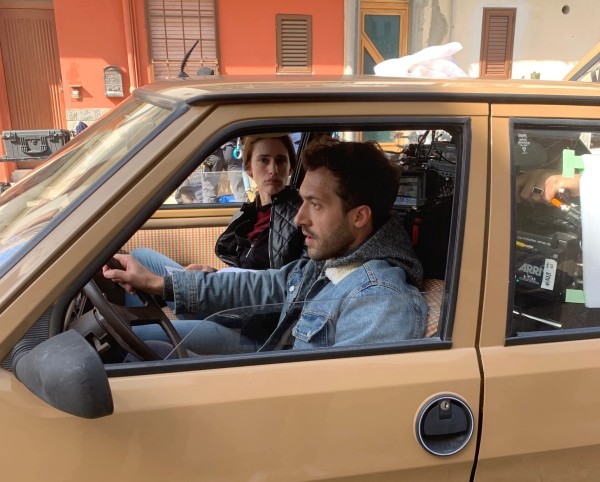
What remains to discuss are the different values of the three wives and Denise as compared to the Mafia men. In his New Italians (1994), Charles Richards tells us that the word ‘Ndrangheta probably comes from a Greek word meaning manliness. “And it is this cult of manliness that has led to the highest murder rate in Europe, if not the world.”
Less than a year ago, on LA Progressive, my “Macho Men Threaten Democracy” appeared, and it discussed the machoness of men like Trump and Putin. It also quoted Philip Caputo’s Rumor of War (1977), where he writes of becoming a Marine officer and fighting in Vietnam. “The heroic experience I sought was war; war, the ultimate adventure; war, the ordinary man's most convenient means of escaping from the ordinary....Already I saw myself charging up some distant beachhead like John Wayne in Sands of Iwo Jima, and then coming home a suntanned warrior with medals on my chest....I needed to prove something—my courage, my toughness, my manhood.”A similar false set of “manly virtues” characterize the Mafia—willingness to use violence, absolute loyalty to one’s fellow warriors (other Mafia men) and to the patriarchal family.
My LA Progressive essay also contrasted such “virtues” to values considered more feminine such as compassion and empathy. And in “The Good Mothers” it is especially the love and compassion of the three mothers—Lea, Guisy, and Maria—for their children and Denise’s love for Lea that motivate them. That and the women’s wish to be recognized as human beings with their own desires and needs. Not a bad tribute to women on this Mother’s Day.
