



Fictional meditations on people, especially of the upper class, attempting to cope with social and other changes, have a long history.
The authors of the Italian novel The Leopard and the Russian novel Doctor Zhivago, respectively Giuseppe Tomasi di Lampedusa and Boris Pasternak, died within three years of each other, Tomasi in 1957 and Pasternak in 1960. Both of their novels also became major films, The Leopard in 1963 and Doctor Zhivago in 1965, and then later TV series, Zhivago in 2002 and The Leopard just recently (in six hourly, dubbed episodes by Netflix) in early 2025. The authors of the two books were also both born in the 1890s and into upper-class families, with Tomasi being a prince and Pasternak’s father being a famous painter and illustrator of some of Leo Tolstoy’s works.
Their novels also deal with main characters who are privileged and of earlier generations than than their authors—Prince Fabrizio of Sicily acting mainly in the early 1860s and Yuri Zhivago, primarily in the first several decades of the twentieth century. Yuri remembers a time when “there was a Zhivago factory, a Zhivago bank, Zhivago buildings, a Zhivago necktie pin, even a Zhivago cake.” Finally, the main story line of both novels is the same—how Prince Fabrizio and Zhivago deal with the tumultuous changes that are occurring in their countries—the unification of Italy in the first case and the Communist revolution, Civil War, and early Soviet era in the second.
Fictional meditations on people, especially of the upper class, attempting to cope with social and other changes, have a long history. In Russia alone we have, for example, Tolstoy in War and Peace and Chekhov in Three Sisters.
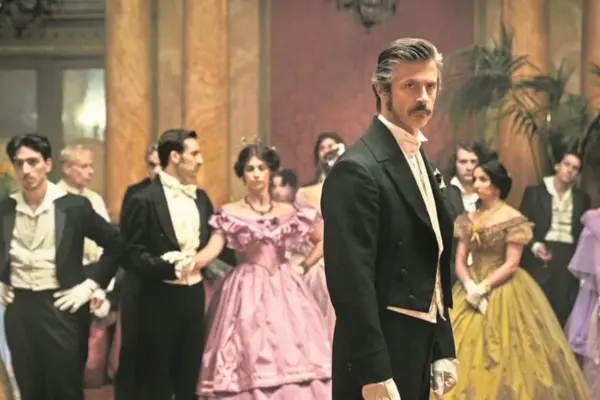
One review of the new Netflix Leopard series compared it to the TV series “Downton Abbey.” And indeed, like the older series dealing with how an aristocratic British family confronts modern (early 20th century) challenges, so too the Italian drama fixates on the privileged family life of a Sicilian house, including the loves and adventures of adult children. Why depictions of bygone noble families appeal so much to we modern, distinctly non-noble, individuals is somewhat of a mystery, yet the attraction is undeniable.
Perhaps one of the pleasures we receive is the all the abundant depiction of luxury—the palaces, the gardens, the servants, the pictures on the walls, etc. But there’s also the universal appeal of family-life dynamics.
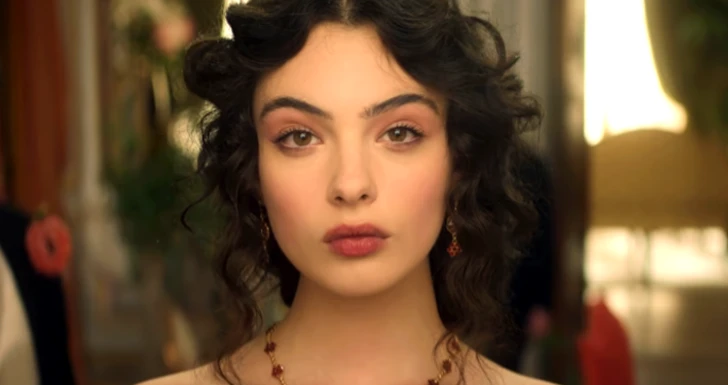
In both the book and screen adaptations of The Leopard, daughter Concetta and her romantic entanglements are her dad Fabrizio’s main family concern. At first, she falls in love with her cousin Tancredi, who is also a favorite of her dad and a supporter of Garibaldi’s quest to unite Italy—about which Fabrizio is not so enthused. But Tancredi comes to prefer the daughter, Angelica, of a fawning (at least to Prince Fabrizio) local mayor, who in the series is the chief symbol of a new class of men who come to challenge the old aristocracy.
For a while Concetta retreats to a convent, and appears headed to—but ultimately does not—become a nun. (Her mother is also very religious, and Fabrizio complains [in the novel], “How can I find satisfaction with a woman who makes the sign of the Cross in bed before every embrace and then at the critical moment just cries, ‘Gesummaria!’ [Good Lord!].” He offers this as a partial excuse for having a mistress in Palermo, the capital of Sicily.)
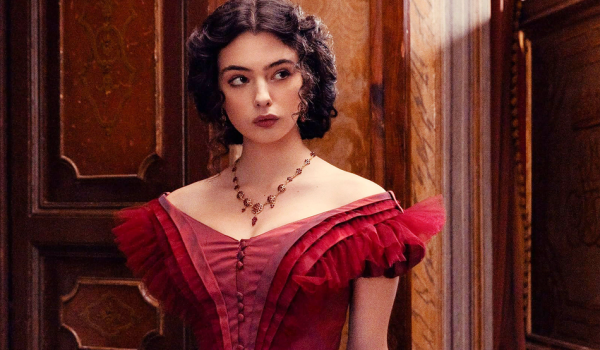
In general the series is pretty faithful to the novel except for the last part. In the book, Chapter 6 is devoted to “A Ball,” which occurs in 1862, Chapter 7 to “Death of a Prince” [Fabrizio], which takes place in 1888, and Chapter 8 to “Relics,” which is set in 1910 and focuses on Fabrizio’s three daughters, especially Concetta. In the Netflix series, the late part of the last episode (Number 6) combines the period from late 1862 to 1910, which necessitates some significant changes in the story’s depiction.
In summary, the Netflix series is well acted, appealing to the eye, features the rise and fall of love interests--which has universal appeal--instructs viewers about a little history, and touches on some major important themes. Among the latter are coping with change, including death--one of Fabrizio’s sons dies before he does--and class challenges.
