

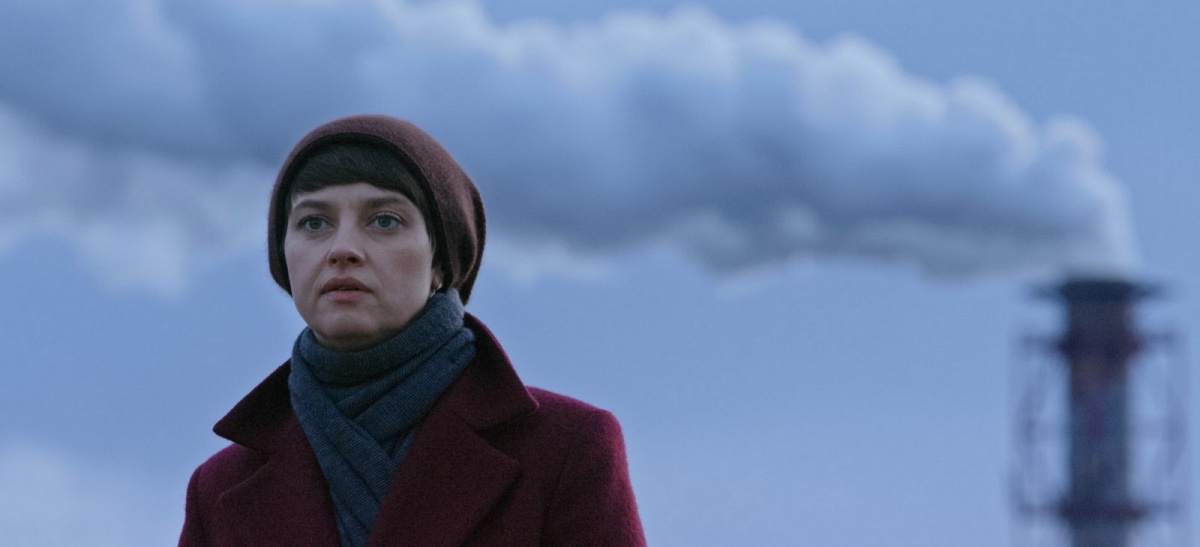

The film symbolizes the long battle in Russia between the state and dissident intellectuals—artists, scientists or, writers.
In LA Progressive a year ago, my “Two Russias” appeared. It zeroed in on “two competing visions of Russia. One vision, reflected in some of Russia’s great writers [like Tolstoy and Chekhov], emphasizes what are sometimes considered the more feminine virtues of peace, love, and compassion. The second vision stresses a warped version of values often deemed more masculine, such as strength and toughness, and is best exemplified by the macho hawkishness of Vladimir Putin.”
The Russian film The Pencil (2019), available on Amazon Prime, falls firmly within the first category. And, perhaps not coincidentally, it is directed by a woman, Natalia Nazarova.
Not knowing the director’s intentions, but just reflecting on what the screen reveals, one could view the film as symbolizing the long battle in Russia between the state—whether tsarist, communist, or Putinesque—and dissident intellectuals, whether artists, scientists (like Andrei Sakharov) or, more commonly, writers. At different points in their lives, Dostoevsky, Tolstoy, Chekhov, Pasternak (author of Doctor Zhivago), Solzhenitsyn, and most recently Masha Gessen had to deal with oppressive Russian state systems and state-supported censorship.
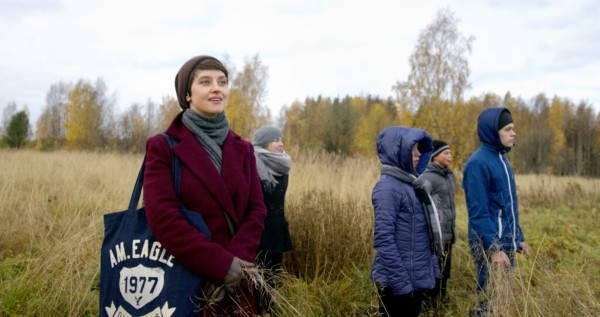
The Pencil’s main character, Antonina Zolotareva (Natalia Gorelova), is an artist from Saint Petersburg, who comes to a small provincial town, 1,230 kilometers from Moscow. She comes to be near her husband, a more famous artist, who she says was “falsely accused,” received an eight-year sentence, and is imprisoned nearby. (Film quotes are from the filmscript.) She rents a room in a big house, and starts teaching art (to grade 8) at a local school. The words she utters, to her students and others, reflect values cherished by many of Russia’s dissident intellectuals, past and present.
In 1970 Alexandr Solzhenitsyn was awarded the Nobel Prize in Literature, and he wrote out a lecture, but did not go to Stockholm to deliver it because he feared he would not be allowed to reenter the USSR. Nevertheless, in his written-out lecture he talked about Art (including literature) and its “inner light.” The main part of his talk was to stress Art’s power to serve beauty, truth, and goodness. He quoted, for example, Dostoevsky who once wrote, “Beauty will save the world.”
Similarly, in The Pencil, Antonina talks about the importance of beauty. After a fellow teacher asks her how she likes her new surroundings, she answers, “The nature is very beautiful.” Later she says, “What beautiful houses they have here!” And she tells her students that “the human being is...probably, the most beautiful, and mysterious” creation. “Admire each other. Because you're all beautiful.”
Regarding truth, she tells a woman, Vera, that her artist husband had “a blog,” which authorities sometimes shut down. After Vera asks her what he wrote about, she responds, “How to say it? The truth...He tries to come to grips with our reality.” She asks Vera, “Did you notice we are all being lied to? They say one thing, but do the other.” Vera responds, “We lie to them and they lie to us.”
When it comes to goodness, she demonstrates it rather than talks about it. She chides a fellow teacher (Andrey) for calling his students “morons.” She tells him, “You know it's wrong, don't you?” Later on she rejects his cynicism when he says to her, “You want to...pull them [her students] out of this shit...[but] they don't feel that they're in the shit. They feel good. All those attempts to understand simple people never ended well. You know this very well from Russian history. And do you know why? Do you want me to tell you?...All they need is...beer, soccer, BBQ, and family outings on weekends. Some TV show. The funnier, the better. They don't give a shit about your Michelangelo. . . . Stay out of their lives...Or you'll awaken demons, that will eat you alive.”
Most importantly, however, her goodness is demonstrated by her care for her students and her determination not to let the class bully, Misha, disrupt the beauty and truth she wishes to convey to them (more on Misha to follow). Her dedication to her teaching calls to mind what the writer Maxim Gorky once wrote that Chekhov had said to him: “If you knew how badly the Russian village needs a nice, sensible, educated teacher! We ought in Russia to give the teacher particularly good conditions, and it ought to be done as quickly as possible. We ought to realize that without a wide education of the people, Russia will collapse...He ought to be the first man in the village; the peasants ought to recognize him as a power, worthy of attention and respect; no one should dare to shout at him or humiliate him personally, as with us every one does. . . . All this is disgusting; it is the mockery of a man who is doing a great and tremendously important work.”
The chief force opposing Antonina is Misha, the class bully. At various times he disrupts Antonina’s art class, refuses to obey her, prevents other students from coming to her class, collects money from and beats up other students. His older brother, Aleksey, is described as a thug, robber, and murderer, although “they cannot prove the murders. The witnesses are being intimidated. Even the police are afraid of him.” For most of the film he is in prison, but returns to the town where Antonina teaches before the movie ends.
The world of Misha and Aleksey could very well symbolize Putin’s world.
The world of Misha and Aleksey could very well symbolize Putin’s world. Contrary to valuing beauty, truth, and goodness, it prioritizes physical strength, violence, and money—in one scene Misha is seen counting all the money he has, at least some of which was obtained by dishonorable methods.
In 2015 my “Putin vs. Obama: 'Macho Man’ vs. Girly Boy'?” referred to 21 macho Putin poses. We see a “shirtless Putin, muscles bulging, swimming, hunting, fishing, horseback riding. He is also in judo, hockey, skiing, and diving outfits, and we are reminded that he has earned black belts in judo and karate and is an ardent amateur hockey player . . . . We also view him in a race car, speed boat, and fighter jet, and on a motorcycle, as well as next to a bear and tiger (both tranquilized).” Like Micha and brother Aleksey in The Pencil, he is a macho man.
Not only is this former KGB officer a macho man, but he’s also willing to use violence when he thinks it necessary. One recent article provides “a list of people who have been critical of Putin and the Russian president is suspected of assassinating” from 2003 through 2022. In that latter year, he also ordered the Russian military to invade Ukraine, warfare that still continues and whose violence is causing innumerable suffering.
When it comes to money, one of the men Putin is suspected of having poisoned but who now is imprisoned is Alexei Navalny, and he has charged Putin with being “obsessed with money and luxury.” He leveled this charge in a documentary available on YouTube. He is considered Putin’s most significant outspoken critic, and a documentary about him was awarded a 2023 Oscar, and is available to stream on HBO Max.
Despite the fact that Putin does not have beauty, truth, or goodness on his side, he has been in power for over two decades. Navalny, whose aims have been more similar to Russia’s past dissidents and to Antonina’s in The Pencil, is in a maximum-security prison, serving a nine-year jail term.
In the short term, the good, the true, and the beautiful do not always win out. And so as not to give away too much for those who have not seen the film, I’ll not reveal whether or not Antonina and her ideas triumph over Misha and his brother and their dastardly values. Regardless, however, of the film’s ending, true progressive know which side they favor.
