


The series captures well the ambivalence of the U. S. government and public toward the war in Europe
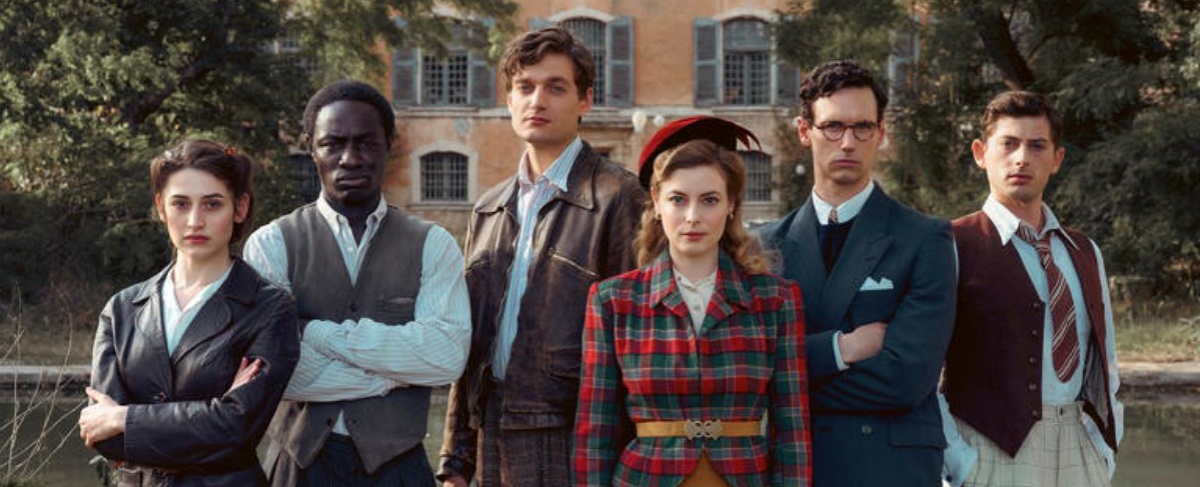
Netflix's “Transatlantic” series of seven shows, each a little less than an hour, tells an important story. It is set in 1940-41, in the French Mediterranean city of Marseilles, then under the control of the Nazi puppet government of Vichy, France. Its main character is Varian Fry (Cory Michael Smith), an American journalist who heads the Emergency Rescue Committee (ERC) in Europe. As he tells a ship captain in Episode 4, “There was a small group of us in New York. Put together a committee with some important German émigrés. Thomas Mann, Theodor Adorno. They wanted to rescue some of their friends, their colleagues, the greatest thinkers and artists in the world. We needed someone on the ground. I was the only person that volunteered.” (All series quotes are from the episode transcripts.)
In his The Sea Change: The Migration of Social Thought, 1930-1965 (1975) historian H. Stuart Hughes writes, “the migration to the United States of European intellectuals fleeing fascist tyranny has finally become visible as the most important culture event...of the second quarter of the twentieth century.”
At the end of the Netflix series we are told, “Between 1940 and 1941 Varian Fry and the Emergency Rescue Committee helped more than 2,000 victims of the Nazi regime to safety across the Atlantic.” Many of them were important cultural figures, and many of them were Jewish, such as artist Marc Chagall and political theorist Hannah Arendt.
The series raises questions on two important topics:
- The U. S. attitude toward Jewish refugees fleeing the Nazis, and
- our attitude in general toward refugees and immigrants.
In an earlier LA Progressive (LAP) article, I quoted John Kennedy’s 1958 book, A Nation of Immigrants: “The contribution of immigrants can be seen in every aspect of our national life. We see it in religion, in politics, in business, in the arts, in education, even in athletics and entertainment. There is no part of our nation that has not been touched by our immigrant background. Everywhere immigrants have enriched and strengthened the fabric of American life.’’ Today, with white supremacists opposition to so many immigrants and refugees, this central question of their value remains terribly significant.
As a historian especially interested in culture and the history of ideas, I am indebted to many of the people that Fry worked with or helped to emigrate to the USA. Hannah Arendt is a good example. Best known for her The Origins of Totalitarianism, she was also the author of many other books and essays. One of the latter I have often mentioned is “Truth and Politics” (1967).
Two of the people that Fry cooperated with in founding the ERC, Thomas Mann and Theodor Adorno, were two of the most important German emigres who had come to the USA prior to 1939, when World War II started in Europe. Mann was perhaps Germany’s most famous 20th century novelist, and the multi-talented Adorno was treated by Hughes at great length in his The Sea Change. (The most prominent German Jew to come to the USA because of his dislike of Hitler, even before he became chancellor in early 1933, was Albert Einstein.)
Regarding the main characters and events of the series, they are indebted to Julie Orringer’s historical novel The Flight Portfolio (2019). In an earlier essay, I outlined the often complex relationship between history and the type of fictional elements that are often introduced in novels, films, and TV dealing with historical subjects. Suffice it to say here that most of the main characters in “Transatlantic”—such as Varian Fry and the rich U.S. socialite Mary Jayne Gold (Gillian Jacobs), who worked with him—really existed, and their main actions are fairly well mirrored in the series. Of course its co-creators, one of whom was Anna Winger, who also created the TV series “Deutschland 83” and “Unorthodox,” took artistic liberties with dialogue, some events, names, and even the creation of several lesser characters.
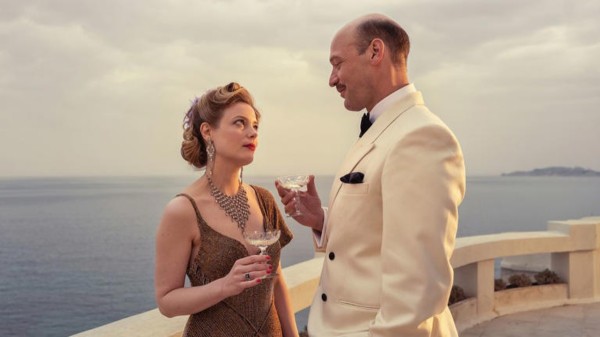
One notable example was the U. S. consul general in Marseilles. In the series, he is called Graham Patterson (Corey Stoll), a fictional name, but a diplomat who acts in a similar manner to the real diplomat, Hugh S. Fullerton. Like the latter, Patterson wanted to keep the U. S. out of the war, often cooperated with the local Vichy police, and generally opposed Fry’s efforts to help refugees.
The series captures well the ambivalence of the U. S. government and public toward the war in Europe, which we did not become involved in until the Japanese bombing of Pearl Harbor on 7 December 1941. On the one hand, most Americans disliked Hitler and Nazism; but on the other, most of them wanted to stay out of “Europe’s war.” Also we were ambivalent about refugees and immigrants.
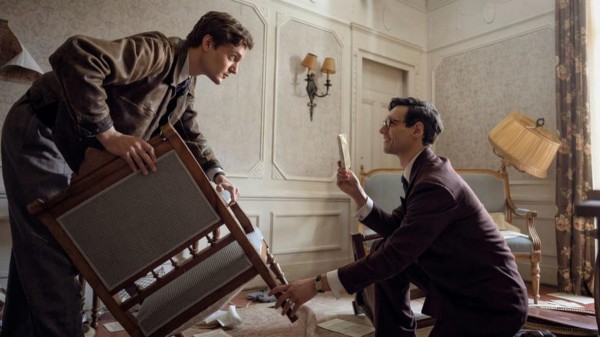
In Episode 2, one of Patterson’s assistants, Harry Bingham Jr. (Luke Thompson), tells Fry that his boss’s policy on issuing visas was, "No pinkos, no British POWs, no Jews. Do I have to spell it out for you?" And Bingham adds, “there's zero appetite stateside for taking in refugee children.” Bingham was a real life person, and his boss in Marseilles (Fullerton) actually expressed such sentiments.
In 1924, Congress passed an Immigration Act that curbed the admission of southern and eastern Europeans, including many Jews. In 1940 there was still prejudice against such immigrants. In 1939 the English poet W. H. Auden, then living in New York, wrote his “Refugee Blues,” which contained such lines spoken by a Jewish refugee about that city as “there's no place for us, my dear” and “Saw a door opened and a cat let in: / But they weren't German Jews, my dear, but they weren't / German Jews.” That same year 937 Jewish refugees on a ship fleeing Nazi persecution were denied U. S. entry. Although President Franklin Roosevelt was more progressive than most of the country, and his wife, Eleanor, supported the ERC, he also reflected some of the biases that many Americans shared. (For other reflections of U.S. antisemitism in the 1940s, readers can turn to Philip Roth’s novel the The Plot Against America (2004) or the 1947 film staring Gregory Peck, Gentleman’s Agreement.)
Although many U. S. company executives disapproved of Hitler’s persecution of the Jews and others, capitalism was primarily about making profits.
Another good example of U. S. ambivalence towards Nazi Germany involves foreign trade. Although many U. S. company executives disapproved of Hitler’s persecution of the Jews and others, capitalism was primarily about making profits. In Episode 6 counsel Patterson deals with an executive from a company called ACM. He shows Patterson punch cards and says that they contain data from “last year's US census, but we can customize it to any client's needs [including Nazi German ones]. Data..Um...Age, race, income, marital status. ACM provides the technology. We don't tell them how to use it. The data serves to organize people into groups. Track migration. Predict behavior.”
The fictional ACM resembles the real-life IBM. In his IBM and the Holocaust, Edwin Black writes “Jews could not hide from millions of punch cards [produced by an IBM subsidiary in Germany] comparing names across generations, address changes across regions, family trees and personal data across unending registries.'' Thus, “millions of cards, millions of lives and millions of dollars would now intersect” at the Nazi’s stations. And Black concludes that “IBM placed its technology at the disposal of Hitler's program of Jewish destruction and territorial domination.” Moreover, he contends that IBM was not the only U. S. company that ''refused to walk away from the extraordinary profits obtainable from trading with a pariah state such as Nazi Germany.''
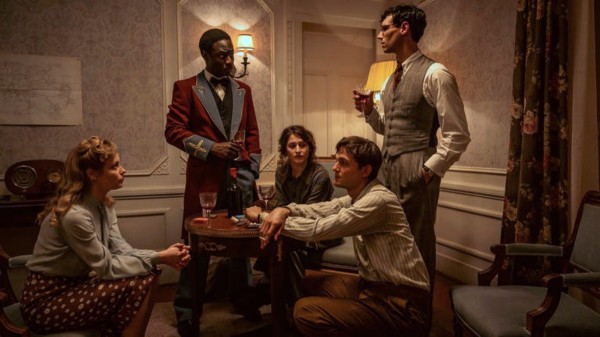
There is little doubt that the co-creators of “Transatlantic” are sympathetic with Varian Fry’s viewpoint, the ERC, and progressive values generally. Fry is depicted as gay, and although there is some dispute about that, his son James wrote, “My father was indeed a closeted homosexual.” Nevertheless, in several of the series love scenes between him and a man named Thomas, Fry is not so “closeted” and openly kisses him. In addition “Transatlantic” takes some artistic liberties in having two African hotel employees, as well as a Black woman, in Marseilles play a major role as resistance planners and plotters. And one of the French Africans, a fictional Paul (Ralph Amoussou) , has a love affair with Lisa Fittko (Deleila Piasko), a Hungarian Jew who actually aided Fry and the ERC.
If the primary goal of the series is informative and thought-provoking entertainment without any major disservice to history, then “Transatlantic” passes the test. The mix of real history and fictional occurrences, like love affairs and invented dialogue, seems about right for achieving such a goal.
The debate about immigrants and refugees—Should we welcome and admit a generous amount or should we shun and limit them?—has gone on for a long time and will continue and maybe even intensify. In an earlier LAP article I contrasted the fearful nativist and later Trumpian views of immigrants and refugees with that of Frederick Douglass, who favored a “composite nation.”
Later on, I pointed out the radical difference on the subject between the views of Trump and Pope Francis, who stated, “Our response to the challenges posed by contemporary migration can be summed up in four verbs: welcome, protect, promote and integrate.” A recent article by the New York Times columnist Thomas Friedman, “How Immigrants Are Saving the Economy,” suggests that his views would lead him to opt for the Douglass/Pope Francis viewpoint. So too do the seven episodes of Netflix's “Transatlantic.”
