

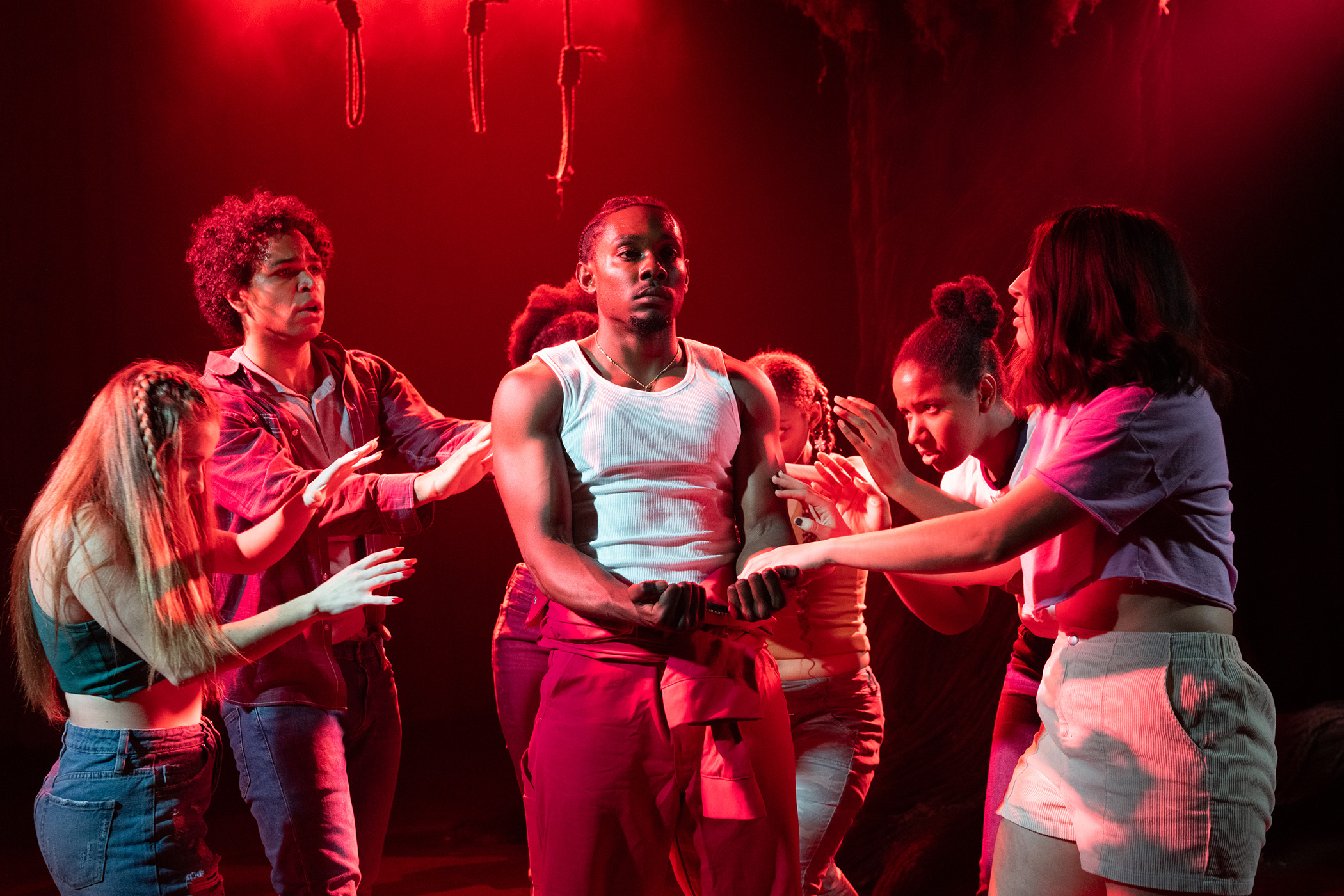

Michael A. Shepperd has creatively directed Root as a choreopoem, a mode of expression that mixes music, song, dance, poetry and drama.
BLOOD AT THE ROOT: Theater Review
Mondays are often considered to be the “blah-est” day of the week but a few of L.A.’s live stages present plays that night and I had the enormous good luck to see Blood at the Root at the Atwater Village Theatre last Monday before it closes on Oct. 28 (with a rumored extention into November). Dramatist Dominique Morisseau’s one-act play, which premiered March 28, 2014 at Penn State Center Stage, fictionalizes a real life racial conflict in Louisiana known as the “Jena Six.”
The actual events that took place at Jena High school in 2006 that Root is based on readily lend themselves to dramatization. What makes this Open Fist Theatre Company production so outstanding and collar-grabbing is its form. Michael A. Shepperd has creatively directed Root as a choreopoem, a mode of expression that mixes music, song, dance, poetry and drama. (Bard Ntozake Shange invented the term for her 1976 for colored girls who have considered suicide/when the rainbow is enuf.) To be sure, there definitely is a plot but by using these imaginative stage techniques Root’s story is heightened beyond the recitation of a mere linear narrative. By breaking with naturalism, Root gets closer to, well, expressing the root of the clash that erupted at Jena High (which is here thinly veiled as “Cedar High School”).
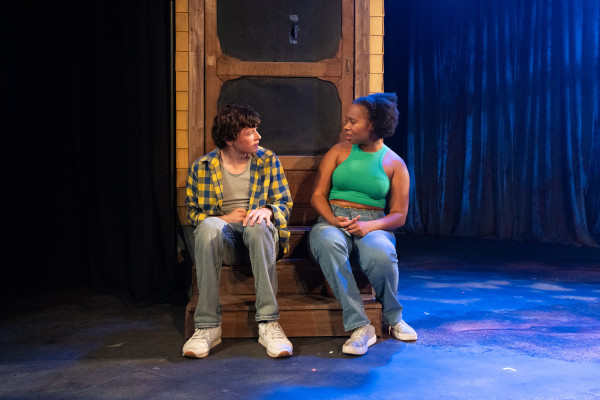 Jeremy Reiter II and Nychelle Hawk
The play opens with the protagonist, braided Raylynn (Nychelle Hawk), and the blonde Asha (Caroline Rose) leading the cast in lamenting how hot the weather is for October. This seems to be a direct reference to Spike Lee’s 1989 classic about a race riot in Brooklyn on the hottest day of summer in Do the Right Thing, and cleverly sets the stage for what’s to come. The spunky Raylynn not only decides to become Jena High’s first Black student to run for class or school president, but sits beneath the tree (presumably the school’s eponymous cedar?) that dominates the campus, as well as the set (kudos to scenic designer Joel Daavid). Supposedly, this spot in the courtyard beneath the tree was racially reserved for whites only (BTW, this is disputed re: the actual Jena High), and all hell breaks loose.
The next day, three nooses hang from a branch of the tree, which catapults the drama onto a trajectory of confrontation, that includes Civil Rights protests. There are captivating subplots, including one that focuses on the centrality of journalism, and the role of censorship, as budding, go-getter student reporter Toria (Grace Soens) is stifled and stymied in her crusade to deliver the news by her biracial editor, Justin (Azeem Vecchio), who is conflicted as he tries to figure out exactly where he fits in at the socially stratified high school. Is he the “Oreo” of this choreopoem?
Nicholas Heard and Nychelle Hawk (left). Grace Soens and Azeem Vecchio (right)
The role of the non-white “ally” is also explored. Asha and Raylynn are besties; in addition to befriending Blacks the blonde Asha also dates them, and loves her Caucasian dad’s African American partner. But when push comes to shove, will Asha step up and do the spike thing or fall back on her white skin privilege?
Raylynn develops a crush on the quarterback Colin (Jeremy Reiter II), the first time her affection has crossed the color barrier. But there’s one obstacle Raylynn can’t hurtle: Belying trite stereotypes of masculinity, Colin the football player is discreetly gay, and Raylynn, shall we say, fumbles the ball.
By introducing a gay theme into the drama, Morisseau, who was Tony Award-nominated for writing the book for the Broadway musical Ain’t Too Proud – The Life and Times of the Temptations, seems to have added a whole other layer to the actual story, further complicating it. When Colin is allegedly assaulted by what comes to be known as “the Cedar Six,” the audience is confronted with an ethical and ideological dilemma: Which is more politically incorrect? What is a worse hate crime: Racism or homophobia? (For my money, activist/actor Marlon Brando had the best answer I ever heard over “competing oppressions”: “It’s not an ouch contest.”)
Although Blood at the Root gets at the rot of America’s malaise, there are no easy answers in this compelling, engagingly told 78-or-so-minute drama performed by an energetic, youthful, charismatic cast of about a dozen thesps, one mo’ bettah than the next. This play positively exudes the excitement of youth. Shepperd’s choreopoetic direction, often accompanied by (presumably recorded) throbbing music and offstage drumming (sound design by Marc Antonio Pritchett), keeps the play hopping along (sometimes literally, with scintillating choreography by Yusuf Nasir) with its Brechtian style, and Blood at the Root doesn’t have a single dull moment.
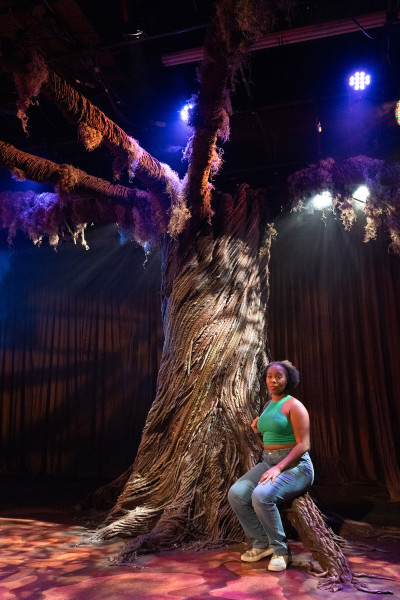
BTW, the play’s title is derived from the Billie Holiday song about lynchings, “Strange Fruit,” which includes the lyrics: “Southern trees bear a strange fruit, blood on the leaves and blood at the root.” Which leads me to my one reservation about this otherwise perfect production. Because I hate plot spoilers, I won’t ruin the grand finale for you, Dear Reader, but it is a spectacular special effect, which should (along with so much else about this stellar work) be remembered at awards time. My regret is that by ending on this note some may get a defeatist message, of despair. I would have preferred it if the super-duper special effect was met by another of the drama’s protests – but that’s the “fight the power,” “venceremos” ethos of this revolutionary-minded reviewer.
But this is a mere quibble and definitely should not deter theatergoers from experiencing and enjoying a great stage production that’s entertaining and enlightening. Anyone interested in plays about racism, homophobia and politics should not miss Root in the remaining two weeks or so of its all-too-brief run. The same is also true for the more adventurous ticket buyer who just loves having a great time at a live performance on the boards. Bravo!
Open Fist Theatre Company’s Blood at the Root is being presented on Fridays and Saturdays at 8:00 p.m. and Sunday, Oct. 15 at 3:00 p.m. and Sunday Oct. 22 at 7:00 p.m. through Oct. 28 at the Atwater Village Theatre, 3269 Casitas Ave., Los Angeles, CA 90039. For info: www.openfist.org; (323)882-6912. (FREE parking in the ATX (Atwater Crossing) lot one block south of the theater.)
