



Precious little about the working class except how it is divided along racial lines is followed by a “monetarist” explanation of why factories left Britain.
The French philosopher Gilles Deleuze said editing is another form of thinking. Maybe he hadn't seen the films of Adam Curtis where editing, or the rapid cut, rather than another form of thinking simply overwhelms thinking and seeks to render it obsolete and unnecessary, an impediment that only slows down image making. This is thought in the age of AI.
Curtis’ latest BBC documentary Shifty: The Land of Make Believe begins by focusing on how things have changed in the British Isles since the deindustrialization of the early ‘80s, with the onset of Thatcher. The series presumes to answer in the five-part series how and why the momentous social changes and disruptions have occurred.
Unfortunately, with Curtis, whose other major work is Can’t Get You Out of My Head about British Populism, the how is a series of juxtaposed and loosely related moments obscured by the failure to adequately answer the why.
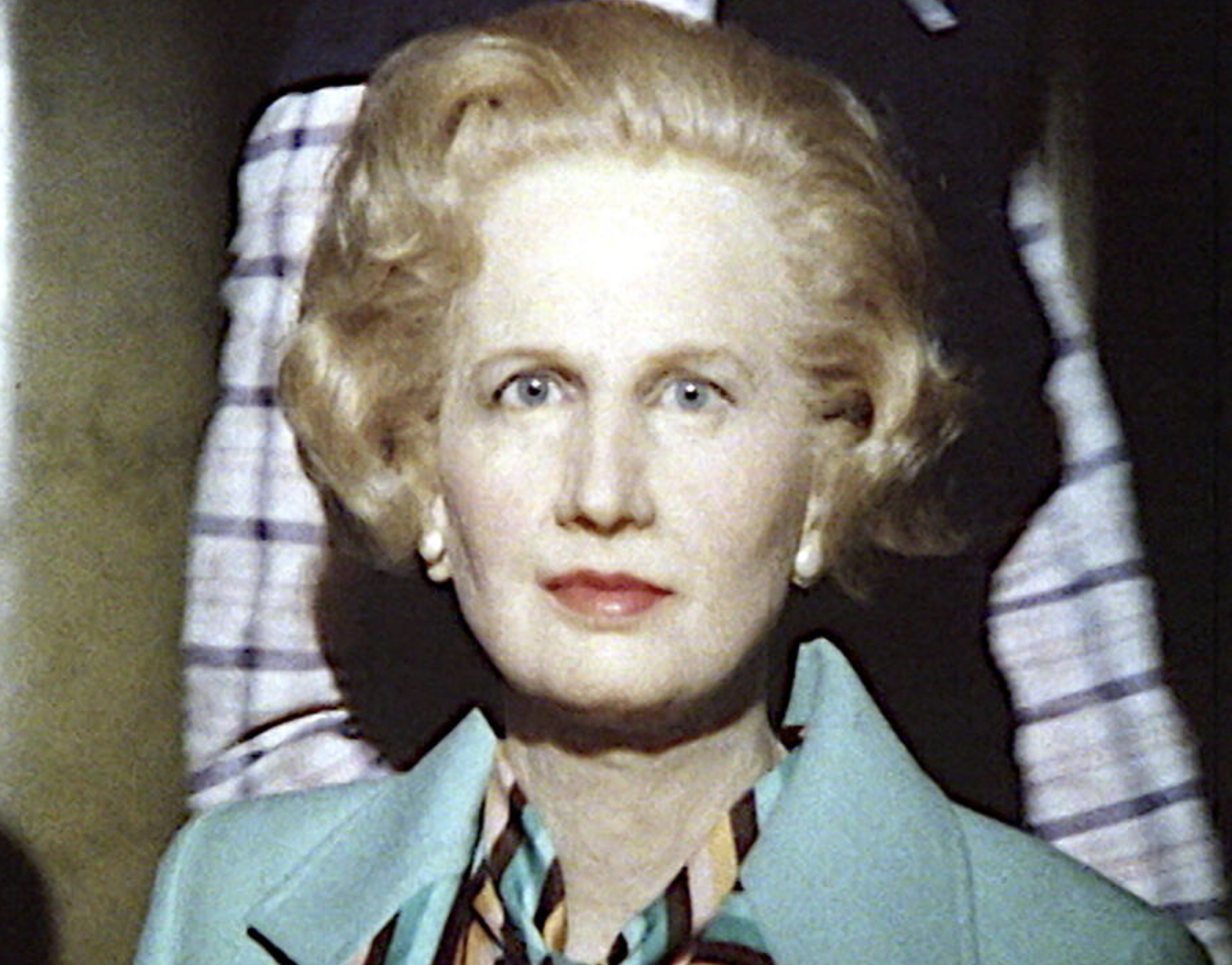
There is the frightening opening of Thatcher in Hansel and Gretel Wicked Witch Mode welcoming children into her den of iniquity. This is followed by fast crosscutting around the British Isles including her “let's cut the number of immigrants to preserve free speech and tolerance” announcement leading to National Front rallies. This is followed by a middle-class white couple supposedly fulfilling Thatcher’s desire to have people own their own home, a rationale for defunding public housing, in a quest to free people from the “dependence on the state as master.”
Precious little about the working class except how it is divided along racial lines is followed by a “monetarist” explanation of why factories left Britain. It seems that the Milton Friedman model of flooding or withdrawing money from circulation is the culprit, withdrawing in the case of Britain in the ‘80s and flooding in the post-2008 crisis in the U.S. which is still with us today.
However, this does not explain why the factories left—in Curtis’ mind because high interest rates accompanying the currency withdrawal forced them to leave. They left in Britain as in the U.S., decimating whole communities and in the U.K. leaving three million unemployed because the profits were greater and the salaries less overseas. They left for the reason capital always leaves, to make more money.
Curtis’ style seems to summon working class concerns, mixing the popular and sometimes resistant forms of reggae, ska, punk and power pop, while giving lip service to minority opposition to these cleavages. In fact, though, the documentary which does move with lightning speed making rapid but sometimes nonsensical associations—we cut from a mention of Marcus Garvey to cheese and onion crisps on an assembly line—is torn from the BBC library and for the most part presents a recounting of the Thatcher era from the increasingly limited point of view of the British non-committed middle class.
Says one interviewee, “I’ve given up. I’ve just completely given up,” proclaiming himself at middle age “waiting to be measured for the old box” that is, for his coffin. But the conservative part of the middle class is always thus, forever despising and looking down on the poor, envious and looking up at the rich and distraught and despairing over their position caught between the two.
Curtis’ work then in the end, since it is drawn from the BBC archives, becomes rather than a social and economic explanation for why changes have occurred in a Britain which refuses its place as a nation among others, clinging to its colonial legacy, instead a documentary on the BBC itself and its limited coverage of a country and a people it is supposedly funded to represent.
The monetarist explanation is unconvincing and in the end Curtis and his cronies throw up their hands and opt for chaos theory, where, like the Marvel Comics Multiverse, or DC’s “Crises on Infinite Earths,” “You could fall into a black hole and come out in another part of the universe.” One wishes that Curtis, a gifted documentary filmmaker and thinker, could offer instead of simply a collage of images, more complex explanations, perceptions and a materialist grasp of reality that rises above comic book word balloons that do little to illuminate the (capitalist) forces at play in the past and present while doing a lot to obscure them.
